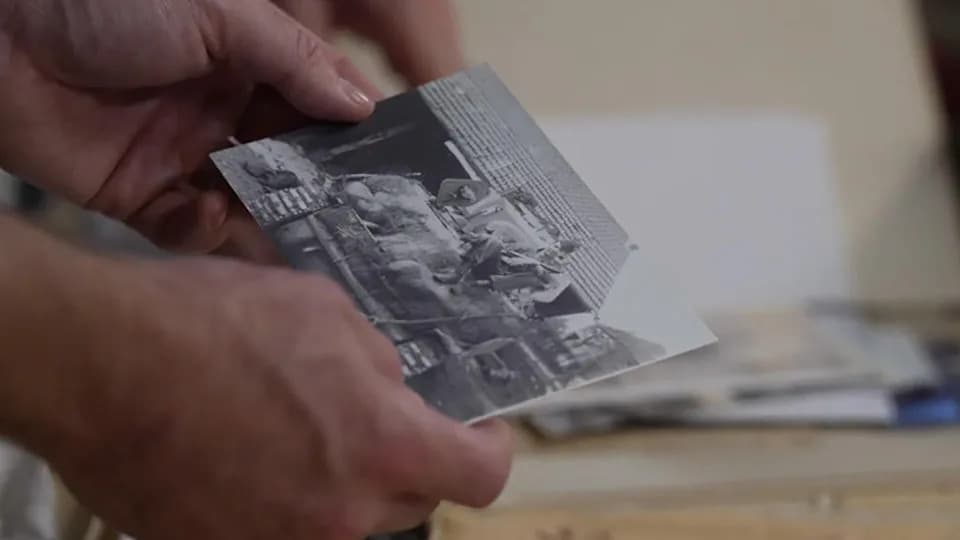
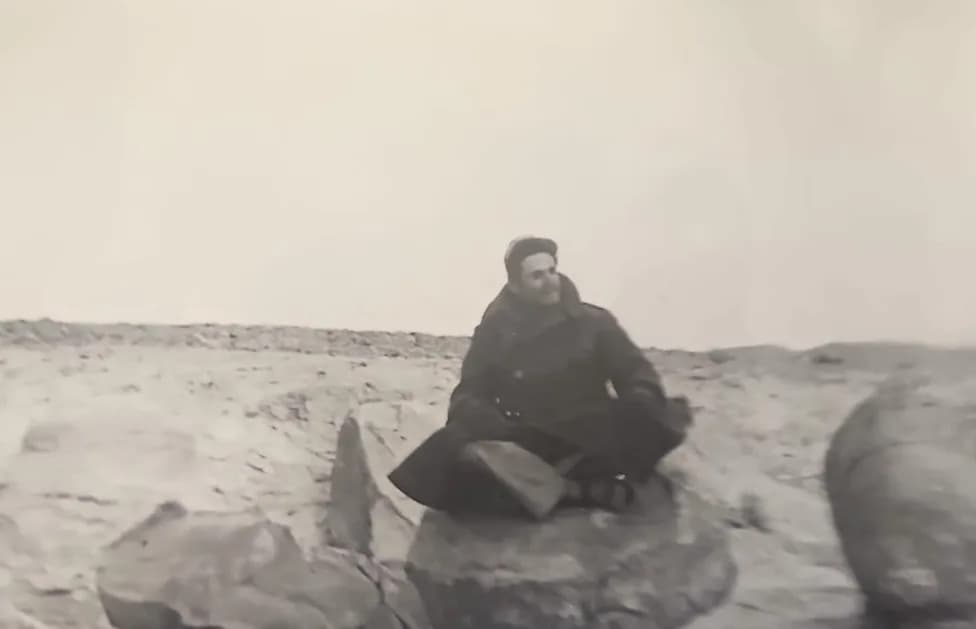
Marine Corporal Leighton Willhite, now 100, was reunited with "Lucky," the M4 Sherman he drove at Iwo Jima, after Jonathan Bernstein of the National Museum of the Marine Corps identified the tank through archival photos and unit records. The Sherman—one of about 50,000 built—had field modifications such as welded nails, wooden planks, sand-dusted paint and spot-welded track blocks to counter Japanese mines and charges. Willhite earned a Bronze Star with Valor for rescuing a trapped crew; "Lucky" was later converted to a flame tank and eventually preserved at the museum.
‘That Tank Was My Life’: 100-Year-Old Marine Reunites With 'Lucky,' The M4 Sherman He Drove At Iwo Jima
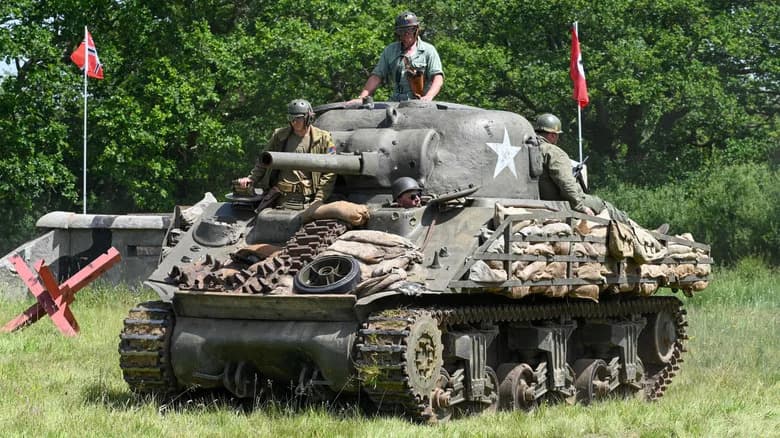
Front 3/4 view of M4 Sherman tank - Dave Colman/Shutterstock
A 100-year-old World War II veteran, Marine Corporal Leighton Willhite, was recently reunited with the M4 Sherman tank he drove during the Battle of Iwo Jima. The tank—nicknamed "Lucky"—is now preserved at the National Museum of the Marine Corps after researchers matched it to archival photographs and unit records.
How the match was made. Jonathan Bernstein, Arms and Armor Curator at the National Museum of the Marine Corps, conducted detailed research in the National Archives and unit records of the 5th Tank Battalion. Distinctive field modifications and weld scars on the hull corresponded with combat-era photographs, confirming that the vehicle present on March 1, 1945, was indeed "Lucky." Bernstein said it is rare to reconnect a specific crew with the exact tank they operated, but the evidence in this case made it possible.
Crew courage under fire. Willhite, only 18 at the time, demonstrated conspicuous bravery when he and his commander left their tank to rescue a trapped fellow crew. For that action, Willhite was awarded the Bronze Star with Valor.
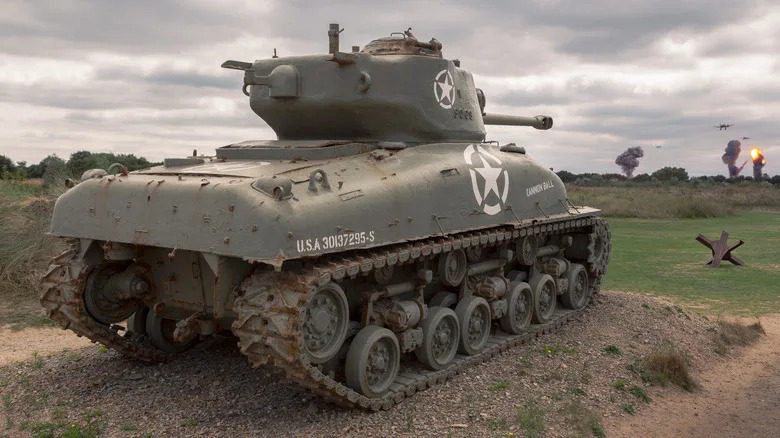
Rear 3/4 view of M4 Sherman tank - Wirestock/Getty Images
Field Adaptations and Combat Conditions
The M4 Sherman was the United States' most-produced tank in World War II, with roughly 50,000 built. On Iwo Jima, Shermans showed both their strengths and limits. The island's volcanic sand hampered mobility and caused many transmission failures, while entrenched Japanese defenses and a willingness to fight to the death made every advance costly.
Japanese anti-armor tactics included satchel charges and magnetic mines that could be affixed to tank hulls. In response, Marines improvised a range of countermeasures: nails welded point-up on upper surfaces to prevent magnetic mines from seating flush; wooden planks along the sides to protect suspensions and blunt shaped charges; sand dusted on fresh paint to make magnetic mines less likely to stick; and track sections (track blocks) spot-welded onto turrets and fronts to add armor and serve as ready spares.
"The all-around performance of the M4A3 tank was exceptionally good," reported the 5th Tank Battalion after Iwo Jima.
During the five-week campaign, American forces suffered heavy losses: roughly 7,000 Marines killed and about 20,000 wounded.
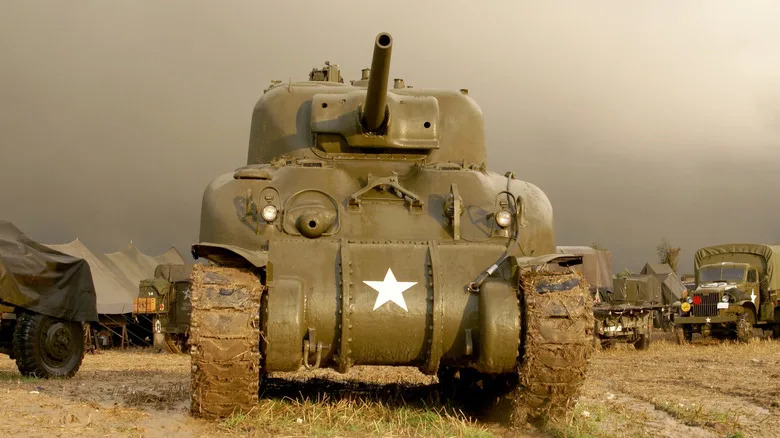
Front view of M4 Sherman tank in rural encampment setting - PHILIPIMAGE/Shutterstock
After Iwo Jima: Conversion, Rediscovery, and Preservation
After the battle, "Lucky" returned to Hawaii and—along with 71 other Shermans—was converted into a flame-thrower tank. The modification replaced roughly 60% of the ammunition storage with fuel tanks holding approximately 300 gallons of incendiary mixture, preparing the vehicles for a planned invasion of Japan that ultimately never occurred after the atomic bombings of Hiroshima and Nagasaki and the Soviet entry into the war in Manchuria.
"Lucky" later served as a training vehicle and was sent to Camp Lejeune, North Carolina, where it sat in a wooded area until Marines rediscovered it in 2002 and arranged for its transfer to the museum.
This reunion—of a veteran and the vehicle that helped shape his wartime experience—adds a personal dimension to the larger history of World War II. It highlights individual bravery, tactical improvisation, and the enduring importance of preserving artifacts that connect living memory to documentary evidence.
Help us improve.