Yohanan Elishuv, 95, was the last surviving participant in the raising of the improvised "Ink Flag" at Umm Rashrash (now Eilat), an image that came to symbolize the close of Israel's 1948 War of Independence. A Palmach runner and driver, he fought in major battles for Jerusalem and the Negev, took part in Operation Uvda and later served in reserves in subsequent wars. After decades building southern Israel as a heavy-vehicle driver, he retired to volunteer work and frequently spoke to youth about the 1948 war.
Yohanan Elishuv, Last Survivor of the Ink Flag Raising at Eilat, Dies at 95
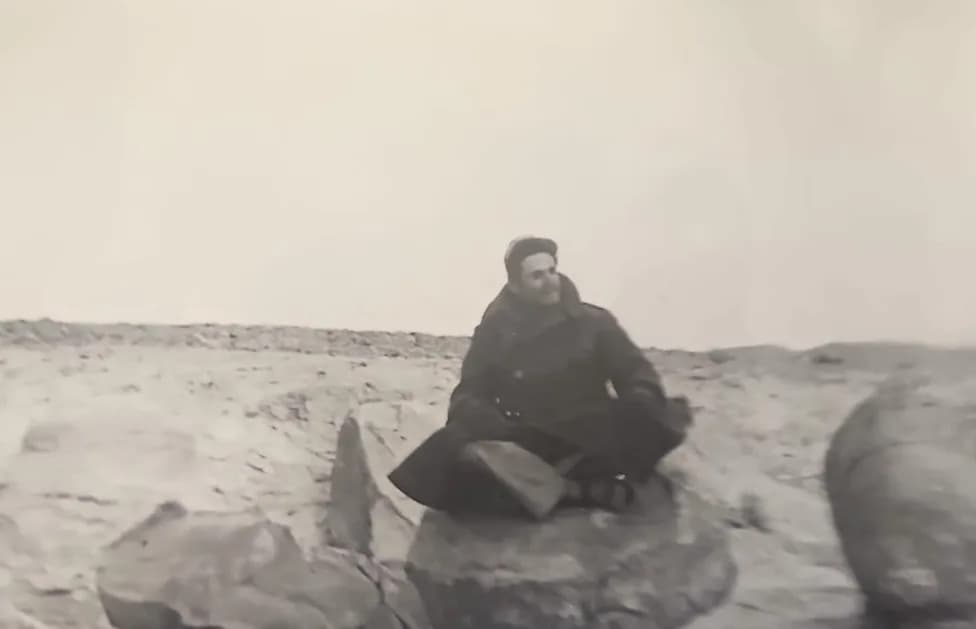
Yohanan Elishuv during the War of Independance. (photo credit: Courtesy)
Yohanan Elishuv, the final surviving participant in the raising of the improvised "Ink Flag" at Umm Rashrash (today's Eilat) that symbolically closed Israel's 1948 War of Independence, has died at the age of 95. A Palmach veteran who served as a runner and driver, Elishuv fought in some of the war’s fiercest battles and later took part in the decisive Operation Uvda.
Early Life
Elishuv was born in Petah Tikva to Haya and Moshe Elishuv. His father came from a family of Subbotnik converts from Russia whose original surname was Sapinkov; his mother immigrated from Bessarabia. A child with severe dyslexia, he left formal schooling at 12 and learned mechanical skills working in a garage—abilities that proved useful during his military service.
Military Service in 1948
At about 15 he lied about his age to join the Palmach, claiming he was 16. He combined civilian work with training at Givat Ada, where his platoon commander was Rafael "Raful" Eitan, later chief of staff of the Israel Defense Forces. After quickly repairing a mechanical fault in a pickup truck, he became the personal runner for Haim "Poza" Poznanski, commander of Company B of the Palmach's Fourth Battalion.
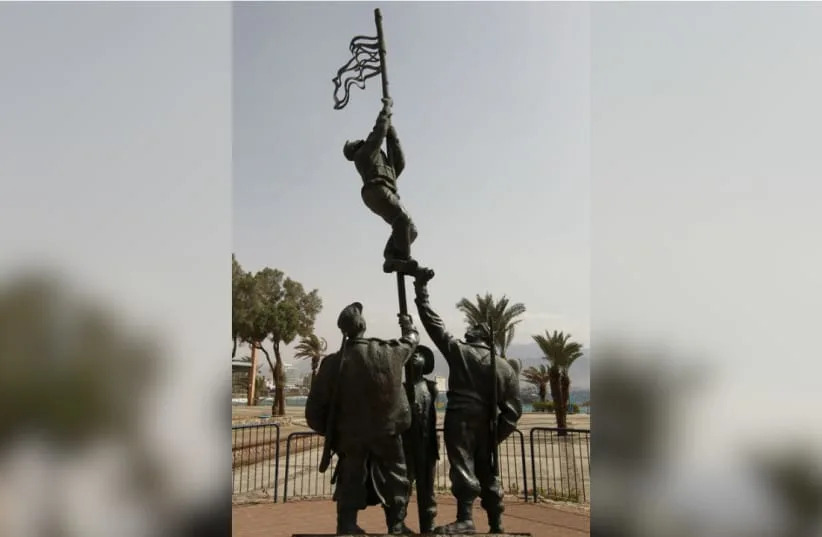
Statue of the Ink Flag which was a handmade Israeli flag raised during the Israeli War of Independence to mark the capture of Eilat; illustrative. (credit: NATI SHOHAT/FLASH90)
Elishuv survived the bloody Nabi Samuel battle in April 1948, escaping under heavy fog—an experience that left him with a lasting fondness for foggy days. He later helped organize retreats, evacuate the wounded and salvage weapons after failed operations. During the battle for Jerusalem's Katamon neighborhood he was among those who evacuated Rafael Eitan and David "Dado" Elazar when they were wounded.
He fought in multiple Jerusalem-area engagements (including Beit Siris, Sha'ar Hagai, Beit Iksa and Beit Mahsir) and took part in an attempt to enter Jerusalem’s Old City through Zion Gate. During the first truce in June 1948 he was transferred to the southern front under Uzi Narkiss; his vehicle struck a mine and he was hospitalized, but he returned to combat after recovering.
The Negev and The Ink Flag
Elishuv fought across the isolated Negev in Operations Yoav, the capture of Beersheba, Operation Lot, Operation Horev and finally Operation Uvda. During Uvda he served as driver to Southern Front commander Yigal Allon after an exchange in which he joked that Allon would be "three times as much trouble" as Narkiss—Allon replied that he wanted a man who feared nothing.
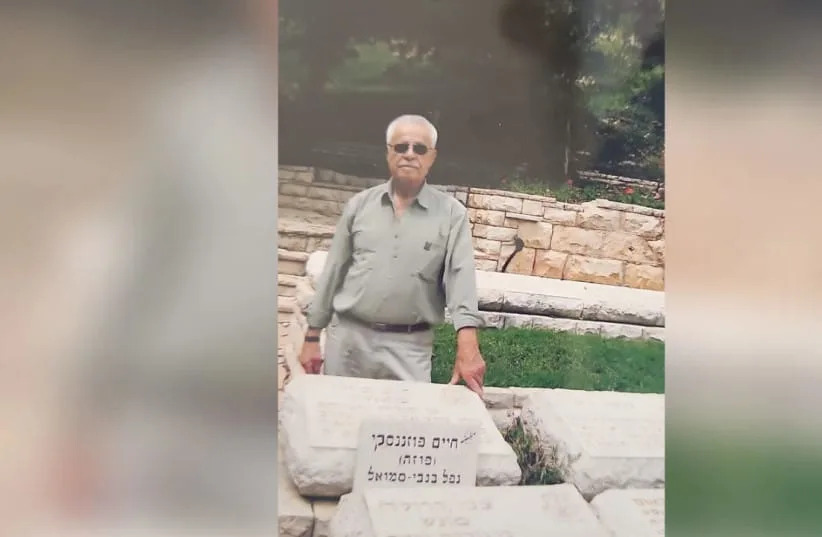
Yohanan Elishuv visiting the grave of his commander, Haim Poznanski, who was killed during the War of Independance. (credit: Courtesy)
Driving the command and reconnaissance jeep that carried Negev Brigade commander Nahum Sarig, Elishuv joined a race south against Golani Brigade troops to reach Umm Rashrash first. On March 10, 1949, he was among the first fighters to reach the abandoned police station. Finding no national flag, soldiers fashioned an improvised banner—the now-famous "Ink Flag"—and raised it. The photograph of that moment became one of the defining images of Israel's founding struggle.
Later Service and Civilian Life
After leaving regular service in 1949, Elishuv remained in the reserves with the Artillery Corps and saw action in later conflicts including the 1956 Sinai Campaign, the 1967 Six-Day War, the 1973 Yom Kippur War and the First Lebanon War. In civilian life he worked for about 30 years as a heavy-vehicle driver for Solel Boneh, helping build roads to Eilat and contributing to development projects across southern Israel, the Dead Sea region and the Negev. He later worked as a purchasing agent in the company’s industrial division.
After retiring, he and his wife volunteered with a diabetes association. In later years he was frequently invited to speak at pre-military academies and high schools about the legacy of the 1948 War of Independence.
Death and Survivors
Elishuv survived three bouts of cancer in his life. He died in his Petah Tikva apartment—built on the same plot where he had been born 95 years earlier—and was buried at Segula Cemetery in Petah Tikva. He is survived by three children: Ofer (a physician at Hadassah Medical Center), Yoav (who works at Ichilov Hospital) and Merav (a lawyer).
Note: The improvised Ink Flag raised at Umm Rashrash on March 10, 1949, is widely regarded as a symbolic end to Israel's War of Independence.
Help us improve.