James Verini’s excerpt from The Theater chronicles how Mariupol’s Donetsk Regional Academic Drama Theater became a refuge after Russia’s 2022 invasion. Volunteers converted the building into a field kitchen, infirmary and sleeping quarters that sheltered roughly 1,500 people nightly. On March 16, the theater was struck by two 500-kg bombs, forcing survivors — including aspiring actors Elizaveta (Liza) Fatayeva and Dima Murantsev — to flee through dust and rubble. The narrative captures both everyday courage and devastating loss.
Inside 'The Theater': How Mariupol’s Drama House Became a Refuge — and Then a Target
James Verini’s excerpt from The Theater: Courage and Survival in the Defining Atrocity of the Ukraine War follows a young couple whose lives and art were swallowed by the siege of Mariupol in 2022. What began as a familiar cultural landmark, the Donetsk Regional Academic Drama Theater, was transformed by volunteers into a sanctuary for civilians — until it was struck by Russian bombs on March 16.
The Siege
The siege of Mariupol began in the predawn hours of February 24, 2022, when armored columns — estimated at roughly 190,000 troops — crossed Ukraine’s borders. Russian forces advanced in a crescent north of the southeastern port city, cut land routes, and established firing positions. Tanks, field guns, mortars and Grad rocket launchers pounded the eastern suburbs and pushed west in an assault that lasted 81 days.
From Theater to Refuge
Elizaveta "Liza" Fatayeva, a 19-year-old aspiring actress, and her partner, acting student Dima Murantsev, were among thousands who fled to the city’s Donetsk Regional Academic Drama Theater when an evacuation never materialized. Volunteers led by the theater’s lighting director turned the vast building into a field hospital, kitchen and sleeping area. Generators were brought in, seats dismantled for beds, and scavengers combed the ruined city for food and medicine. At its peak the shelter housed around 1,500 people each night.
Performance as Survival
As actors, Liza and Dima resisted letting the war harden them. They performed scenes from earlier rehearsals and staged improvised pieces using scavenged props — transforming fear into ritual, memory into performance. They recorded their work whenever they could charge a phone, creating small islands of meaning amid chaos. Their cat, Zhmenya (called Handful), wandered the corridors and returned to the couple’s cramped niche in the basement.
The Bombing
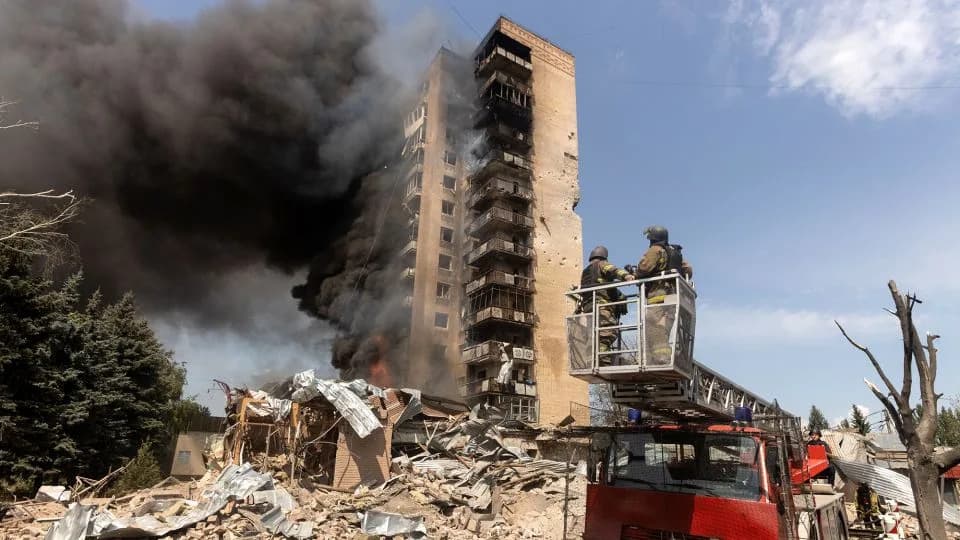
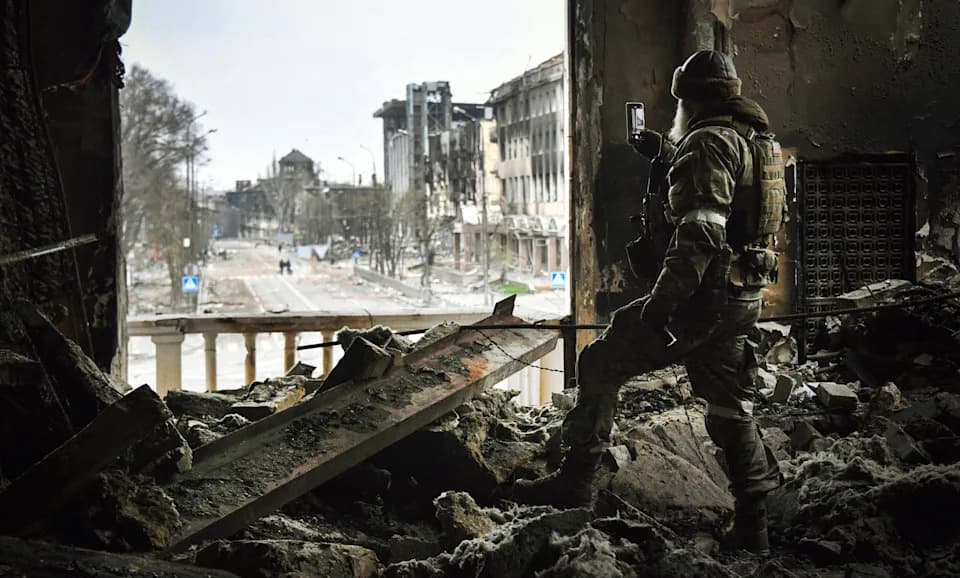
On the morning of March 16 the theater was struck. According to survivors, two 500-kilogram bombs hit the building. The blast ripped through walls and filled the air with dust and smoke. People were injured and killed; the field kitchen and shelters outside became a scene of rubble and bodies. Liza later described a moment when time stretched and syllables felt underwater before Dima’s voice cut through and they fled.
“The theater is gone,” a bloodied survivor screamed through the dust, and Liza later found herself screaming in rage and grief: "Putin, die! Putin, die! Putin, die!"
Escape and Aftermath
Fleeing in a packed minibus, Liza and Dima traveled about fifteen miles west and reached the coastal village of Melekyne, then occupied by Russian troops who largely ignored them. They spent the night with a distant acquaintance; Handful remained in shock. Dima later reflected on survival with fatal honesty: "The only question is why we stayed alive. There were children. There were newborns. I am sure there were people much better than me there."
Verini’s account blends intimate portraiture and documentary detail to show how ordinary acts of courage — volunteers cooking soup, actors staging plays — stood against catastrophic violence that erased a shelter and reshaped a city.
Help us improve.