The 1976 Soweto uprising — when thousands of Black schoolchildren protested a policy forcing Afrikaans instruction — remains a defining moment in South African history. The killing of 12-year-old Hector Pieterson became an international symbol of apartheid’s brutality, and June 16 is now observed as The Day of the African Child. Today South Africa faces deep economic and social problems: failing infrastructure, roughly 60% youth unemployment, stark racial income gaps and recent attacks on migrants. Activists urge poverty-relief, rights education and renewed civic participation to restore faith in democracy.
50 Years Since Soweto: How a Student Uprising Shaped South Africa — And What Still Needs Fixing
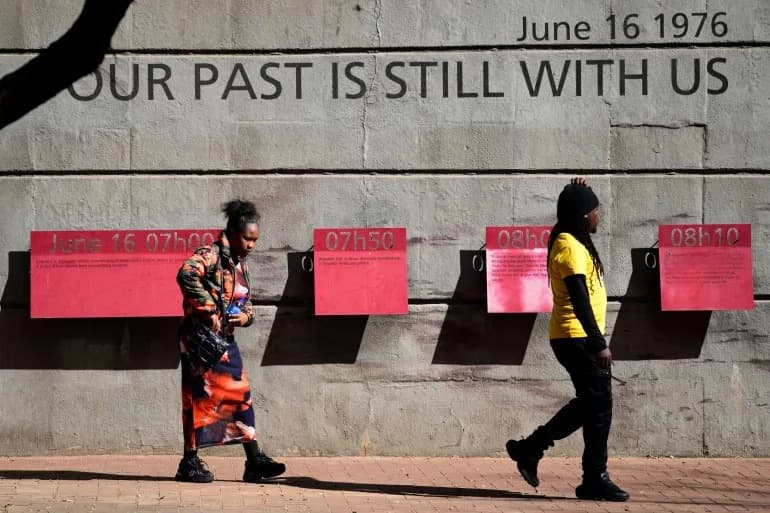
Youth visit the June 16 Memorial Acre, in Soweto, South Africa, Monday, June 15, 2026 [Themba Hadebe/AP]
Fifty years after the Soweto uprising of June 1976, South Africa commemorates a student-led revolt that exposed the brutality of apartheid and helped accelerate the end of white-minority rule. Yet the anniversary is clouded by persistent social and economic crises that many say show democracy's gains remain incomplete.
What Happened in Soweto
On June 16, 1976, thousands of Black schoolchildren in Soweto, a township outside Johannesburg, marched peacefully to protest a new policy that forced them to learn in Afrikaans and English instead of their home languages such as Xhosa and Zulu. Police met the students with dogs and live ammunition. The image of a man carrying 12-year-old Zolile Hector Pieterson, who was fatally shot, became a searing international symbol of the crackdown.
Riots and repression spread across Johannesburg and beyond from June 16–18. Official tallies and historical accounts cite at least 176 people killed, thousands injured, and many detained. The Soweto events intensified domestic and international pressure on the apartheid regime and are widely regarded as a turning point in the struggle for liberation. June 16 is now observed in South Africa as The Day of the African Child, in memory of Pieterson and the other young victims.
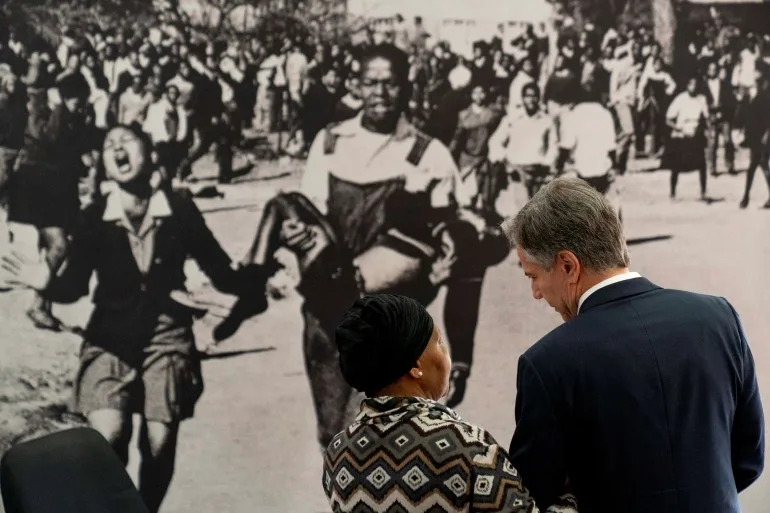
Then-US Secretary of State Antony Blinken and Antoinette Sithole, the sister of the late Hector Pieterson, tour the Hector Pieterson Memorial in Soweto, South Africa, August 7, 2022 [File: Andrew Harnik/Pool via Reuters]
From Apartheid’s Education Policy to a Broader Struggle
Under apartheid (1948–1994) South Africa enforced strict racial separation in schools and public life. Education for Black children was designed to restrict opportunities and funnel them into low-paid labour. The 1975 policy requiring Afrikaans as a medium of instruction in many Black schools was the immediate trigger, but the uprising reflected deeper anger about systemic discrimination, poverty and exclusion.
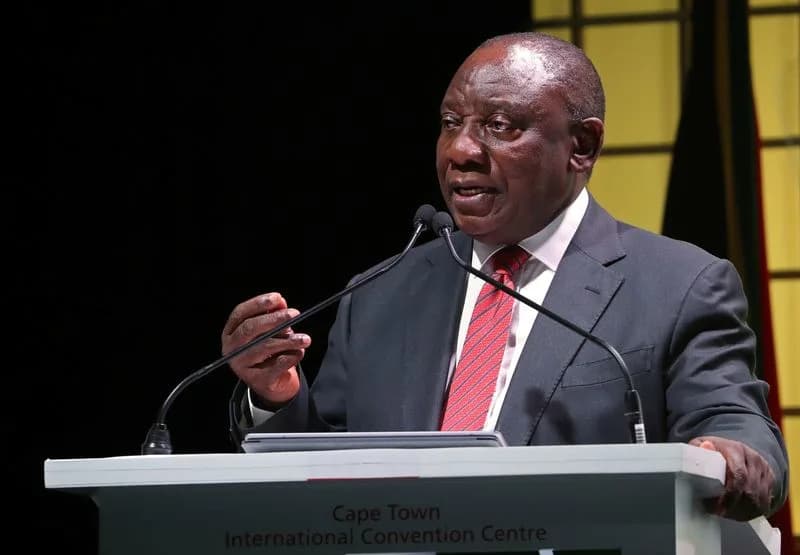
“Exactly 50 years later, as young South Africans, you face a different challenge: finding your place in an economy that has for too long kept its doors closed.” — President Cyril Ramaphosa
Where South Africa Stands Now
South Africa today remains Africa’s largest and most industrialised economy but is beset by severe challenges: failing infrastructure, high crime, entrenched poverty and youth unemployment. Youth joblessness among 15–24-year-olds is around 60 percent, and essential services such as electricity are unreliable. Many citizens say they have not felt the benefits of democracy because of government inefficiency, corruption and structural economic problems, including reduced returns from mining.
Racial economic inequality persists. Publicly cited figures show the average Black household income at roughly 10,554 ZAR (~$652) per month versus about 117,249 ZAR (~$7,427) for white households. In 2022 the World Bank described South Africa as among the world’s most unequal countries, citing land-ownership disparities and the slow emergence of a broad Black middle class.
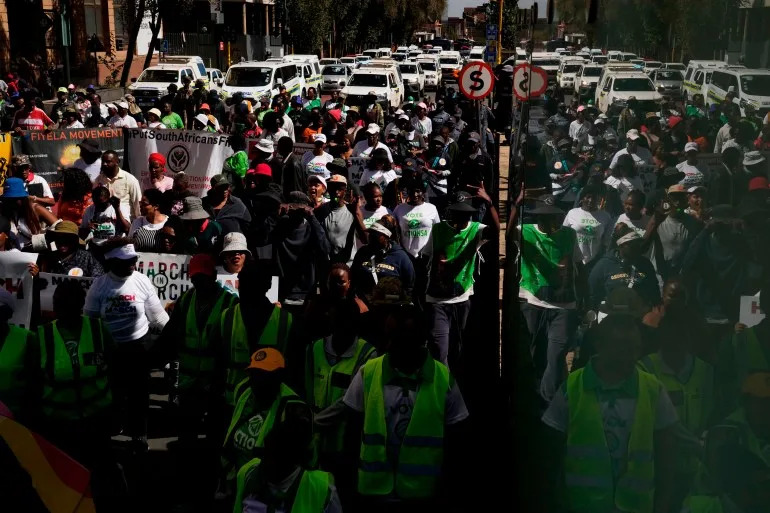
South Africans protest against illegal migration, in Johannesburg, South Africa, April 29, 2026 [Themba Hadebe/AP]
Rising Tensions and Attacks on Migrants
Recent weeks have seen violent attacks on African migrants — many from Zimbabwe, Malawi, Mozambique, Nigeria and Ghana — with homes and businesses targeted and hundreds evacuated by their governments. In April and subsequent incidents, mobs clashed with communities and at least two Nigerians and several Mozambicans were reported killed; Mozambique reported seven deaths among its citizens. Some governments labeled the violence xenophobic; South African officials have disputed that label while acknowledging serious social tensions.
Voices and Responses
Activists and community leaders warn that economic exclusion and loss of faith in institutions are driving anger, especially among youth. Irfaan Mangera, a youth democracy activist, told reporters that frustration is understandable and that long-term remedies require both poverty-alleviation projects and stronger civic education to encourage democratic participation and restore trust.
Fifty years on, Soweto’s memory is both inspiration and warning: it reminds South Africa of the power of youth-led protest and the unfinished task of building an inclusive economy and society that honors the sacrifices of those who risked their lives for freedom.
Help us improve.