Researchers created a small obstacle course to test whether bumblebees could solve novel problems without step-by-step training. In experiments published in Science, bees learned to roll foam balls to bring unreachable blue “flowers” within reach, with nearly 75% solving the initial puzzle and about 80% completing a multi-step challenge. The work demonstrates spontaneous problem-solving in an invertebrate and raises broader questions about insect intelligence and pollinator resilience.
Bumblebees Outsmarted a ‘Flower’ Puzzle — Rolling Balls Shows Spontaneous Problem-Solving
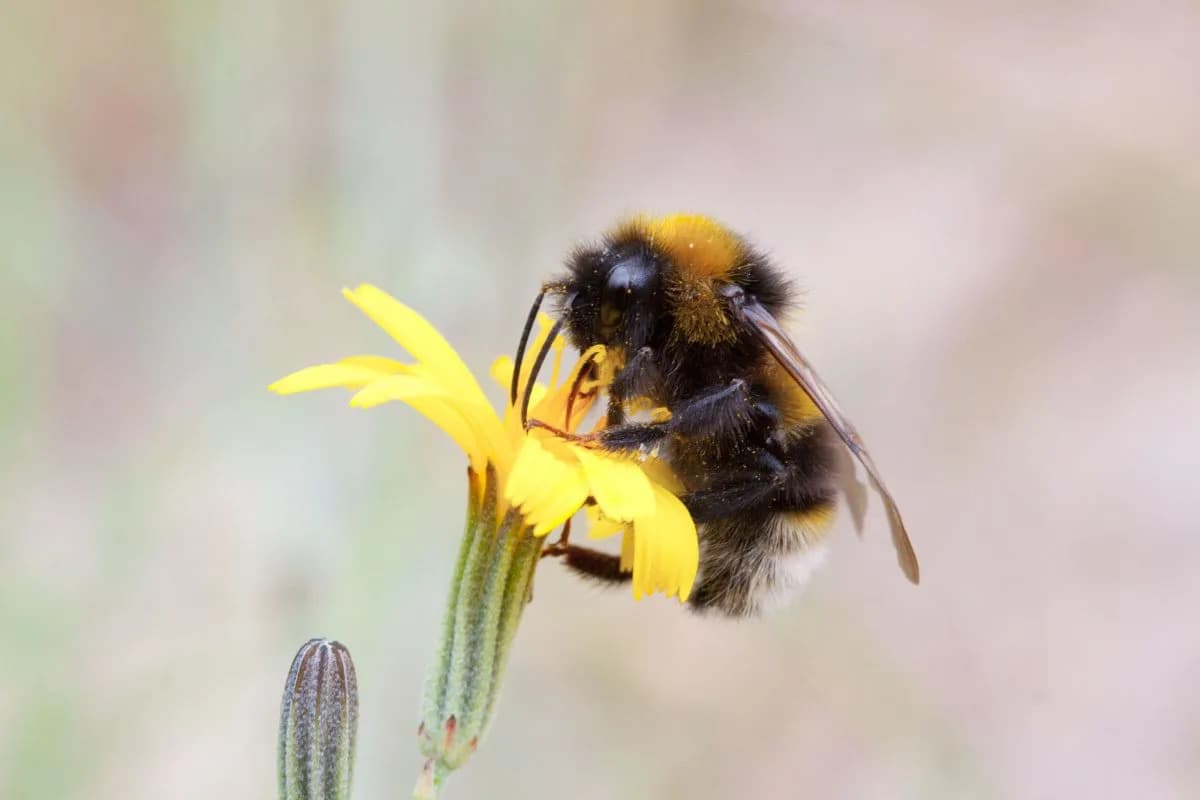
A bumblebee pollinates a flower.
Scientists recently designed a tiny obstacle course to test whether bumblebees can solve novel problems without step-by-step training. Published in Science, the study found that many individual bumblebees invented a solution on the spot: they rolled foam balls to bring a blue “flower” cue within reach and access a sugary reward.
The researchers, including Olli Loukola and lead author Akshaye Bhambore of the University of Oulu, trained bees to recognize two simple associations: a small foam ball is movable and a blue ring symbolizes a flower and food. The bees were then placed in a compact plexiglass box where identical blue rings were printed on the ceiling out of reach.
Because the enclosure prevented flight, rolling the ball became the only way to bring the flower cue down to access sucrose. Many bees quickly discovered this new, goal-directed strategy and repeated it reliably.
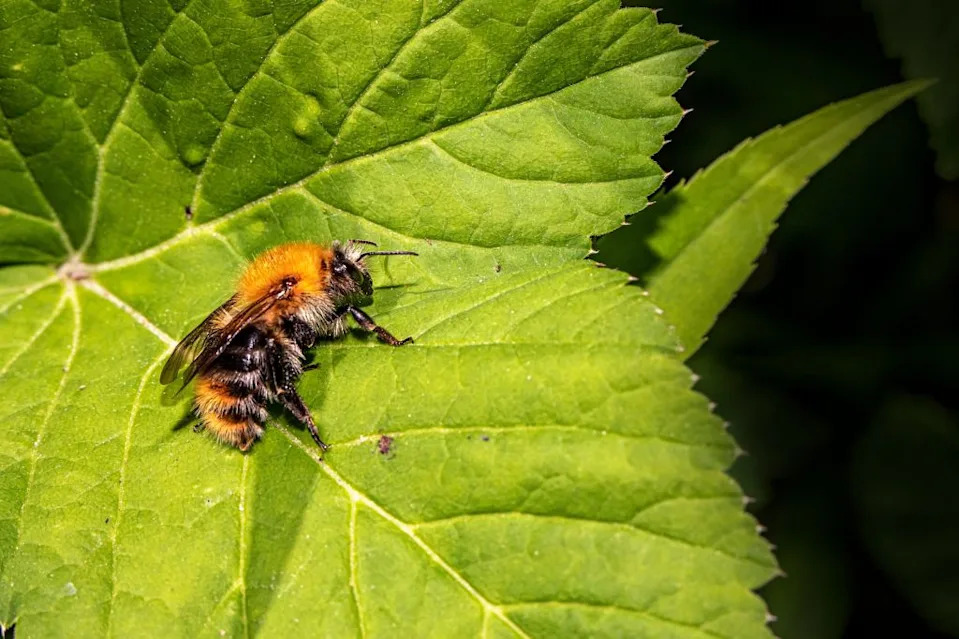
A bumblebee on a leaf Photo credit:Pexels/ Chris F
“Spontaneous problem-solving is something that has never been shown in any invertebrate before,” Olli Loukola told Science News. The behavior looked innovative rather than reflexive: successful individuals showed more directed movement patterns, the authors report.
In the primary task, nearly 75% of tested bees solved the puzzle. To rule out chance, researchers then introduced a multi-step challenge: bees had to locate a hidden flower cue, maneuver the ball around a barrier, and push it through a small opening to reach the reward. About 80% completed that more complex sequence.
These results build on earlier work (e.g., a 2022 Animal Behaviour study) showing bumblebees sometimes engage in ball-rolling behavior that may resemble play. Here, the same behavior served a clear problem-solving purpose.
Although a bumblebee’s brain is about the size of a sesame seed, the team emphasizes that this does not equate to human-like cognition. Still, the findings expand our understanding of how small brains can support flexible, innovative behavior. That capacity for individual innovation could help bees locate and access food when environments change—an important trait as pollinators face growing pressures. As the authors note, many flowering plants depend on insect pollinators for reproduction.
Implications: The study demonstrates spontaneous problem-solving in an invertebrate, raises new questions about the limits of insect cognition, and highlights potential resilience mechanisms that could help pollinators cope with environmental change.
Help us improve.