President Trump and allies are pushing a symbolic bid to have his 2019 and 2021 impeachments "expunged" from the House record, an effort reported by The Wall Street Journal. Legal experts say the Constitution contains no procedure to retroactively erase impeachments, so any resolution would be mostly symbolic. Rep. Darrell Issa introduced the proposal with 23 co-sponsors and House Speaker Mike Johnson has expressed support, though he does not call it a top priority. Critics warn the move could be politically risky and would not change the underlying historical record.
Trump Seeks To 'Expunge' Two Impeachments — Experts Say Constitution Offers No Such Remedy
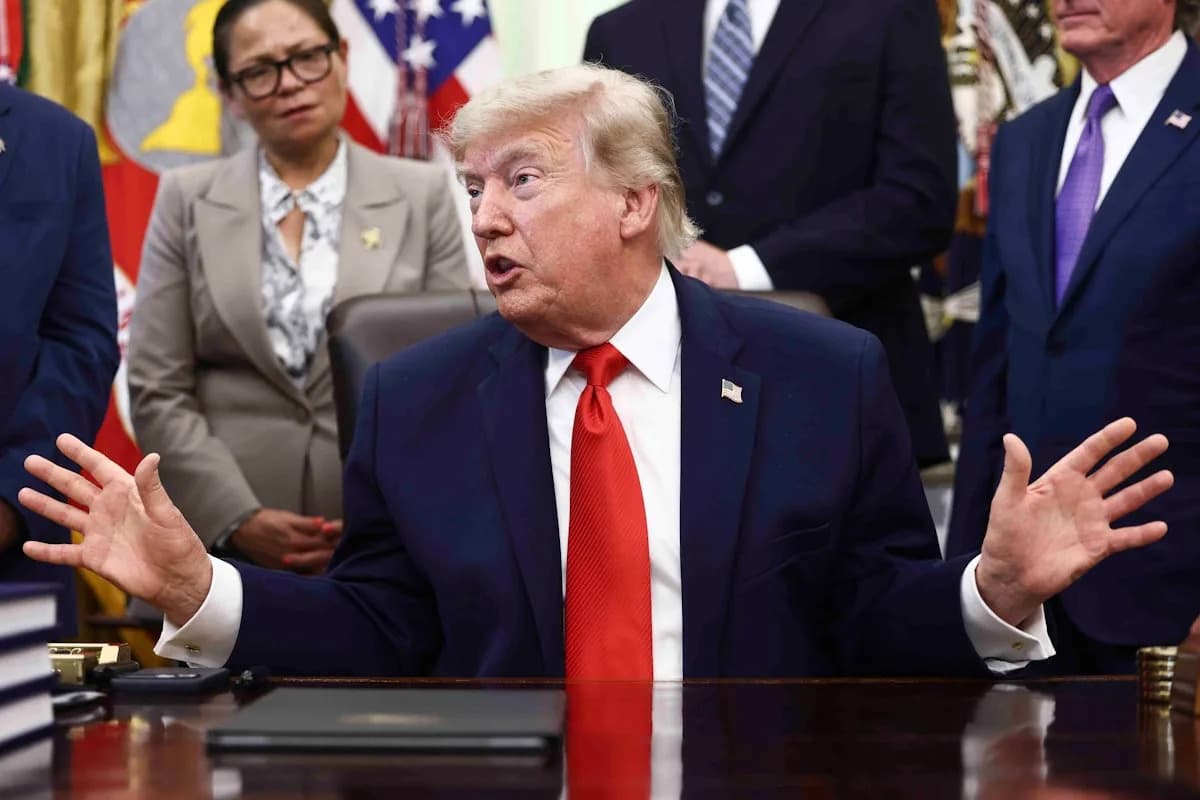
President Donald Trump and allies in Congress are preparing a push to have the House declare his 2019 and 2021 impeachments "expunged" from the record — a symbolic move that legal scholars say the Constitution does not authorize. The effort, reported by The Wall Street Journal, is likely to be considered only after the midterm elections and faces both legal and political obstacles.
What Supporters Are Proposing
California Representative Darrell Issa introduced legislation that would declare Trump’s two impeachments "expunged as if such Articles had never passed the full House of Representatives." Issa’s measure has drawn 23 co-sponsors. House Speaker Mike Johnson has voiced support for examining the impeachments anew, calling them "hyperpartisan" and saying the record should be reviewed — though he cautioned the effort is "not an order of first priority."
Legal and Political Reality
Constitutional scholars note there is no mechanism in the Constitution to retroactively nullify or erase an impeachment that has already occurred. Any House resolution would be largely symbolic and carry little to no legal effect; it could change only the House's own record, not the underlying constitutional fact that articles were adopted. Republican lawmakers are also split, with some warning the move could be politically damaging or distract from other priorities.
"It should be done because I did nothing wrong... It was a rigged deal — it was a whole rigged situation," Trump told The Wall Street Journal.
Why the Push Gained Steam
The effort gained momentum in April after the Trump administration released additional documents tied to the 2019 inquiry. Supporters say the new material undermines the credibility of witnesses from the first impeachment. Opponents argue the factual record remains significant: the 2019 inquiry centered on a transcript of a White House phone call in which Trump asked Ukrainian officials to investigate then-candidate Joe Biden; the 2021 impeachment followed the January 6 attack on the U.S. Capitol and allegations that Trump incited an insurrection.
Where This Leaves Congress
Issa’s resolution has attracted some Republican backing but not a consensus. Retiring Representative Don Bacon warned the push could be politically risky for Republicans and called it "silly," suggesting it might alienate swing voters or appear to rewrite history. For now, the proposal appears to be largely symbolic — a political statement about how some Republicans view the impeachments rather than a change with legal consequence.
Bottom line: The campaign to "expunge" Trump’s impeachments is a politically charged effort that highlights deep partisan divisions. Even if the House adopted such a resolution, constitutional experts say it would not remove the historical or constitutional fact that impeachments occurred.
Help us improve.