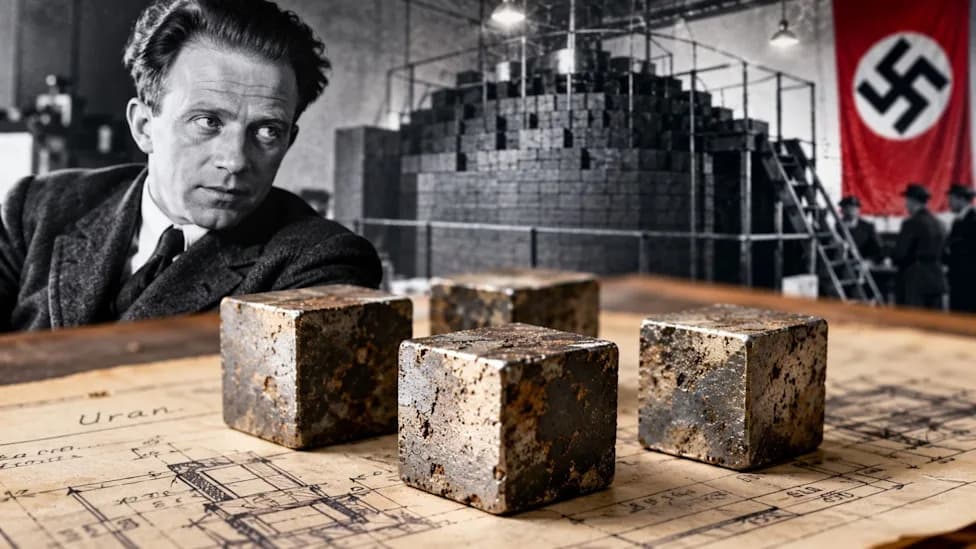
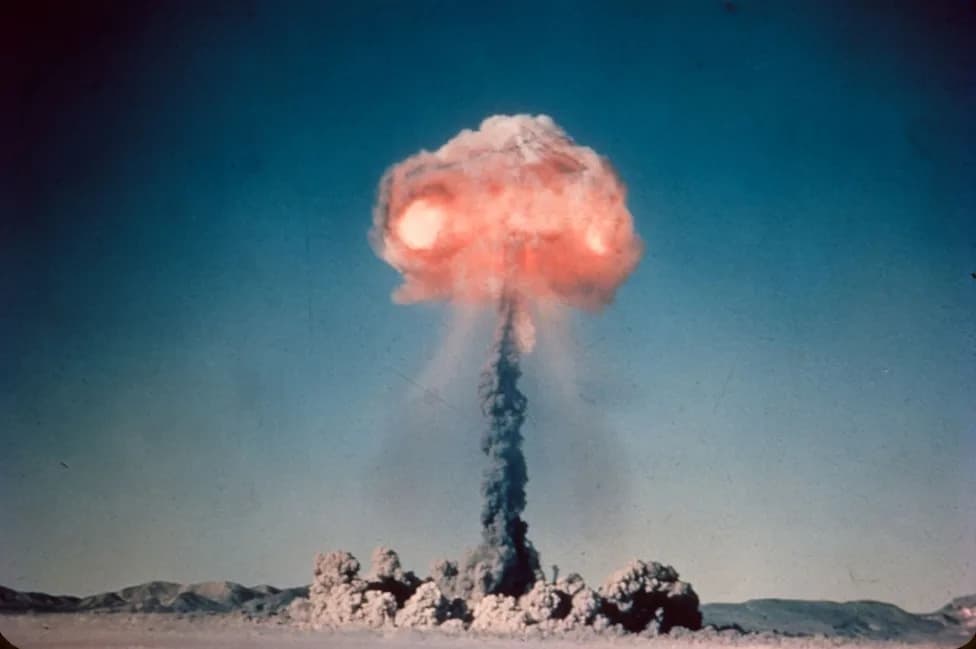
Scientists at Lawrence Livermore National Laboratory recreated miniature nuclear fireballs using a plasma flow reactor to study how uranium, cerium and cesium vaporize and condense as they cool. The team tested two thermal histories—gradual cooling and a prolonged high‑temperature hold followed by rapid cooling—and found uranium and cerium condensed earlier while cesium remained vaporous longer and mixed more. These measured thermal histories provide baseline data to refine fallout models and support better emergency decision‑making.
Scientists Recreate Miniature Nuclear Fireballs to Improve Fallout Models

Nuclear Fireballs Are Helping to Plan for FalloutGwengoat - Getty Images
Understanding how radioactive particles form and behave after an explosion is critical to improving emergency response and protecting public health. Scientists at Lawrence Livermore National Laboratory (LLNL) have recreated controlled, miniature nuclear fireball conditions in the lab to measure how key elements vaporize, react and condense as they cool.
Why this matters: Fallout — not the blast itself — often causes the most widespread harm after a nuclear accident. Historical events such as Chernobyl illustrate the stakes: while two workers died in the initial explosion in 1986, radioactive fallout went on to affect millions. Better measurements of particle formation and chemical speciation can make fallout models more accurate and help planners make life‑saving decisions.
How the experiment worked: The LLNL team used a plasma flow reactor to generate a high‑temperature vapor of selected elements, then tracked how that vapor cooled and condensed downstream. The reactor permits precise mixtures, controlled heating to form a plasma, and continuous sampling at multiple points so researchers can observe particle evolution in real time.
The study focused on three elements: uranium (the common fissile material), cesium (notably cesium‑137, a hazardous fission product), and cerium, which is commonly used in labs as a nonradioactive chemical stand‑in for plutonium because it mimics plutonium’s chemical and physical behavior during vaporization and condensation.
“These particles preserve a record of how they formed. By studying these processes in a controlled system, we can replace assumptions with measurements, improve the models used to interpret nuclear debris, and support decision‑making when it matters most,” said Rakia Dhaoui, lead author of the study.
Two thermal histories: Researchers tested two cooling scenarios. In the first, temperature decreased steadily along the reactor tube. In the second, vapor remained at elevated temperature for longer before undergoing a rapid cooldown. These different thermal paths altered chemical speciation and the timing and nature of particle formation.
Key findings: Under the experiment’s conditions, uranium and cerium—being less volatile—condensed earlier in the cooling sequence. Cesium stayed in vapor form longer and condensed later, giving it more opportunity to mix with other constituents before solidifying. That mixing behavior is critical: fallout models must account not just for when an element condenses but how it interacts with other materials while cooling.
The results, published in Analytical Chemistry, establish baseline measurements for how these analogs condense and interact over time. The authors say future work will add more common environmental materials to better simulate real‑world scenarios and continue improving predictive fallout models.
Implications: These controlled measurements can reduce uncertainty in fallout predictions, help interpret nuclear debris after an incident, and improve recommendations for evacuation, sheltering and remediation — ultimately helping to protect lives and limit contamination.
Help us improve.