President Claudia Sheinbaum applauded Mexico's 2-0 World Cup opening win over South Africa, with Julián Quiñones and Raúl Jiménez scoring while César Montes was sent off late. Protests by teachers over pension reforms and relatives of missing people briefly disrupted roads. City officials enforced a roughly 1.6-kilometre security perimeter around the Estadio Azteca and deployed a large police presence to keep the event running.
Sheinbaum Hails Mexico's 2-0 World Cup Opener Amid Citywide Protests
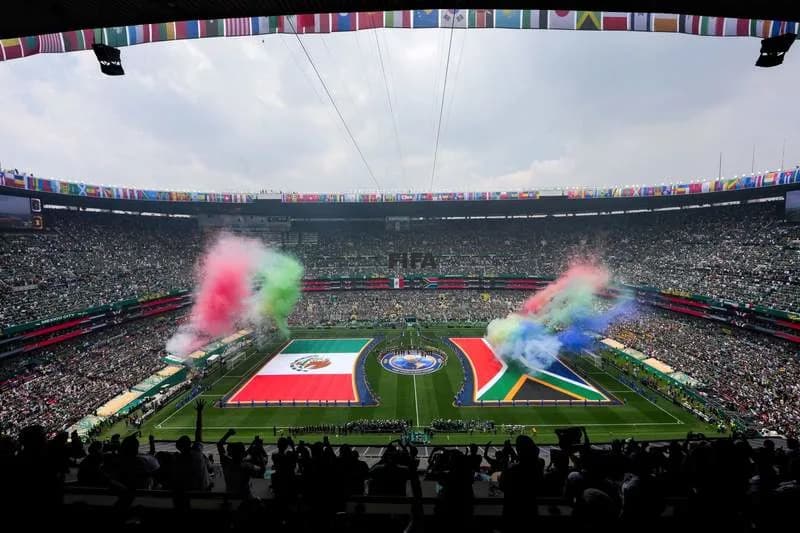
A general view during the opening ceremony of the 2026 FIFA World Cup, ahead of the Group A soccer match between Mexico and South Africa at the Azteca Stadium (Mexico City Stadium). Nick Potts/PA Wire/dpa
Mexican President Claudia Sheinbaum praised Mexico's 2-0 victory over South Africa in Thursday's World Cup opener in Mexico City, saying the match showcased the country's pride and hospitality despite several pre-match demonstrations.
Co-hosts Mexico got off to a perfect start as Julián Quiñones and Raúl Jiménez found the net to secure a 2-0 win against a South African side that finished the match with nine players. The only blemish for the hosts came late when defender César Montes received a red card for a last-man tackle.
"It's with great pride that I congratulate our Mexican national team for bringing us this historic joy and for showing the world the greatness of Mexico both on and off the field," Sheinbaum said after watching the match at a fan festival. "Long live our fan base, long live our city, and long live Mexico."
Despite the celebrations, several groups used the occasion to stage demonstrations across the capital. Teachers marched to protest ongoing disputes over pension reforms, while relatives of missing people blocked roads to demand faster investigations and justice for their disappeared family members.
Sheinbaum defended the city's response: "Mexico City is a city of rights and freedoms, because not only were the groups that wanted to demonstrate able to do so, but the general public also had the right to participate in the football festivities or go to the stadium."
Authorities established a strict security perimeter of roughly 1.6 kilometres around the Estadio Azteca, closing access roads and deploying a substantial police presence to keep both demonstrations and matchday crowds under control. The event highlighted Mexico's role as co-host and its capacity to stage major sporting events amid complex civic dynamics.
Help us improve.