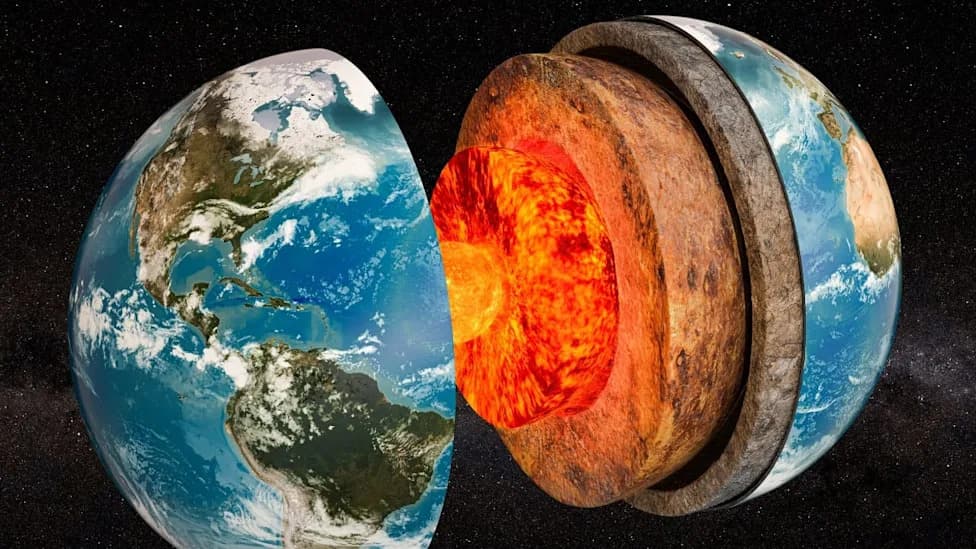
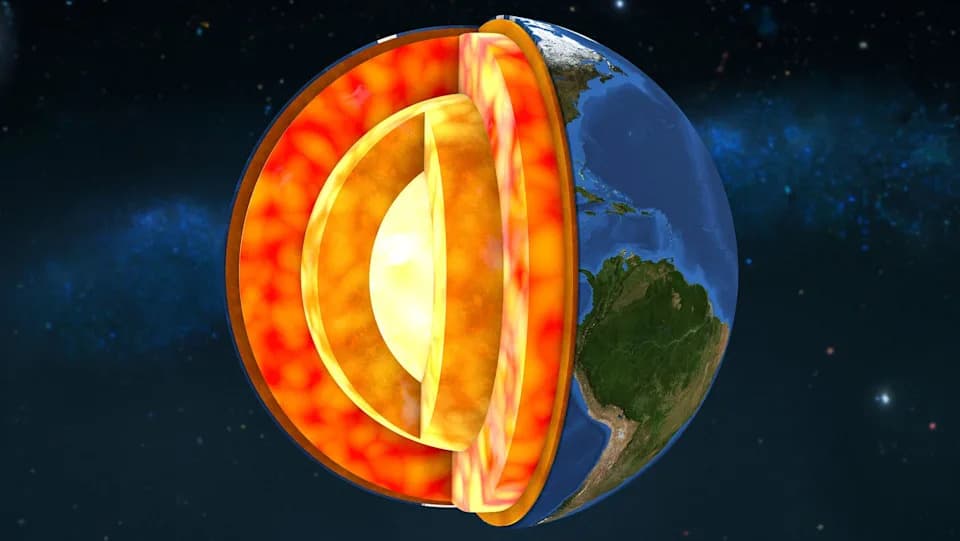
A high-resolution seismic study of Earth’s Southern Hemisphere detected thin, dense ultralow velocity zones (ULVZs) at the core–mantle boundary about 2,900 km beneath the surface. Using 15 Antarctic seismic stations over three years, researchers propose these layers are buried fragments of ancient oceanic crust transported by mantle convection. The zones range from a few kilometers to several tens of kilometers thick and may form prominent topography at the boundary; alternative explanations remain under consideration.
Ancient Ocean Floor May Cloak Earth’s Core, High-Resolution Seismic Map Suggests
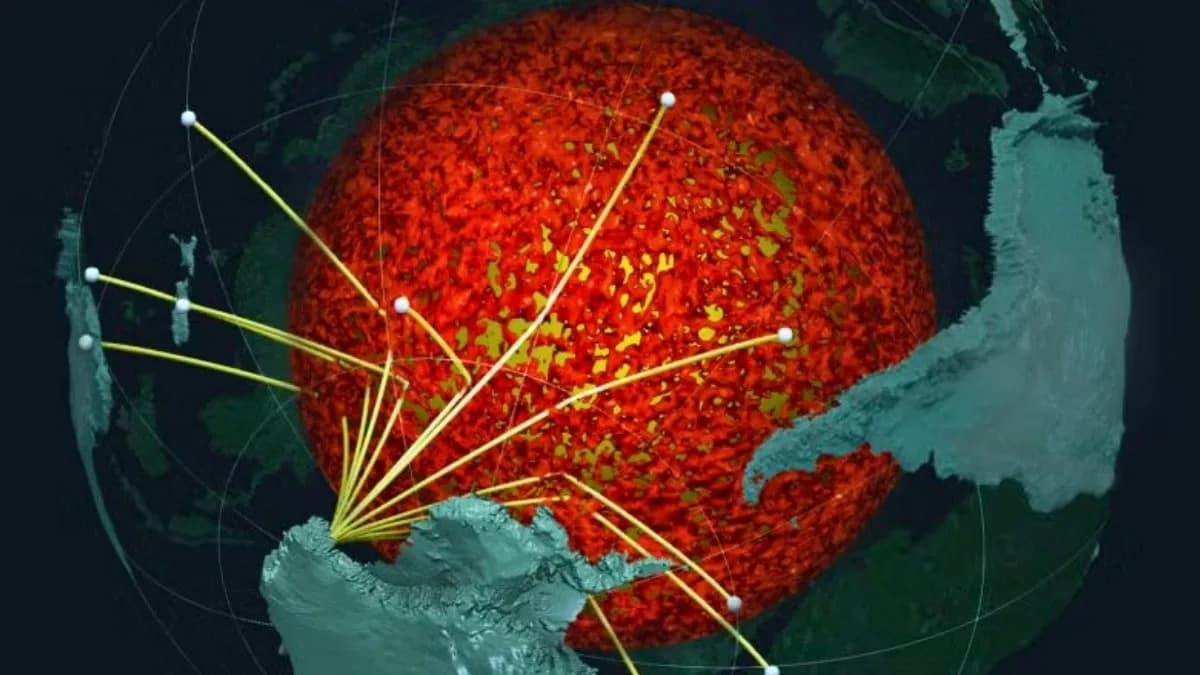
A representation of the underground imaging used in the study. (Edward Garnero and Mingming Li/Arizona State University)
A new, highest-resolution seismic map of Earth’s Southern Hemisphere reveals an unexpected and potentially planet-wide feature: thin, dense slices of material at the core–mantle boundary that researchers propose are ancient oceanic crust.
The anomalous layer lies near the core–mantle boundary at roughly 2,900 kilometers (1,800 miles) beneath the surface, where Earth’s molten metallic outer core meets the rocky mantle above it. The findings were published in Science Advances in 2023.
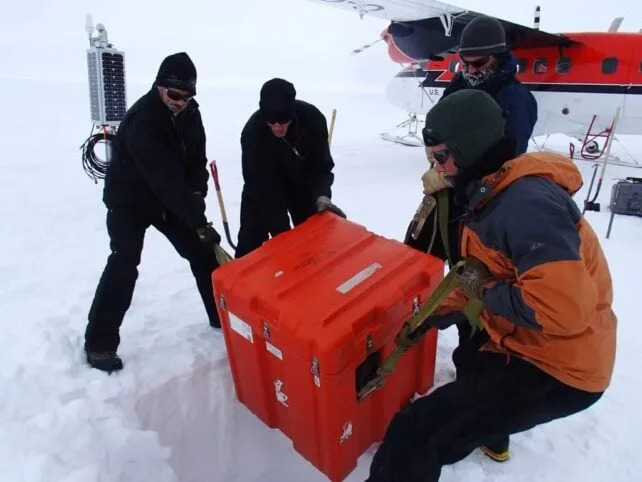
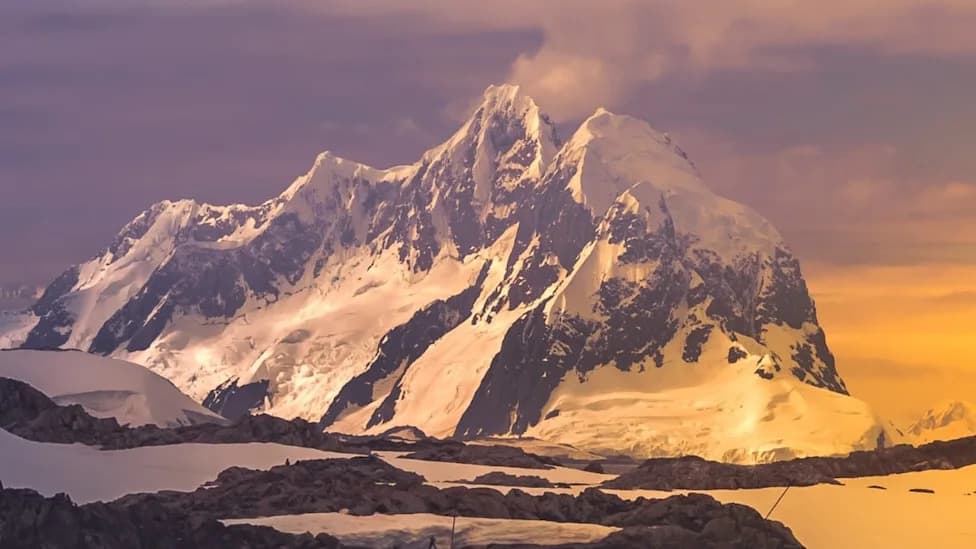
Researchers lower seismic equipment into place at one of the stations as part of research into the Transantarctic Mountains. (Lindsey Kenyon)
“Seismic investigations, such as ours, provide the highest-resolution imaging of the interior structure of our planet,”
— Samantha Hansen, University of Alabama
Hansen and colleagues installed 15 seismic monitoring stations buried in Antarctic ice and recorded seismic waves from earthquakes over a three-year period. The travel times and scattering behavior of those waves were used to produce detailed images of the deep interior.
Regions where seismic waves slow dramatically are known as ultralow velocity zones (ULVZs). Using a high-definition imaging technique and analysis of thousands of Antarctic seismic recordings, the team identified thin anomalous zones at the core–mantle boundary across every profile they probed.
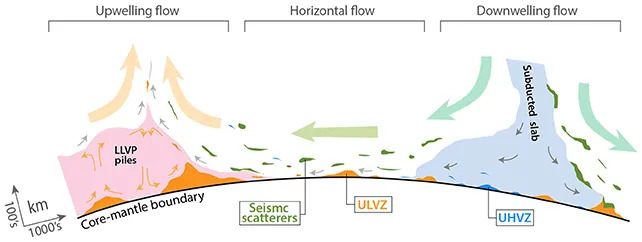
Rock movements in the mantle. (Hansen et al.,Science Advances, 2023)
“Our imaging found thin anomalous zones of material at the core–mantle boundary everywhere we probed,”
— Edward Garnero, Arizona State University
The putative ULVZs vary in thickness from a few kilometers to several tens of kilometers. In places, the topography of the boundary appears to form features the researchers liken to mountains up to about five times the height of Mount Everest.
The leading interpretation is that these ULVZs are fragments of ancient oceanic crust that sank long ago and were transported by mantle convection to accumulate at the base of the mantle. Notably, the locations of these layers do not correspond to present-day surface subduction zones, implying long-term lateral transport within the mantle.
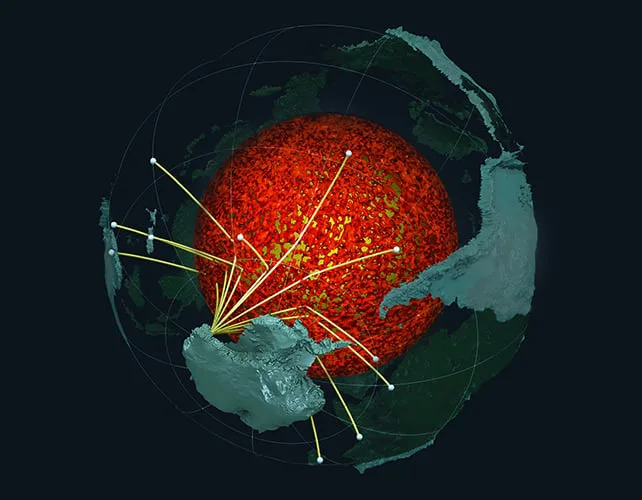
Seismic waves from earthquakes in the southern hemisphere were used to sample the ULVZ structure along the Earth's core-mantle boundary. (Edward Garnero and Mingming Li/Arizona State University)
The authors caution that inferring precise rock types and histories from seismic data alone is challenging, so alternative explanations are not yet ruled out. Still, the oceanic-crust hypothesis currently offers the best match to the observed seismic signals and modeling.
One important implication of the discovery is improved constraints on how heat flows from the hot, dense core into the overlying mantle. Strong compositional contrasts at the core–mantle boundary influence thermal transport, mantle dynamics, and ultimately processes such as volcanic activity and the geodynamo that sustains Earth’s magnetic field.

Subscribe to ScienceAlert's free fact-checked newsletter
Future seismic surveys and modeling should refine the geometry and continuity of these layers; it remains uncertain whether the material forms a discontinuous patchwork or a more continuous, thin wrapper around the core.
Publication: Science Advances (2023).
Help us improve.