Mongolia has repatriated a Tarbosaurus bataar skeleton (more than 50% intact) and 28 groups of fossilised remains that were illegally exported in 2006. French customs seized the specimens between 2013 and 2015 and began returning them under international heritage conventions. The fossils have arrived in Ulaanbaatar and will be conserved, studied and eventually displayed at the National Museum of Natural History. Officials hailed the recovery as a major success against the illicit fossil trade.
Smuggled Tarbosaurus and Gobi Fossils Returned to Mongolia After Two Decades
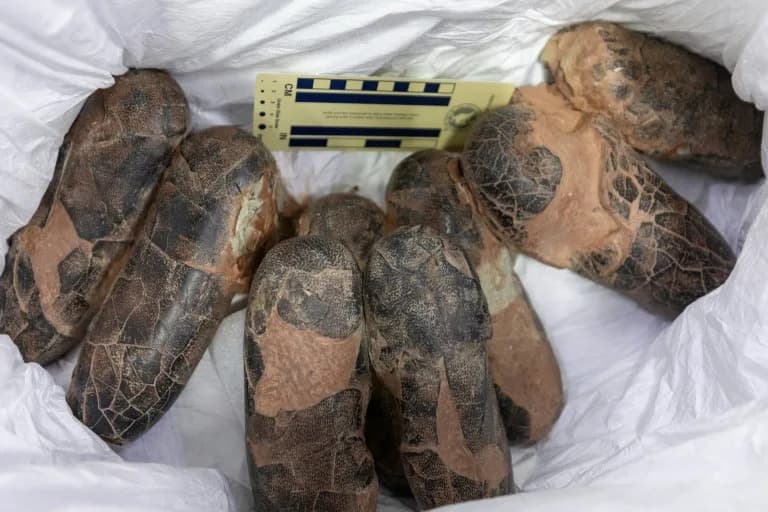
Demand from private collectors and auction houses has fuelled an international black market in rare palaeontological specimens (BYAMBASUREN BYAMBA-OCHIR)(BYAMBASUREN BYAMBA-OCHIR/AFP/AFP)
Mongolian authorities announced on Wednesday that a rare Tarbosaurus bataar skeleton and an extensive collection of fossils illegally exported about two decades ago have been repatriated, concluding a long international effort to recover the country’s palaeontological heritage.
Police say the shipment includes a Tarbosaurus bataar skeleton estimated to be more than 50% intact, together with 28 sets of fossilised dinosaur remains originally discovered in Mongolia’s Gobi Desert. According to D. Munkhkhuyag, head of the police public relations department, the bones were removed from Mongolia in 2006 "with the aim of making a profit."
French customs authorities seized the material in stages between 2013 and 2015. Beginning a year after those seizures, French agencies started the process of returning the fossils to Mongolia under international conventions aimed at combating illicit trafficking in cultural property and scientific specimens.
After a lengthy repatriation process, the fossils arrived in the capital, Ulaanbaatar, and will be housed at Mongolia’s new National Museum of Natural History. Specialists will study the finds and, once conservation and research are complete, the specimens will go on public display.
"The dinosaur fossil is priceless and a unique piece of heritage," said Manchuk Nuramkhan, director of the museum. "We are delighted that children and young people will have the opportunity to see Mongolia's dinosaur heritage firsthand and learn from it."
Why This Matters
Tarbosaurus bataar — a close relative of Tyrannosaurus rex — roamed what is now Mongolia roughly 70 million years ago, and most confirmed specimens have been found in the Gobi Desert. The return of these fossils is both a scientific gain for Mongolia and a symbolic victory in the global fight against the illicit trade in antiquities and fossil material.
Mongolia has intensified efforts in recent years to locate and repatriate dinosaur fossils smuggled abroad after demand from private collectors and auction houses helped fuel an international black market in rare palaeontological specimens.
Next steps: conservation, cataloguing and scientific study at the National Museum of Natural History, followed by public exhibitions to allow researchers and visitors to benefit from the repatriated material.
Help us improve.