Researchers have identified a continuous 745‑mile belt of whale falls on the Indian Ocean seafloor, ranging from about 13,779 to 22,965 feet deep. The team recorded 485 fossil sites tied to five active whale falls and found remains up to 5.3 million years old, including a newly described extinct species, Pterocetus diamantinae. These deposits host rich, potentially new deep‑sea communities and provide a rare, continuous fossil record to study the evolution and ecology of deep‑diving beaked whales.
745‑Mile Whale Graveyard Found Deep in the Indian Ocean — A Unique Window into Ancient Deep‑Sea Life
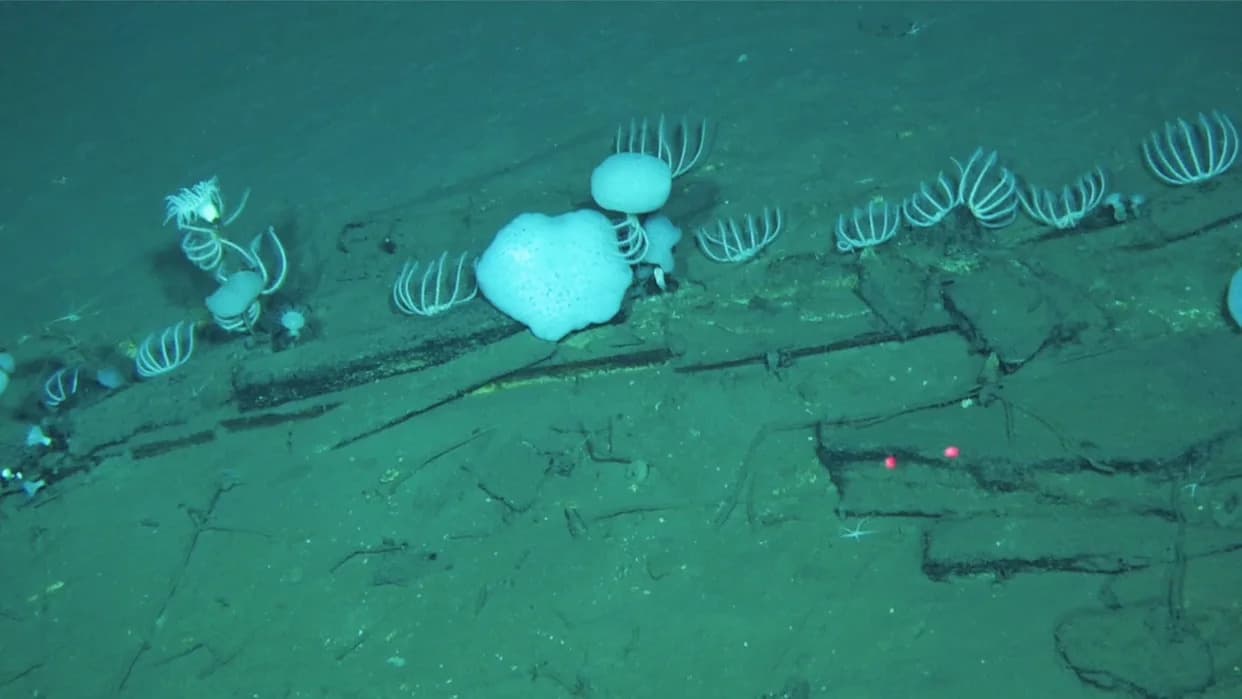
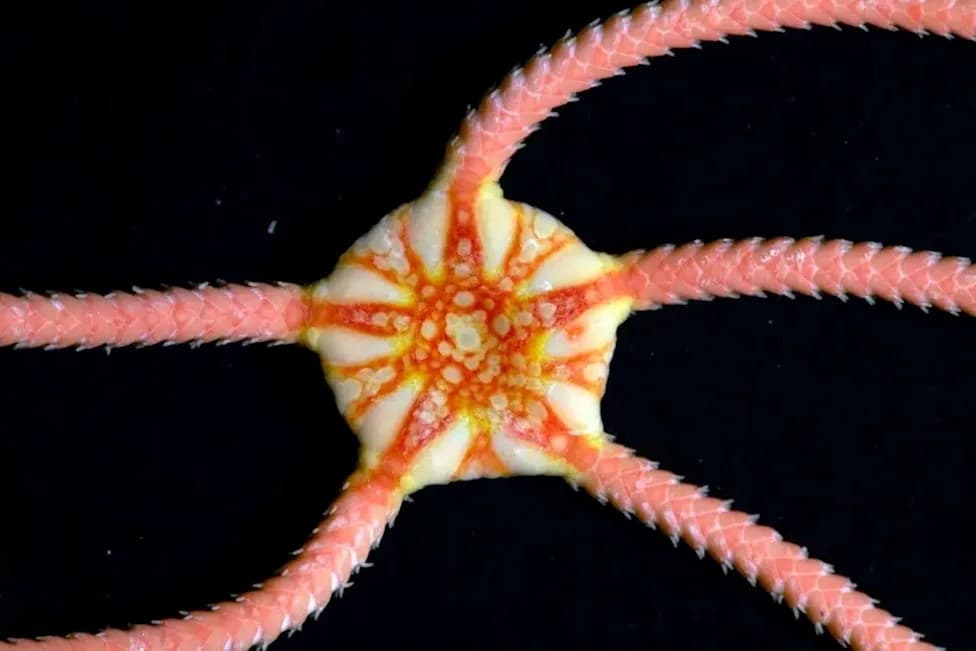
Fragmentary whale skeletal remains are abundant on the deep seafloor of the Diamantina Zone, reflecting long-term exposure and slow carcass degradation. These bones are typically colonised by hard-substrate animals, including stalked sea anemones, sponges, and sea stars. Photographs taken from the Chinese submersible ‘Fendouzhe.’
Scientists have mapped an extraordinary, continuous belt of whale remains on the Indian Ocean seafloor — a 745‑mile (about 1,200 km) “whale graveyard” that spans depths from roughly 13,779 to 22,965 feet (4,200–7,000 m). Far from a hazard, these whale falls act as localized oases that sustain rich communities of marine life and preserve a long fossil record of deep‑diving whales and their associated ecosystems.
Discovery and Scope
During a 2023 expedition, a team from the Chinese Academy of Sciences (CAS) exploring the southeast Indian Ocean's hadal margins encountered the first fossil while operating a submersible at about 22,972 feet (7,000 m). Once the search was expanded, researchers documented 485 fossil sites associated with five active whale falls, distributed continuously for roughly 745 miles across the seafloor.
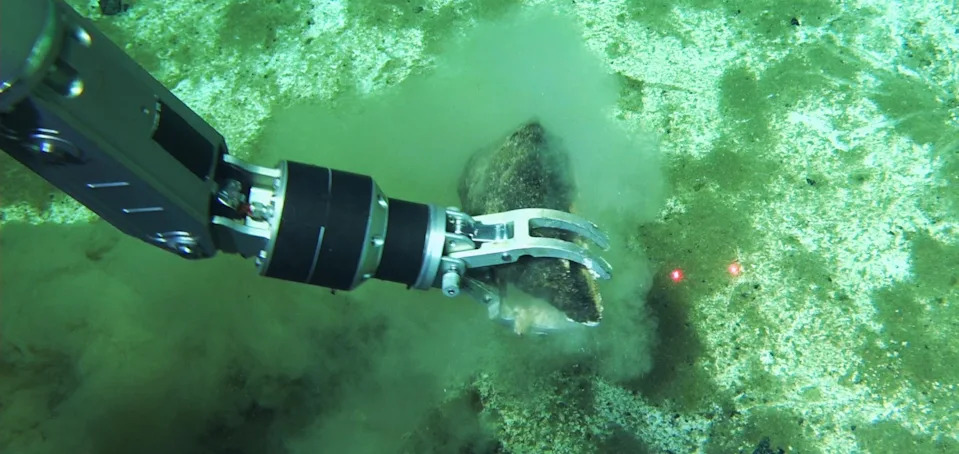
Recovery of whale fossil bones using the manipulator arm of the Chinese submersibleFendouzheon the deep seafloor of the Diamantina Zone, a deep-sea rift in the Indian Ocean.Image: Global TREnD, IDSSE.
What the Bones Reveal
The remains include bones from several species of deep‑diving beaked whales. Some belong to species that still swim our oceans today, while others are from extinct forms — including a newly identified species named Pterocetus diamantinae. Radiometric and stratigraphic evidence indicate some deposits date back to the Pliocene, about 5.3 million years ago, giving scientists an unusually continuous record to study population dynamics and evolution over geologic time.
“The deep sea is far from barren — it’s dynamic, full of life and history,” said Dr. Xiaotong Peng (Chinese Academy of Sciences). “When a whale dies and sinks, it becomes an oasis supporting unique communities for decades or centuries.”
Living Communities and Potential New Species
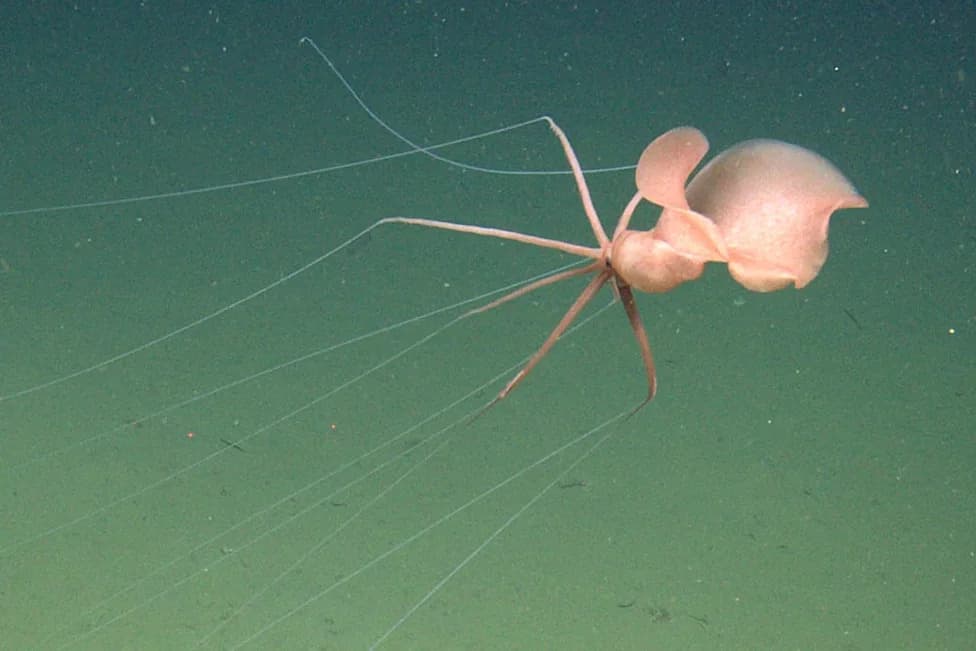
Active whale falls in this belt host abundant life: jellyfish, brittle stars, bone‑boring worms, bivalves and other scavengers and specialists that depend on whale carcasses. Some of the organisms observed appear to be previously undescribed, although formal taxonomic work is still underway.
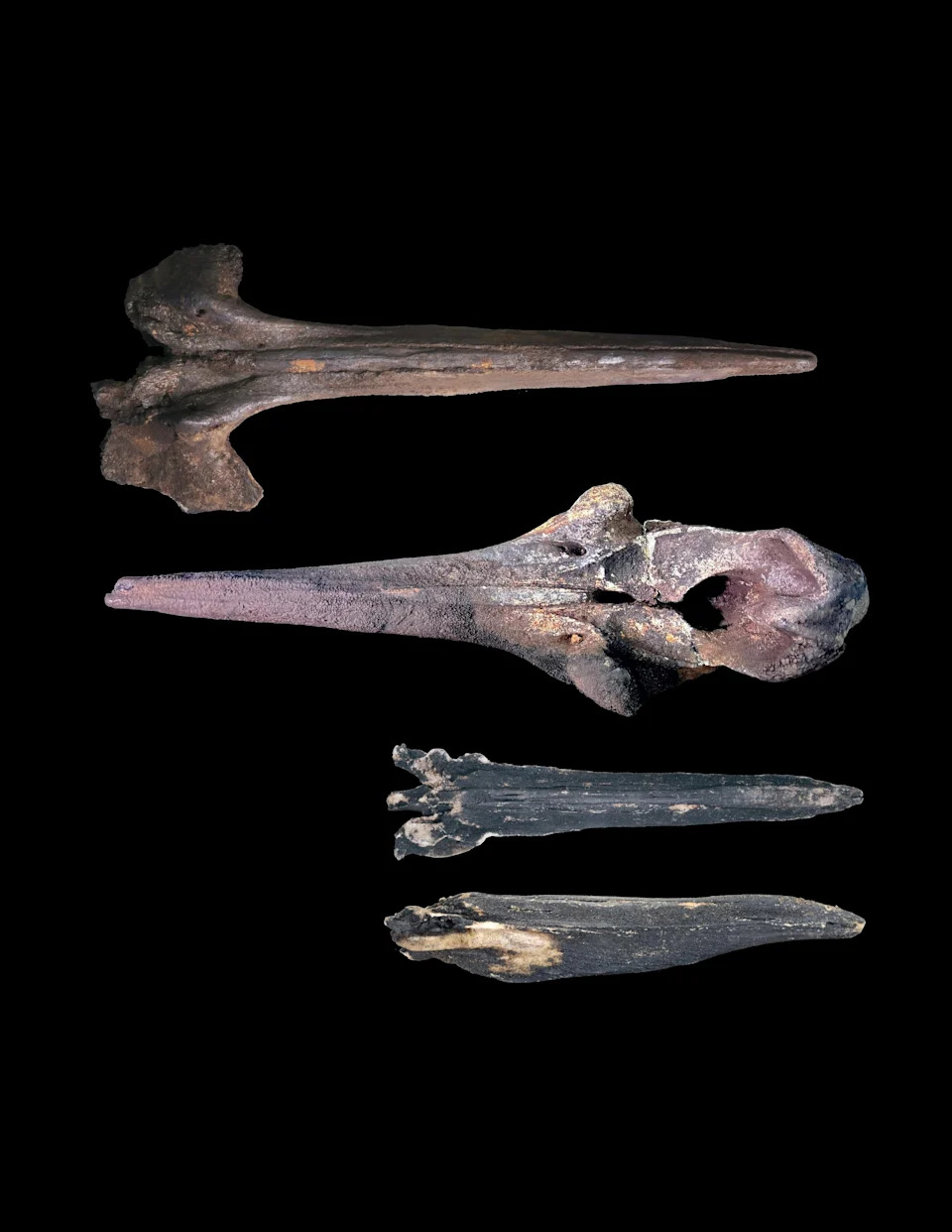
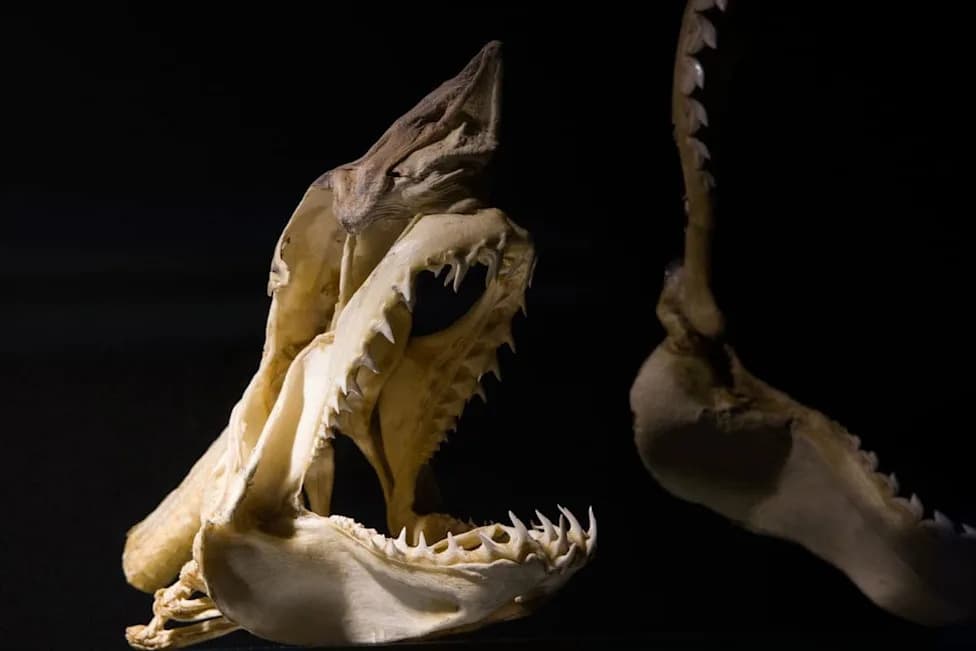
Fossil skulls of three beaked whales recovered from the seafloor at hadal depth of the Diamantina Zone, 6,584–-6,878 meters. The image shows two extinct beaked whale species,Pterocetus diamantinae sp. nov. (new species to science, on the top) andIzikoziphius rossi(the second skull), as well as an extant Andrews’ beaked whale,Mesoplodon bowdoini(two skulls on the bottom).Image: Global TREnD, IDSSE
Scientific Importance
This remarkably continuous fossil record provides a rare opportunity to trace how deep‑diving beaked whales evolved and responded to environmental change across millions of years. Because modern beaked whales are elusive — living at great depths, in low densities and often avoiding ships — this deposit offers crucial context for both their past diversity and present ecology.
Future Directions
The discovery highlights the value of combining curiosity, international collaboration and deep‑sea technology. Continued study of the site should refine the timeline of whale diversity, reveal new species (both vertebrate and invertebrate), and improve understanding of deep‑sea ecosystems that remain largely unexplored.
Study Source: Findings published in the journal Nature; research led by the Chinese Academy of Sciences and collaborators.
Help us improve.