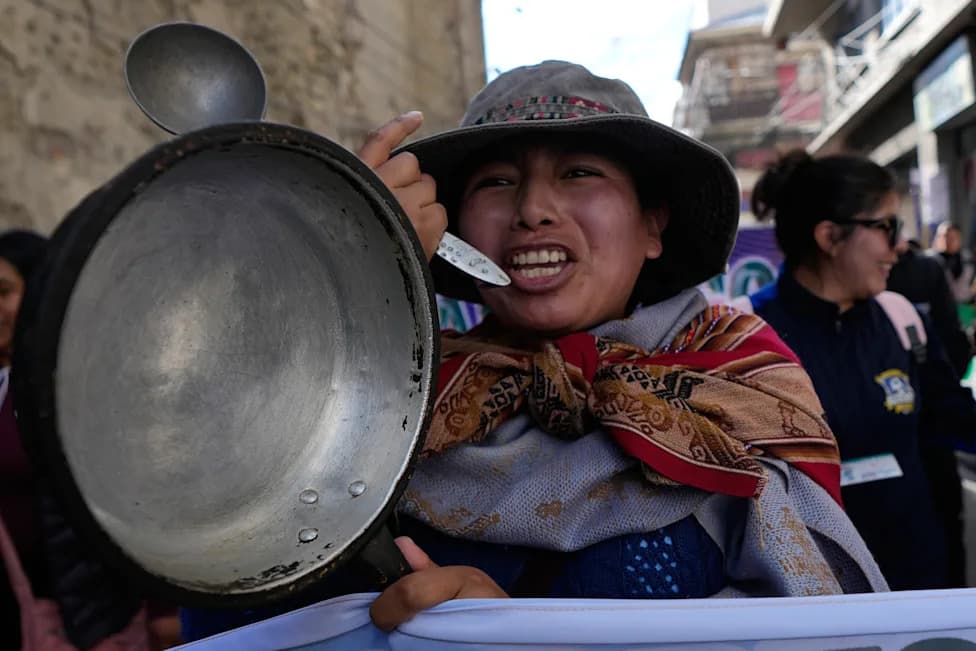
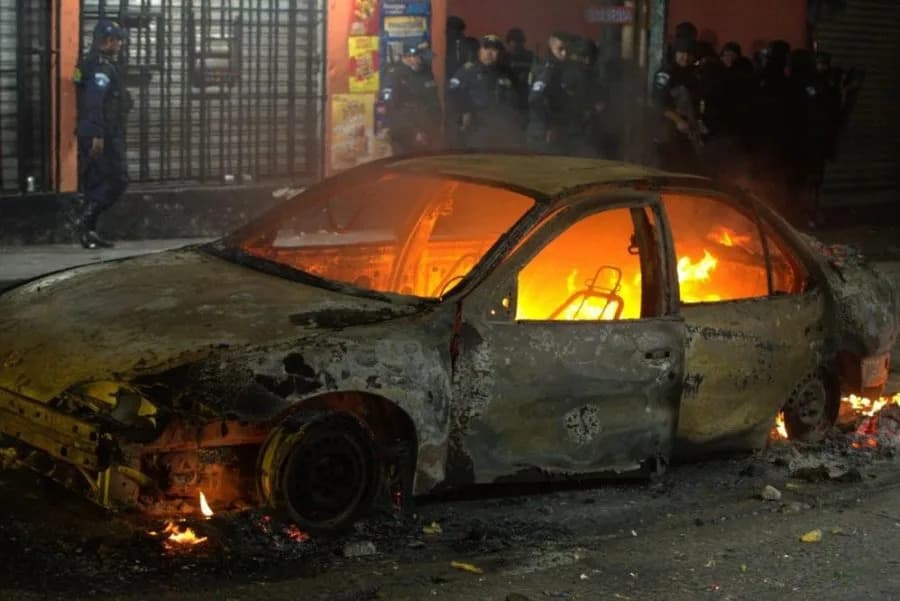
Bolivia faces escalating unrest as farmers and coca growers in the Cochabamba Tropics threaten to occupy military and police facilities to protest a new law on states of emergency. The move occurs during the sixth week of road blockades and clashes calling for President Rodrigo Paz's resignation. Organizers say the law criminalizes protest; authorities insist it is needed to restore order while upholding rights. Blockades have caused shortages, at least 10 deaths tied to restricted medical access, and spurred international aid deliveries.
Bolivian Protesters Threaten to Seize Military and Police Sites in Cochabamba Amid Sixth Week of Clashes
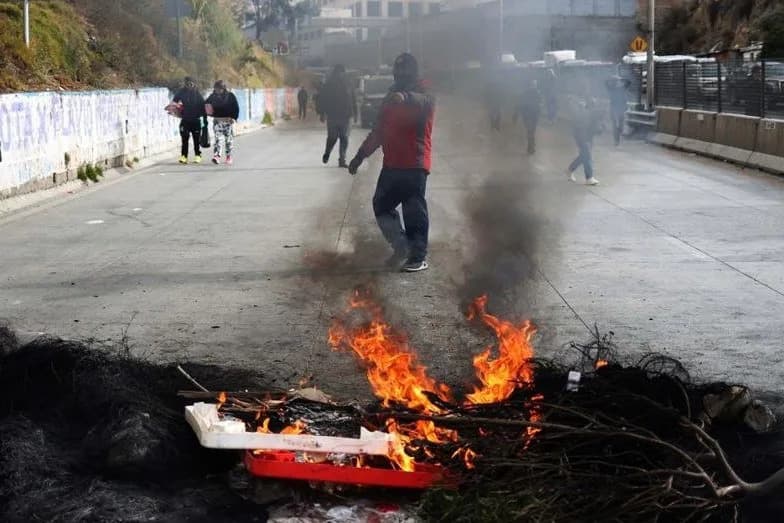
Residents stage a blockade during a protest over fuel shortages in La Paz, Bolivia, on Tuesday to demand the resignation of President Rodrigo Paz. Demonstrators have disrupted transportation and caused shortages of fuel, food and medical supplies since early May. Photo by Luis Gandarillas/EPA
Bolivian farmers and coca growers' organizations have warned they may occupy military and police installations in the Cochabamba Tropics to protest a newly approved law regulating states of emergency. The announcement comes during the sixth week of large-scale road blockades and confrontations by groups calling for the resignation of President Rodrigo Paz.
Threats and Local Organizing
Leaders of the Chimoré Intercultural Federation said the federation's 15 local chapters have declared a state of emergency and will hold vigils around military bases and other security facilities across the region. Mario Rivera, the federation's secretary for external relations, told La Razón that the law threatens social movements and that grassroots organizations are prepared to respond if authorities try to enforce it in the area.
"The law represents a threat to social movements," Rivera said, adding that protest organizers would not be responsible for the safety of police or military personnel should authorities use force to break up demonstrations or dismantle roadblocks.
Violence, Roadblocks and Police Response
Police on the highway between Cochabamba and La Paz reported attacks that included dynamite explosions and deliberate landslides intended to stop the progress of security forces. Local paper El Potosí said officers used tear gas after demonstrators refused to clear the roadway.
Who Is Leading the Blockades
The roadblocks are being driven primarily by the Central Obrera Boliviana (COB) labor federation, allied trade unions, Indigenous communities and farming organizations aligned with former President Evo Morales.
Humanitarian Impact
Blockades have disrupted supplies in multiple cities and contributed in some areas to a humanitarian crisis, with limited access to food and medicine. Bolivia's Ombudsman's Office has linked at least 10 deaths to the unrest, noting that most fatalities involved patients who could not reach medical care because roads were blocked.
Legal and Government Position
The new Law on the Regulation of States of Emergency lays out procedures, scope and limits for declaring states of emergency under Bolivia's Constitution. Although the law has not yet been applied, the government says it provides a necessary legal framework to restore public order and freedom of movement while respecting human rights.
International Assistance
In response to the growing crisis, Bolivia has received 39 tons of humanitarian aid delivered in stages by Brazil, Chile, Paraguay and Peru.
Note: All details reflect local media reports and statements from involved groups and officials.
Help us improve.