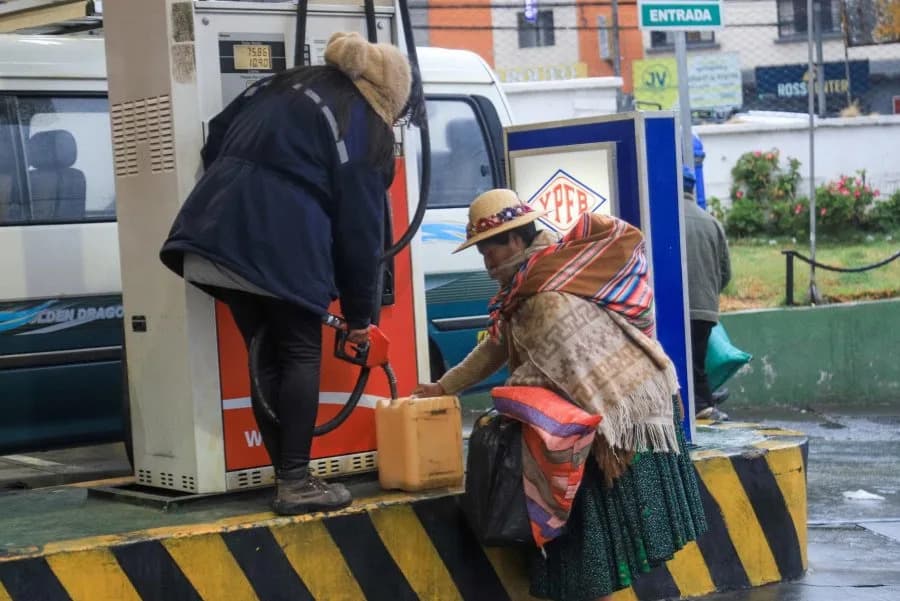
Bolivia's Congress ratified a three-year $1.9 billion IMF program intended to rebuild foreign-exchange reserves and stabilize an inflation-hit economy. The deal still requires IMF Executive Board approval before funds can be disbursed. The government says the package could unlock about $5 billion more in financing, but unions oppose austerity measures — especially plans to phase out fuel subsidies — and have warned of renewed road blockades. Congress has extended a 90-day state of emergency amid those tensions.
Bolivia Ratifies $1.9 Billion IMF Deal — Fuel Subsidy Cuts Raise Prospect Of New Protests
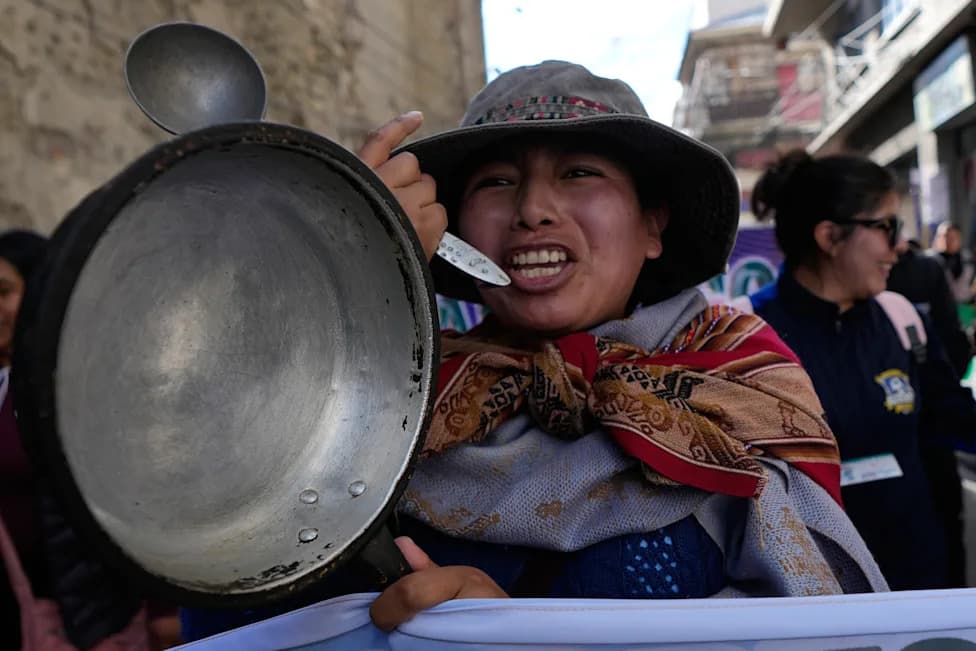
A teacher holds an empty pot during an anti-government protest in La Paz, Bolivia, Tuesday, Sept. 15, 2026. (AP Photo/Juan Karita)(AP Photo/Juan Karita)
Bolivia's Congress on Friday ratified a $1.9 billion loan arrangement with the International Monetary Fund, giving the conservative government a major policy win even as unions warned the package could trigger renewed unrest.
The Senate approved the three-year financing program a day after the lower chamber, clearing the final domestic hurdle. The program is designed to rebuild shrinking foreign-exchange reserves and stabilize an economy grappling with high inflation and weak growth. The IMF's Executive Board must still sign off before any funds are disbursed.
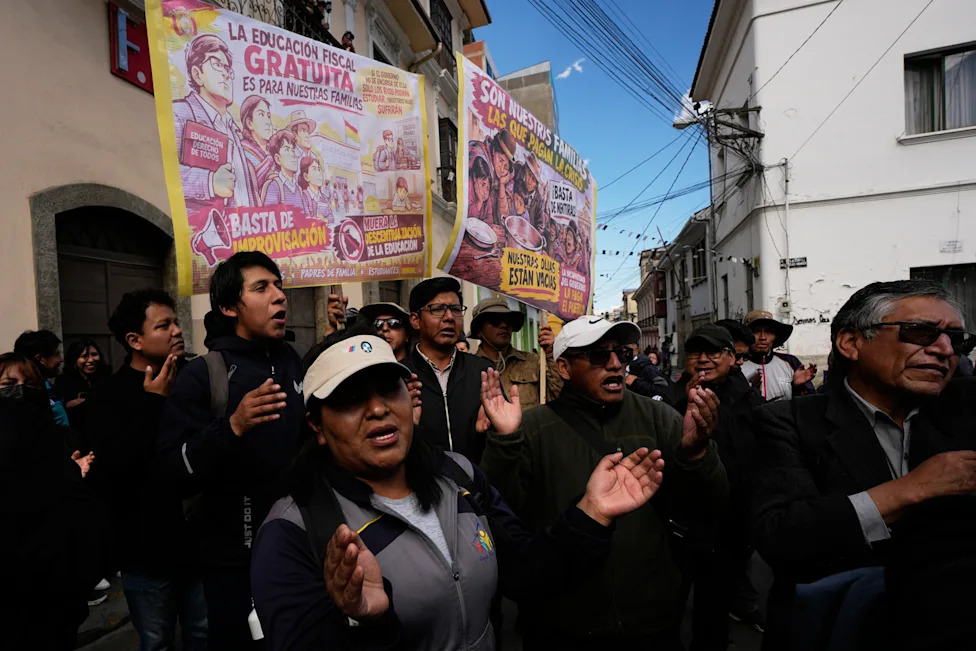
Teachers shout slogans during an anti-government protest in La Paz, Bolivia, Tuesday, Sept. 15, 2026. (AP Photo/Juan Karita)(AP Photo/Juan Karita)
Government says deal will unlock further financing. President Rodrigo Paz called the vote a "historic step" and a "resounding signal of political maturity, unity and economic certainty." Economy Minister Christian Morales told senators the agreement should bolster confidence among other lenders — including the World Bank and the Inter-American Development Bank — and could help the government secure roughly $5 billion in additional financing.
Unions warn of renewed protests. The Bolivian Workers' Central and other labor groups strongly oppose the loan, arguing that the austerity measures required — notably plans to phase out long-standing fuel subsidies by January — will raise living costs and deepen hardship for struggling families. Weeks of road blockades in June and July previously paralyzed large parts of the country; in response, Congress extended a state of emergency for another 90 days, a measure that allows limited military intervention and temporary suspension of certain civil liberties to clear roads.
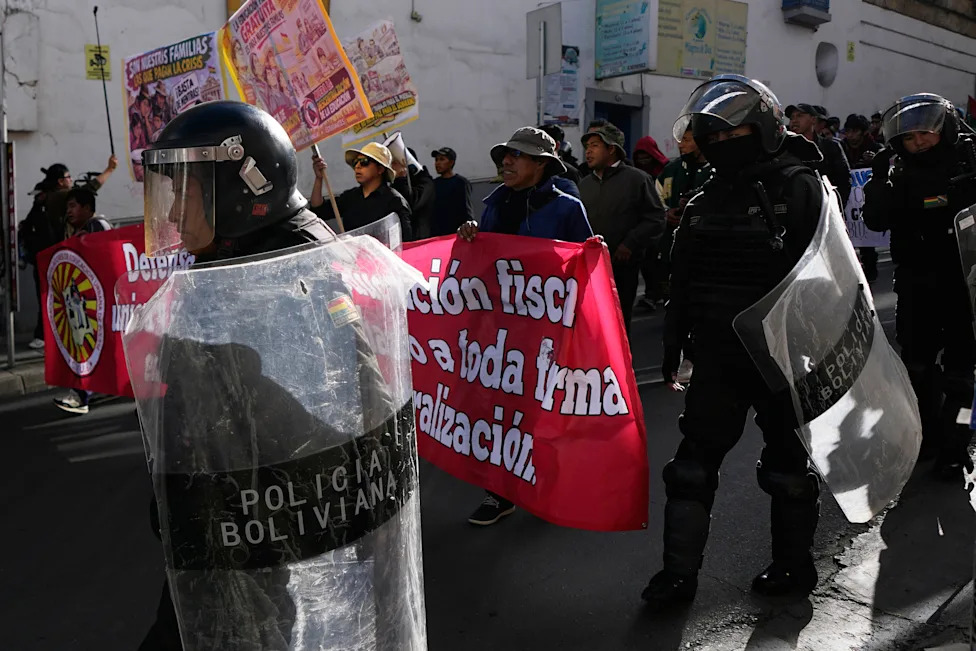
Police escort teachers during an anti-government protest in La Paz, Bolivia, Tuesday, Sept. 15, 2026. (AP Photo/Juan Karita)(AP Photo/Juan Karita)
Economic backdrop and fuel shortages. Declining natural gas exports have reduced the dollars available to import gasoline and diesel, contributing to chronic fuel shortages since 2023. Selling imported fuel at subsidized prices has further strained public finances; the government says it intends to redirect savings from subsidy cuts into oil and gas exploration and production to boost domestic revenue.
Political landscape. Although President Paz's Christian Democratic Party does not hold a congressional majority, centrist and right-leaning lawmakers who dominate both chambers rallied behind the package. The Movement Toward Socialism, the party that led Bolivia for nearly two decades under Evo Morales, now holds only two of 130 seats in the lower house and none in the 36-seat Senate.
"We are finalizing crucial agreements for Bolivia," Paz said, warning that difficult decisions lie ahead as rising international fuel costs linked to regional conflicts push prices higher. "International prices are forcing us to make complex choices."
Help us improve.