Guatemala’s president, Bernardo Arévalo, accused local politicians of coordinating with drug traffickers, gangs and organized crime to finance and inflame last week’s fuel-price protests. The demonstrations, driven in part by a global energy shock, triggered roadblocks and violent clashes that left officers injured and a police motorcycle burned. Congress imposed temporary retail fuel price caps, while authorities say they cleared 34 blockade points and are investigating alleged criminal involvement.
Guatemala President Alleges Politicians, Crime Networks Fueled Violent Fuel-Price Protests
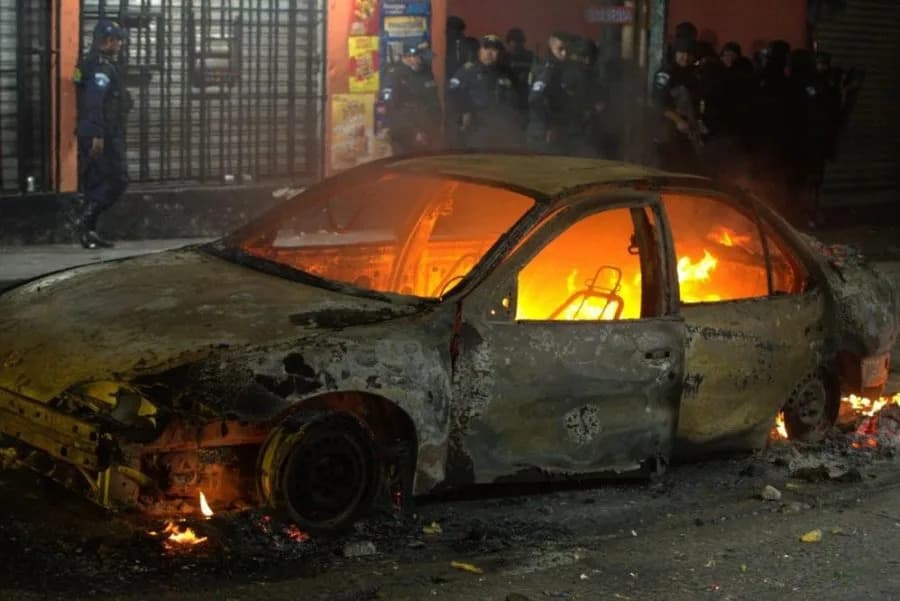
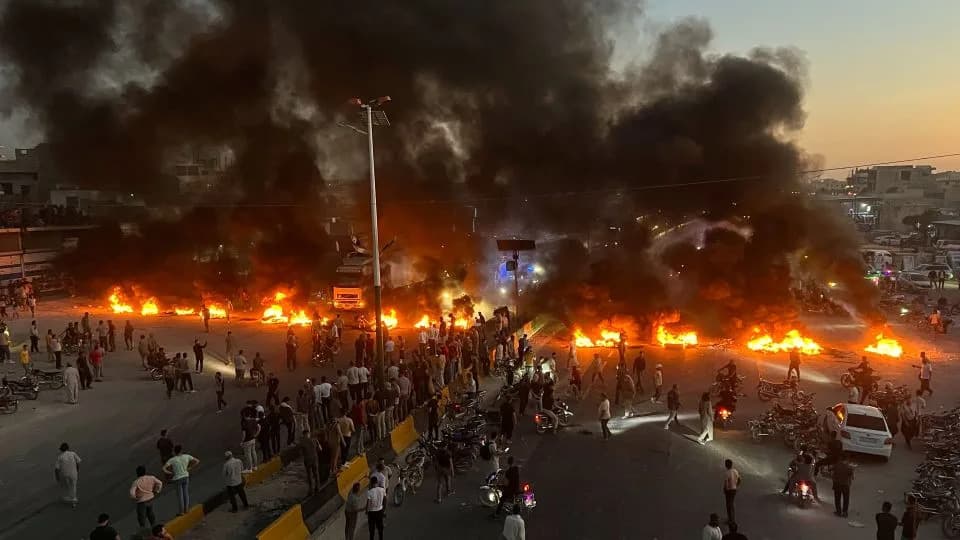
A vehicle burns during protests against the rise in fuel prices in Guatemala City, Guatemala, on Friday. Photo by Alex Crus/EPA
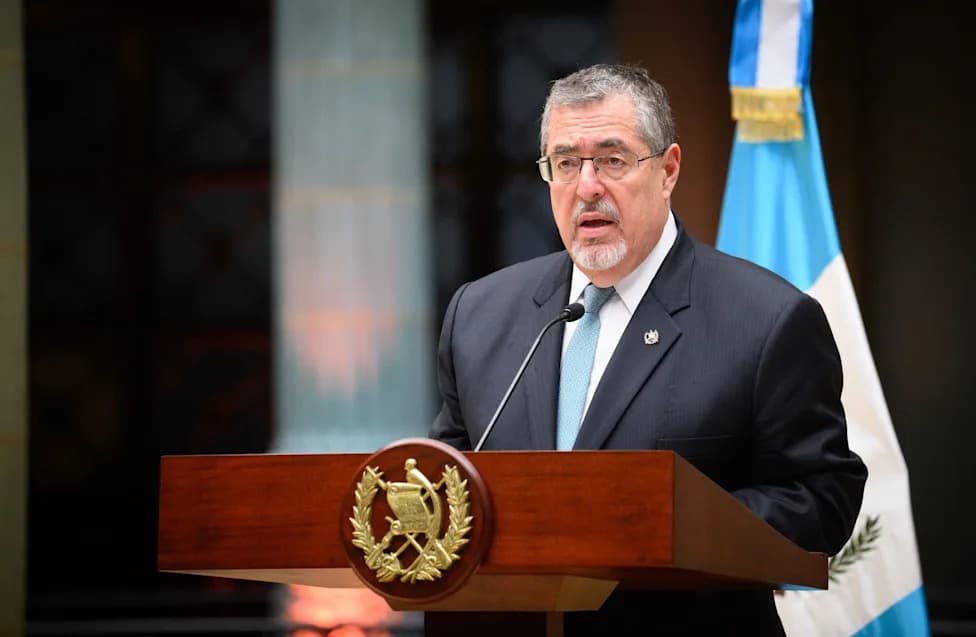
Guatemalan President Bernardo Arévalo on Sunday accused certain local politicians of colluding with drug traffickers, gangs and organized crime to finance and provoke last week’s fuel-price protests, saying criminal networks tried to exploit public anger to destabilize his government.
Arévalo made the claims in a televised address after days of roadblocks over rising gasoline and diesel prices disrupted highways nationwide and produced violent clashes with security forces.
The president attributed much of the price surge to an international energy shock tied to the conflict in the Middle East, saying oil costs had climbed to levels not seen in decades. According to Guatemala’s Energy and Mines Ministry, diesel averaged about $6.05 per gallon at self-service stations in the Guatemala City metro area on Sept. 7, up from $5.83 a week earlier. Regular gasoline rose to $5.34 per gallon from $5.04, while premium increased to $5.62 from $5.30.
In response, Congress approved maximum consumer price caps of roughly $5.09 per gallon for diesel and regular gasoline and $5.35 for premium gasoline.
Arévalo said political and criminal actors then seized on legitimate public frustration to organize roadblocks and instigate violence. He alleged that in Río Hondo local politicians had colluded with drug-trafficking groups to pay people to join blockades, and that in Cuyotenango and Villa Nueva political operatives, gangs and organized-crime groups coordinated protests.
Cuyotenango, located on a major southwestern highway, and Villa Nueva, just south of Guatemala City on the main route to the Pacific coast, both saw sharp clashes as security forces moved on Friday to clear blockades. Authorities say two police officers were shot while clearing the Cuyotenango blockade. In Villa Nueva, demonstrators hurled objects and burned a police motorcycle before officers used tear gas to disperse crowds.
The Interior Ministry and National Civil Police also alleged that gangs and organized-crime groups used women, children and older adults as "human shields" at confrontation points in Villa Nueva and Zacapa. Police said they requested the intervention of child-protection and human-rights authorities after these reports.
"I find it difficult to offer an opinion without concrete evidence because that would be speculation," Interior Minister Marco Antonio Villeda told local media, adding that authorities are investigating possible links between politicians, public officials and criminal groups and would turn any evidence over to prosecutors.
Villeda said security forces ultimately cleared 34 blockade points nationwide. Arévalo did not identify the politicians or criminal groups he named in his speech, nor did he present publicly available evidence to substantiate the links, a detail Villeda noted as he called for evidence-based action.
Arévalo warned: "The spurious electoral interests of some and the criminal interests of others converge in these cases in an attempt to destabilize the country."
The allegations raise tensions amid an already volatile moment over higher fuel costs; investigations by authorities are ongoing.
Help us improve.