Researchers reclassified a long-misidentified fossil as Praearcturus gigas, a scorpion-like predator about 3.3 feet long that lived around 415 million years ago during the Early Devonian. Using modern imaging and specimens from multiple collections, scientists from the Natural History Museum, London, and the University of Manchester clarified its classification. The team suggests reduced competition from other large predators and a partly aquatic lifestyle may explain its unusual size, challenging ideas that giant arthropod size depended mainly on later increases in atmospheric oxygen.
Ancient 3.3‑Foot Scorpion Roamed Floodplains 415 Million Years Ago — Before Trees Existed
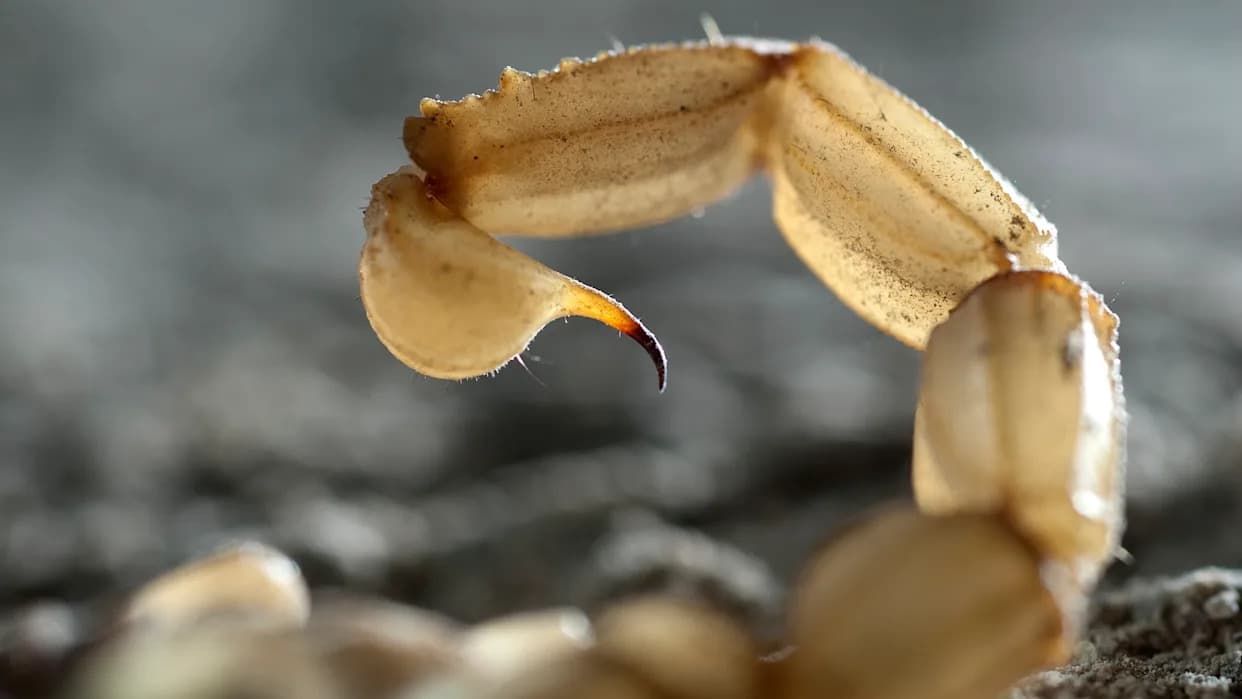
Photo Credit: iStock
Paleontologists have reclassified a long-misidentified fossil as Praearcturus gigas, a scorpion-like predator roughly 3.3 feet (1 metre) long with pincers exceeding 6 inches. The specimen lived about 415 million years ago during the Early Devonian — a time when terrestrial ecosystems were only beginning to form and trees had not yet evolved.
Reexamination Solves a Century-Old Mystery
First described in 1871 as an isopod, the fossil was compared to several arthropod groups over the decades and was tentatively called a giant scorpion in the 1980s despite limited illustration. Researchers from the Natural History Museum, London, and the University of Manchester used modern imaging techniques and additional specimens from multiple collections to clarify its anatomy and classification.
What the Fossil Reveals
The team concluded that Praearcturus gigas was a large, scorpion-like predator that inhabited floodplain environments during the Early Devonian. Its size challenges conventional explanations that link giant arthropod body size primarily to later periods when forests were widespread and atmospheric oxygen levels were higher.
Investigators suggest two factors that may have allowed the animal to grow so large: reduced competition from other large predators on land at that time, and a partly aquatic or amphibious lifestyle that could have supported greater body size.
"Confirming that this animal is a scorpion fundamentally changes our understanding of how and when these creatures evolved to such extraordinary sizes," said lead author Dr. Richard Howard.
"Praearcturus gigas has puzzled us paleontologists for more than a century," said co-author Dr. Russell Garwood. Co-author Dr. Greg Edgecombe added that the specimen offers "a fascinating glimpse" of a time when the boundary between land and sea was far less distinct.
Why It Matters
Findings like this help scientists reconstruct how life adapted during dramatic environmental transitions — for example, how animals coped with shifting habitats along the blurred land–sea margin of early terrestrial ecosystems. Reclassifying this fossil reshapes timelines for the evolution of giant arthropods and suggests ecological opportunity, not only atmospheric oxygen, played a major role in enabling large body sizes.
Sources: Natural History Museum (London), University of Manchester, Sci.News.
Help us improve.