This roundup highlights key events that occurred on June 7 across history, from the introduction of the Lee Resolution in 1776 to a deadly train collision in 2021. The entry spotlights the 1998 murder of James Byrd Jr., a racially motivated killing that spurred state and federal hate-crime legislation. Other items include Abraham Lincoln’s 1864 renomination, Israel’s capture of Jerusalem in 1967, the Supreme Court’s 1965 contraceptive ruling, and major incidents in 2013 and 2002.
On This Day, June 7: James Byrd Jr. Murdered by White Supremacists — Milestones From 1776 to 2021
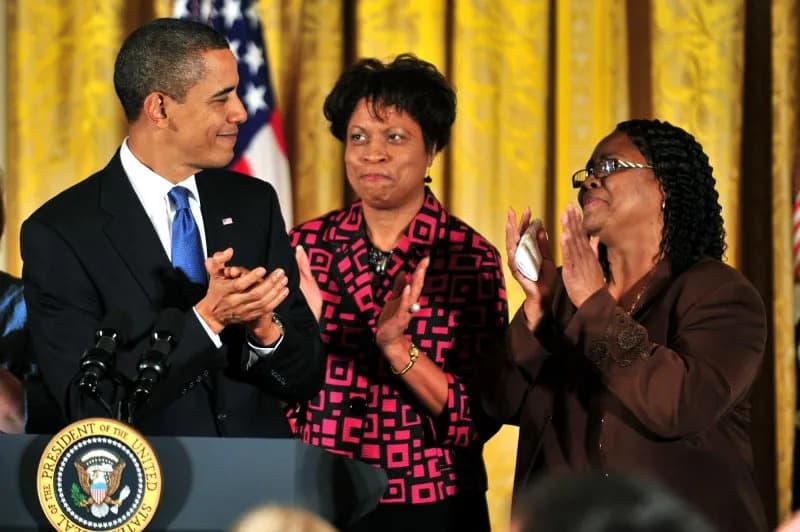
President Barack Obama (L) claps with Louvon Harris (C) and Betty Byrd Boatner, the sisters of James Byrd, Jr., who was a victim of a hate crime, as he delivers remarks on the passing of the Matthew Shepard Hate Crimes Prevention Act, at the White House in Washington on October 28, 2009. On June 7, 1998, three white supremacists killed Byrd by dragging him for 3 miles behind a pickup truck in Jasper, Texas. File Photo by Kevin Dietsch/UPI
On This Date In History — notable events from 1776 through 2021 that shaped politics, law, war and culture.
1776: Members of the Continental Congress introduced the Lee Resolution, the measure that set the stage for the U.S. Declaration of Independence.
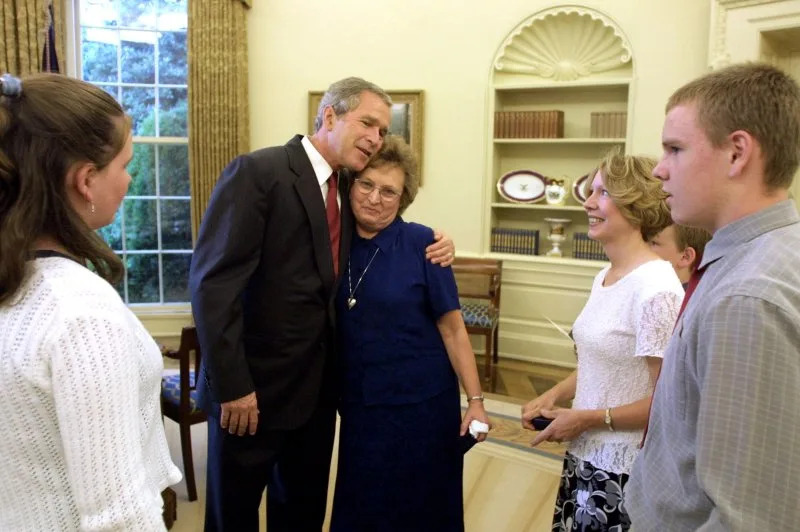
President George W. Bush hugs Oreta Burnham, mother of killed missionary Martin Burnham, during a meeting with Gracia Burnham (L) and her family in the Oval Office July 24, 2002. On June 7, 2002, U.S. missionary Martin Burnham, captured in the Philippines by a Muslim group more than a year earlier, was fatally shot during a rescue attempt. UPI File Photo
1864: Republican delegates met in Baltimore and nominated Abraham Lincoln for a second presidential term; his running mate was Andrew Johnson.
1942: Japanese forces occupied the Aleutian Islands outposts of Attu and Kiska during World War II. U.S. forces reclaimed the islands roughly a year later.
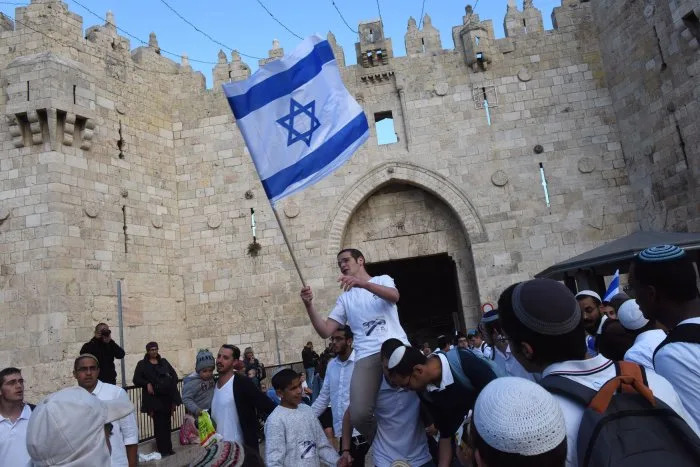
Far-right Israeli supporters wave national flags on Jerusalem Day to celebrate Israel's victory in the Six-Day War outside the Damascus Gate in the Old City of Jerusalem, May 13. Photo by Debbie Hill/UPI
1965: The U.S. Supreme Court struck down a Connecticut law banning the use of contraceptives, a major decision for reproductive privacy.
1967: Israeli forces captured Jerusalem during the Six-Day War, a pivotal moment in Middle Eastern history.
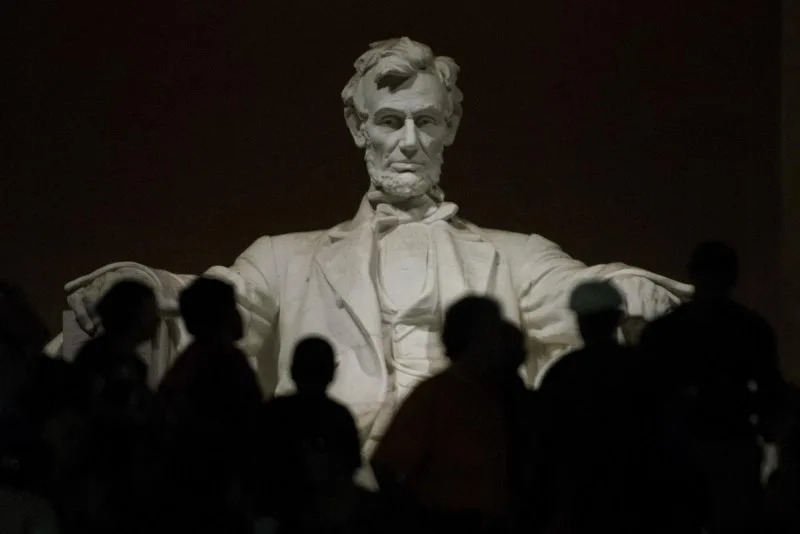
On June 7, 1864, Republican delegates meeting in Baltimore nominated Abraham Lincoln for his second term as president. His running mate was Andrew Johnson. File Photo by Pat Benic/UPI
1975: The first consumer videocassette recorder (VCR) went on sale, marking a shift in home entertainment and media consumption.
1983: One day after Nicaragua expelled three U.S. diplomats, the Reagan administration ordered six Nicaraguan consulates in the United States closed and expelled six Nicaraguan diplomats.
File Photo by Matthew Healey/UPI
1990: South African President F.W. de Klerk lifted a four-year nationwide state of emergency, except in the violence-plagued Indian Ocean province of Natal.
1998: In Jasper, Texas, three white supremacists murdered James Byrd Jr. by dragging him behind a pickup truck for roughly three miles. The three were convicted of murder—one was executed in 2011, another remains on death row, and the third received a life sentence. The crime galvanized support for tougher hate-crime legislation, prompting a Texas hate-crimes law and contributing to the federal Matthew Shepard and James Byrd Jr. Hate Crimes Prevention Act.

File Photo by Waqar Hussein/EPA-EFE
2002: U.S. missionary Martin Burnham, who had been held hostage in the Philippines, was fatally shot during a rescue operation.
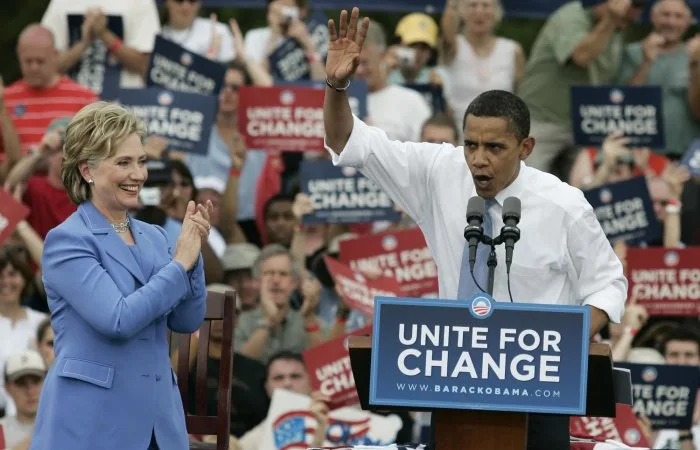
2008: Senator Hillary Clinton of New York suspended her campaign for the Democratic presidential nomination and publicly endorsed Senator Barack Obama.
2013: An arsonist set fire to a bus in Xiamen, China, killing 42 people and injuring about 30. Also that year, a shooting rampage in Santa Monica, California, that began at a private home and ended on a college campus left six people dead and five wounded; the 23-year-old gunman was killed by police.
2021: Two express trains collided in southern Pakistan, killing at least 40 people and injuring dozens.
Context: These events range from foundational political acts and landmark legal rulings to violent crimes and disasters that reshaped law, public policy and public memory.
Help us improve.