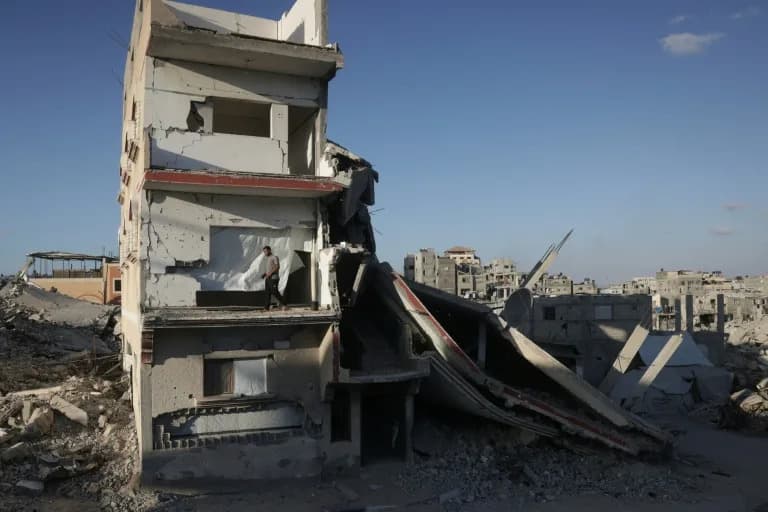
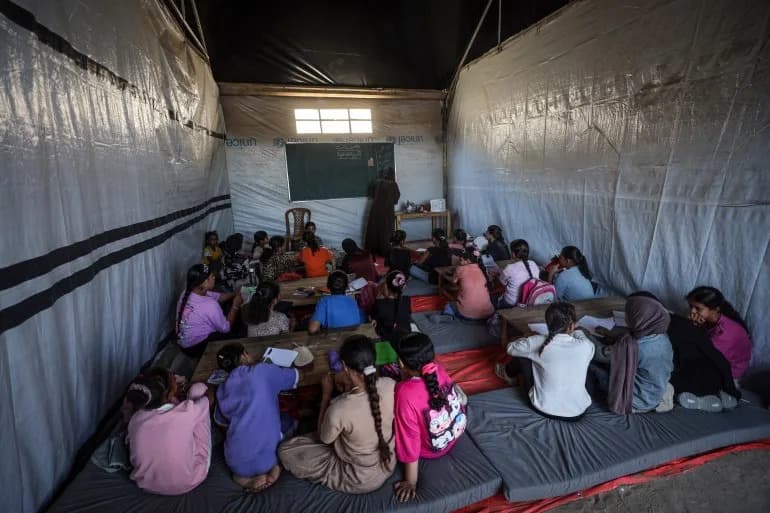
Displaced families across Gaza’s tent cities lack proper toilets and have been forced to build makeshift pit latrines that leak sewage and attract disease. More than 80% of Gaza’s sewage pumping stations have collapsed after roughly 2½ years of bombardment, worsening an acute sanitation and public-health crisis. Small-scale aid efforts provide limited relief, but high costs, scarce supplies and restricted access to heavy equipment delay meaningful reconstruction. Residents report humiliation, safety fears—especially among women at night—and growing health risks.
Gaza’s Tent Cities Face Severe Sanitation Crisis as Families Resort to Makeshift Latrines
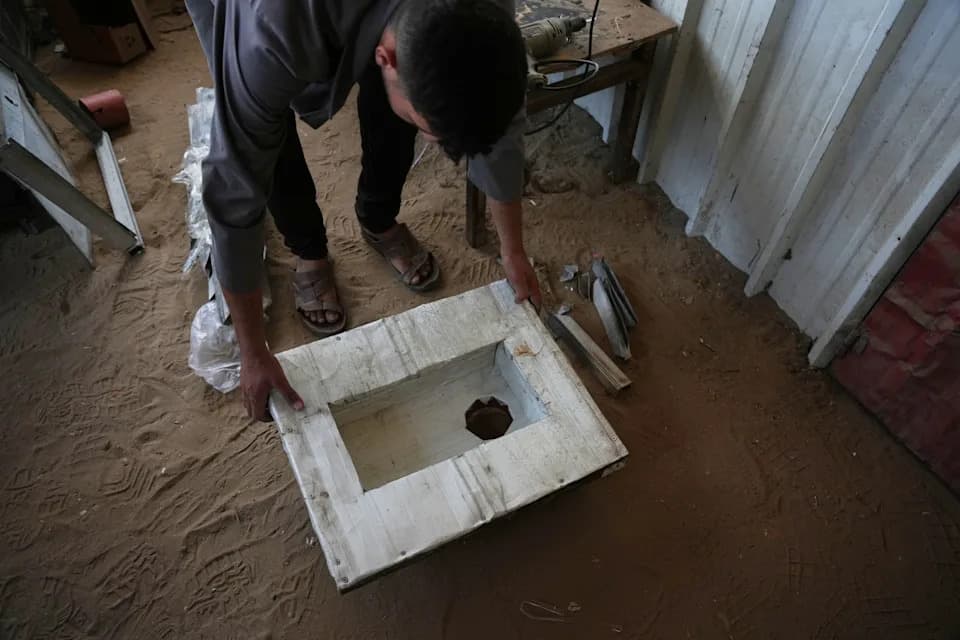
Akram Awwad works on a locally manufactured toilet, in Khan Younis, southern Gaza Strip, Wednesday, June 3, 2026. (AP Photo/Abdel Kareem Hana)(AP Photo/Abdel Kareem Hana)
In a bare tent in southern Gaza, 38-year-old Mostafa Shaaban fashioned a private latrine for his family behind a curtain. He dug a shallow pit in the sand, poured a concrete ring around it, set a bottomless bucket over the hole and placed a battered plastic toilet seat on top.
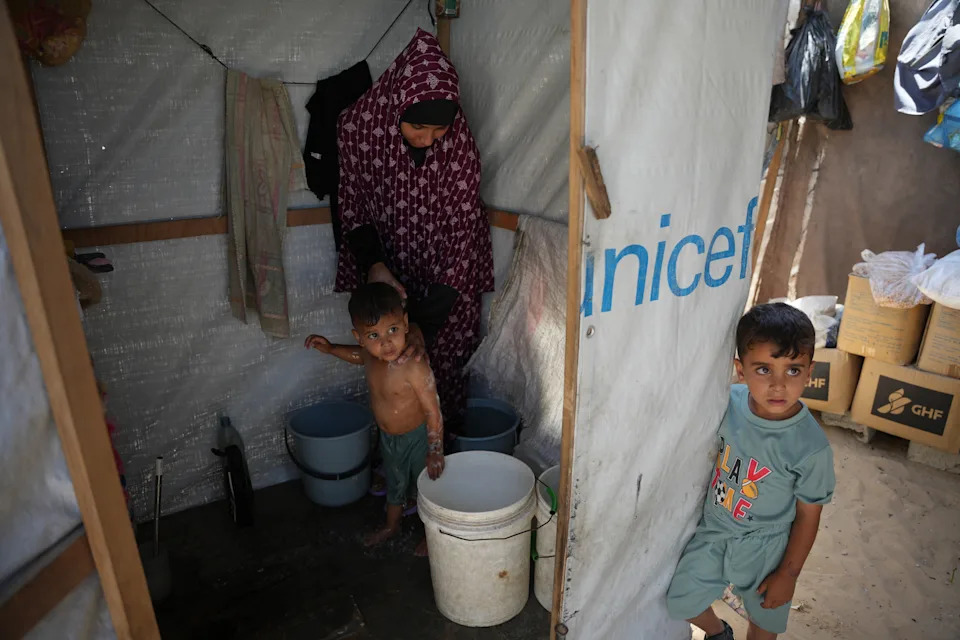
Iman Mansour bathes her son, Mohamed Shaban, in a makeshift bathroom beside her family's tent in Khan Younis, southern Gaza Strip, Wednesday, June 3, 2026. (AP Photo/Abdel Kareem Hana)(AP Photo/Abdel Kareem Hana)
The improvised facility emits a foul stench and attracts flies and mosquitoes just feet from where the family sleeps and prepares food. Each week Shaaban must scoop sewage sludge from the pit. Still, he says the makeshift toilet offers greater privacy and dignity than the communal latrines used by hundreds of people in the sprawling camp.
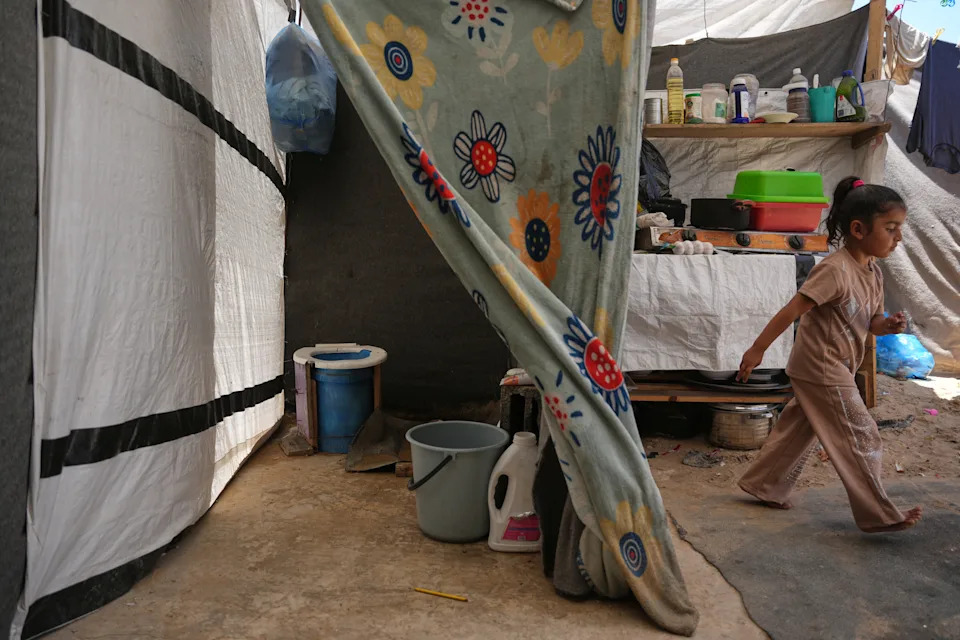
Wateen Darwish walks past her family's makeshift toilet at a camp for displaced Palestinians in Khan Younis, southern Gaza Strip, Wednesday, June 3, 2026. (AP Photo/Abdel Kareem Hana)(AP Photo/Abdel Kareem Hana)
“I did not want the kids and my wife to use any public toilet. It is humiliating,”
Shaaban, driven from Rafah two years ago, said. “The situation is revolting, but at least it has more dignity.”
Widespread Breakdown Of Sewage Systems
Across Gaza’s vast tent cities — which shelter most of the roughly 1.7 million people left homeless by the war — there is not a single fully functional, properly installed toilet system. Displaced families have largely been forced to build their own pit latrines, many shared by extended households. At communal camp toilets, men, women and children queue and use stalls separated only by thin cloth or sheets of metal. Women report fearing the walk to these facilities after dark.
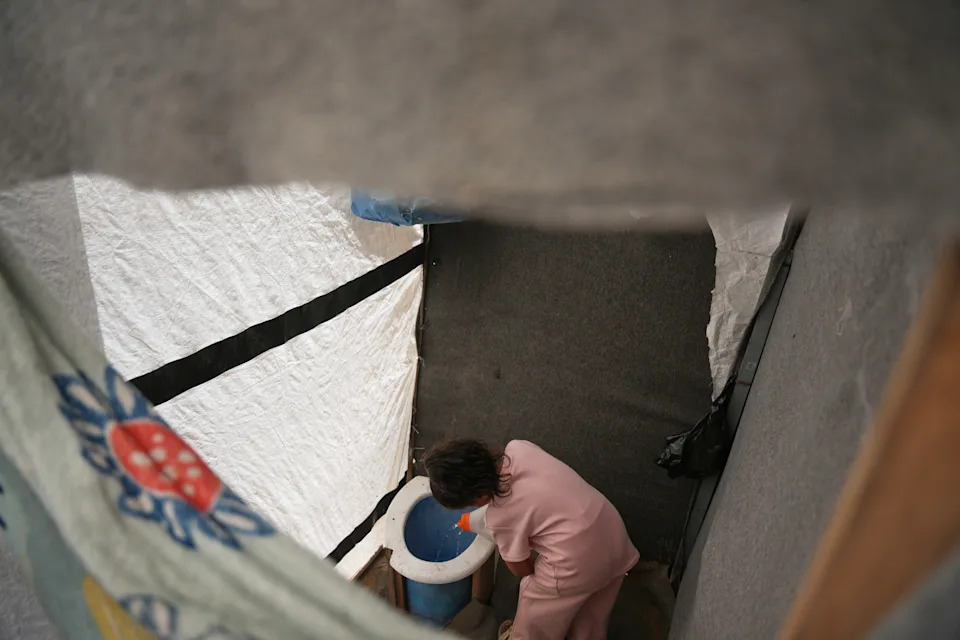
Sila Darwish pours water into a makeshift toilet at her family's tent in Khan Younis, southern Gaza Strip, Wednesday, June 3, 2026. (AP Photo/Abdel Kareem Hana)(AP Photo/Abdel Kareem Hana)
The public-health consequences are severe: foul odors hang between tightly packed tents, cesspools and pools of untreated wastewater form near shelters, and people sometimes dump latrine contents into the open. Rights groups report that more than 80% of Gaza’s sewage pumping stations have collapsed after some two and a half years of bombardment and offensives.
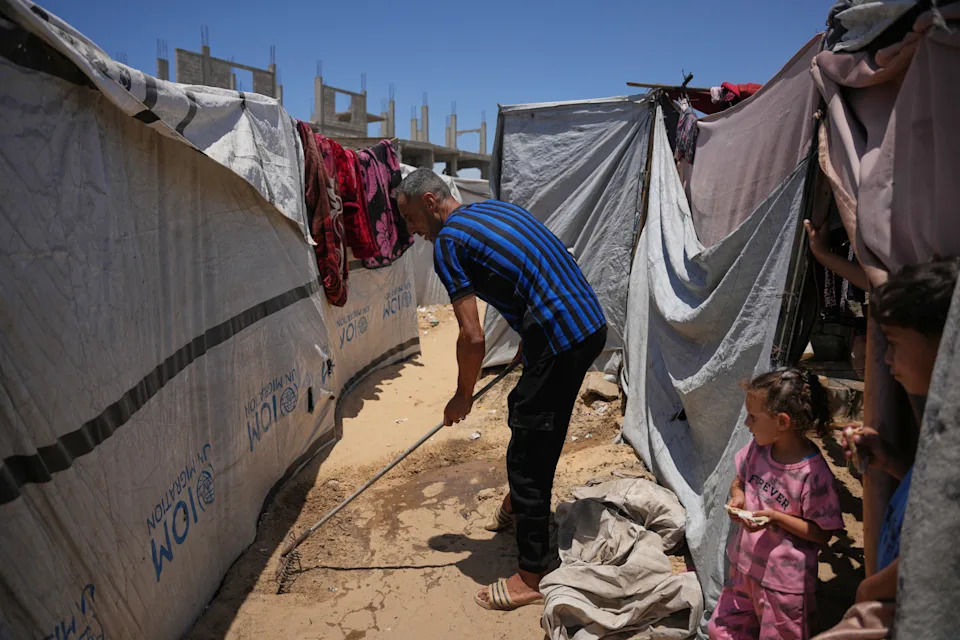
Khaled Kollab cleans a drainage pit in front of his family's tent in Khan Yunis, southern Gaza Strip, Wednesday, June 3, 2026. (AP Photo/Abdel Karim Hanna)(AP Photo/Abdel Kareem Hana)
Costs, Supplies And Reconstruction Barriers
Constructing even a simple latrine is costly and logistically difficult. Shaaban said he had to buy piping and concrete to seal the hole; the concrete often crumbles and must be replaced when money allows. A porcelain toilet seat can cost 1,700–2,000 shekels ($500–$680), out of reach for most families. Vendors in Khan Younis sell metal sheets to surround latrine holes for about 100 shekels ($34), but these remain stopgap solutions that do not address sewage treatment.
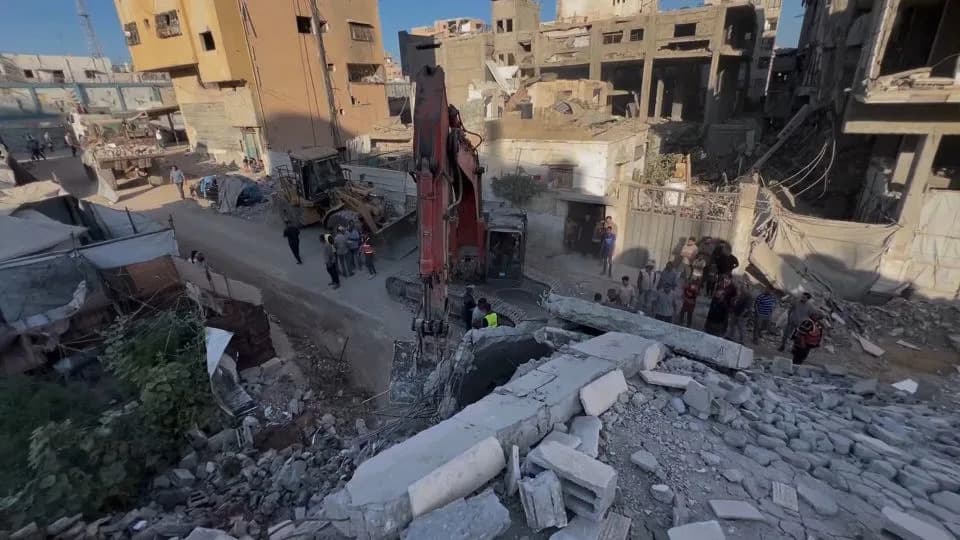
Some humanitarian organizations have implemented small projects to improve household toilets, yet supplies and scale are limited. The ceasefire agreement overseen by a U.S.-backed official envisages the entry of major construction and repair equipment into Gaza even before full disarmament, but so far little heavy machinery has entered, leaving large-scale reconstruction uncertain.
Human Cost
Residents describe humiliation, safety fears and mounting health risks. In one camp outside Khan Younis, Khaled Kollab cleared blocked drains and pooled wastewater beside his tent. His simple squat latrine was built from scavenged materials; his 3-year-old daughter, Sila, has visible skin lesions.
“You go into this toilet and feel humiliation and shame,” Kollab said.
Humanitarian experts warn that without repairs to sewage infrastructure and large-scale sanitation support, outbreaks of diarrheal and skin diseases will remain a constant threat in the camps. Small fixes provide temporary relief, but durable solutions require heavy equipment, stable funding and secure access for aid agencies.
Ezzidin reported from Cairo.
Help us improve.