Protests have intensified in Mexico City as teachers, families of around 130,000 missing people and other activist groups leverage the upcoming FIFA World Cup to press demands. Demonstrations have blocked major thoroughfares, toppled player statues, breached a government building and staged a street soccer match. President Claudia Sheinbaum said negotiations are open with teachers but accused some protesters of seeking provocation; activists say the government is prioritizing World Cup pageantry over social crises like disappearances and rising costs of living.
Protests Surge In Mexico City Ahead Of World Cup As Activists Demand Action
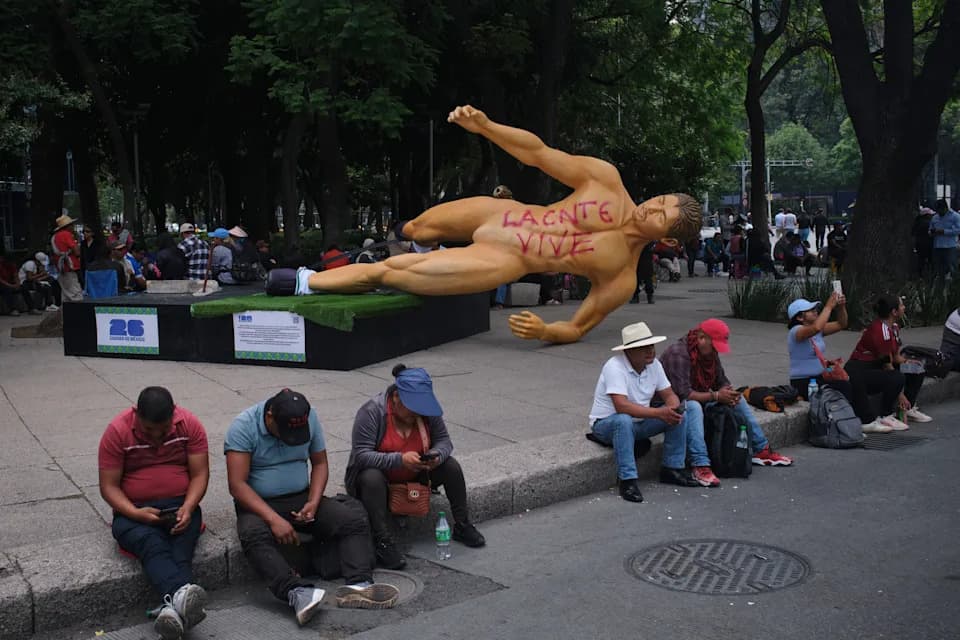
A World Cup statue, with graffiti that reads in Spanish, "The National Educational Workers Coordination lives" lies sideways during a teachers' protest for higher salaries sit in Mexico City, Tuesday, June 2, 2026. (AP Photo/Jon Orbach)(AP Photo/Jon Orbach)
Mexico City has been rocked by large demonstrations as teachers, relatives of roughly 130,000 missing people, animal-rights activists and other social movements have seized the global spotlight of the upcoming FIFA World Cup to press a range of demands on authorities.
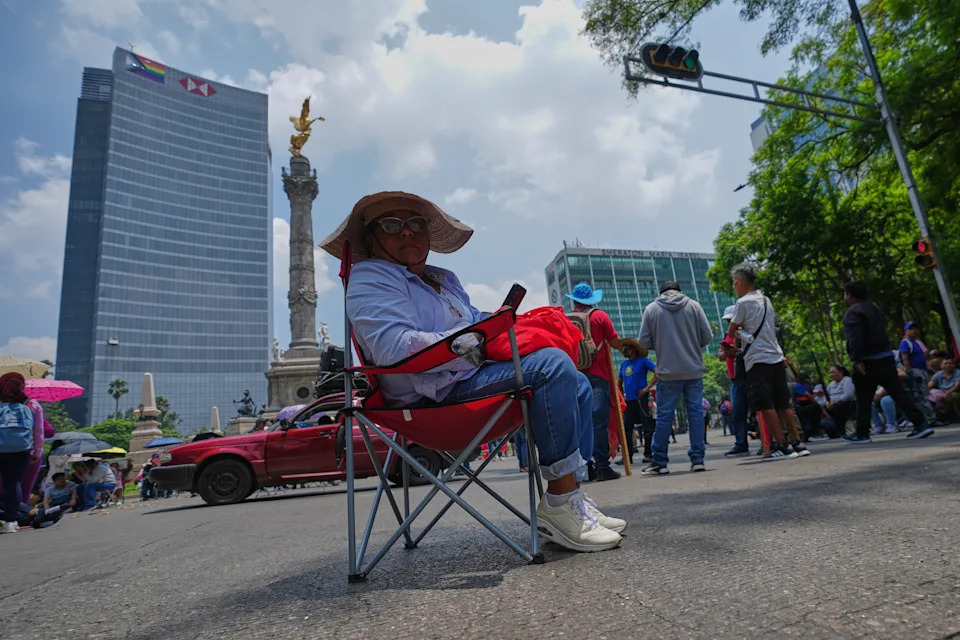
Teachers stage a protest at the Angel of Independence to demand salary increases in Mexico City, Tuesday, June 2, 2026. (AP Photo/Marco Ugarte)(AP Photo/Marco Ugarte)
Members of the dissident teachers' union CNTE blocked major avenues across the capital this week, disrupting central districts to demand better working conditions and retirement benefits. Protesters toppled statues of World Cup players, entered a government building and staged a soccer match on a street they had blockaded as international visitors began arriving ahead of the tournament, which opens June 11.
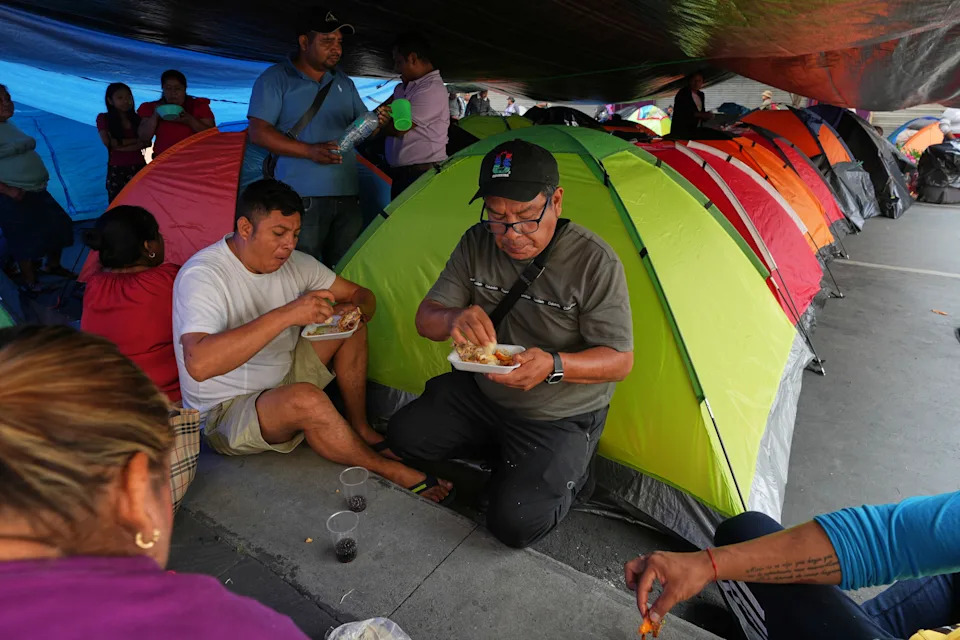
Teachers eat by tents they set up during protests to demand salary increases in Mexico City, Tuesday, June 2, 2026. (AP Photo/Marco Ugarte)(AP Photo/Marco Ugarte)
“The proximity of the World Cup places a lot more pressure on the government,” said Abel Escalante, a 52-year-old special education psychologist who traveled from the southern state of Chiapas to join a demonstration around the city’s Angel de la Independencia monument.
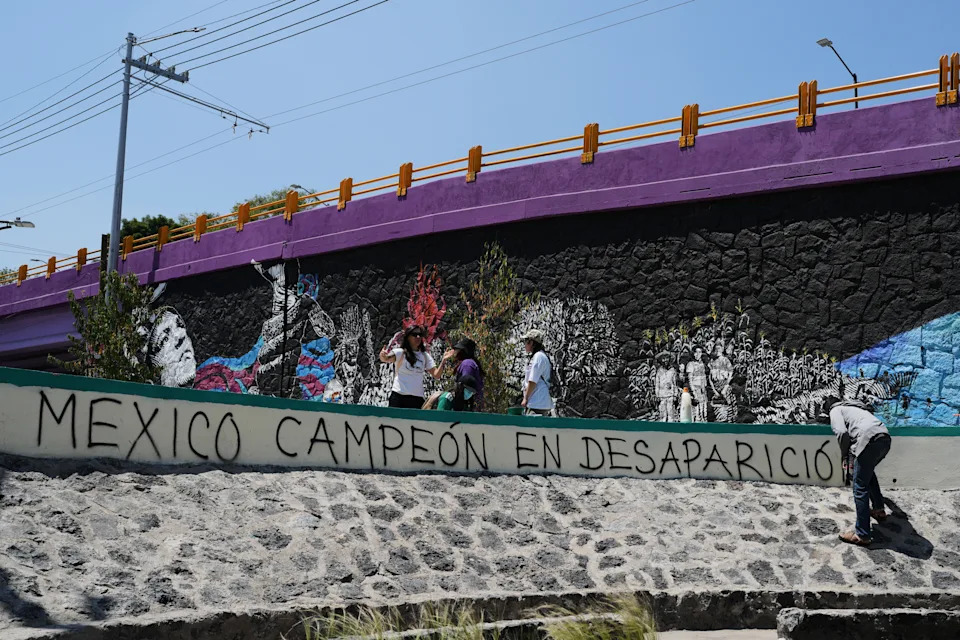
A person protesting the more than the 134,000 disappeared people, writes in spray paint, "Mexico, champion of disappearances" as Mexico prepares to host the 2026 FIFA World Cup in Mexico City, Saturday, May 30, 2026. (AP Photo/Marco Ugarte)(AP Photo/Marco Ugarte)
The demonstrations come days before Mexico City hosts the tournament’s opening ceremony; the World Cup is being co-hosted by Mexico, the United States and Canada. In addition to the capital, Guadalajara and Monterrey are scheduled to host several matches.
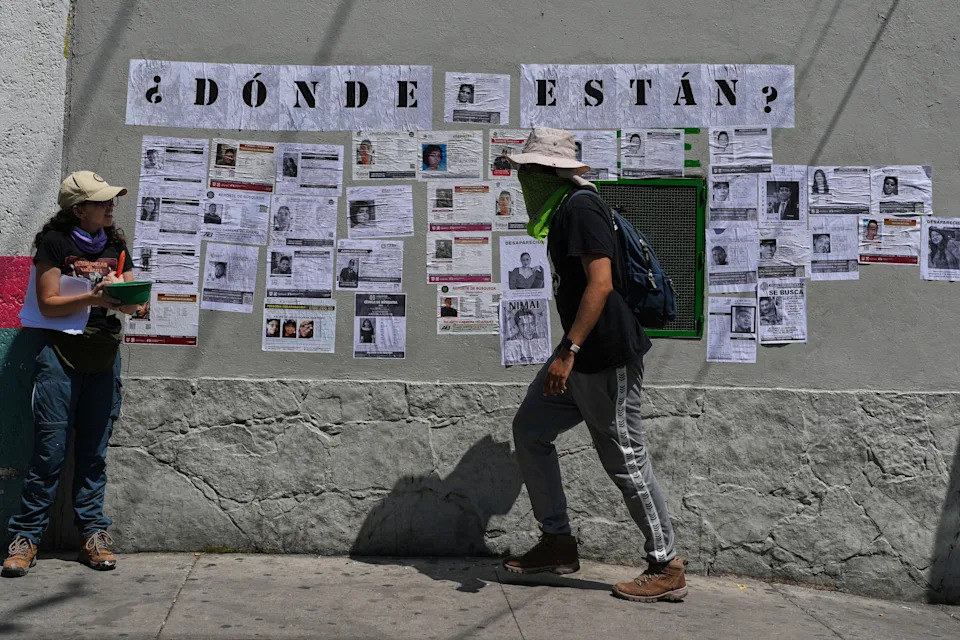
Activists and families of the country's more than 134,000 disappeared people paste missing-person posters in Mexico City, Saturday, May 30, 2026, as Mexico prepares to host the 2026 FIFA World Cup. (AP Photo/Marco Ugarte)(AP Photo/Marco Ugarte)
Authorities Respond
President Claudia Sheinbaum acknowledged the protests and said on Friday that “the door is open” for teachers to negotiate demands that include improved retirement benefits. She also accused some demonstrators who forced their way into a government building of trying to provoke a violent reaction from authorities — a response she said would not occur. Sheinbaum pledged that the capital’s main plaza, the Zócalo — which teachers tried to occupy late in May to stage a sit-in — would remain available for World Cup events.
Broader Grievances
Activists have criticized Sheinbaum’s government for appearing to prioritize World Cup-related celebrations over urgent social problems, including a rising cost of living — which some blame in part on increased foreign tourism — and the long-running crisis of forced disappearances across Mexico. Families searching for disappeared relatives have plastered photos across the city and sprayed graffiti near newly painted public works. One message read: “Mexico, Champion Of Disappearance.”
City beautification efforts ahead of the World Cup have included painting bridges bright purple, planting orange marigolds and decorating streets with cartoon axolotls — the endangered amphibian that has become a mascot of the capital. Organizers and protesters say those efforts contrast sharply with unresolved social issues.
What Comes Next
More demonstrations are planned in the lead-up to the tournament. Mexico City has a deep-rooted protest culture, with unions and civil-society groups regularly taking over public spaces to press their causes. Organizers say they will continue to use the World Cup’s global attention to amplify demands until authorities address their key concerns.
Context: The World Cup begins June 11, 2026, with matches hosted across Mexico, the United States and Canada. Mexico City will host the opening ceremony and several fixtures, increasing the stakes and visibility of local protests.
Help us improve.