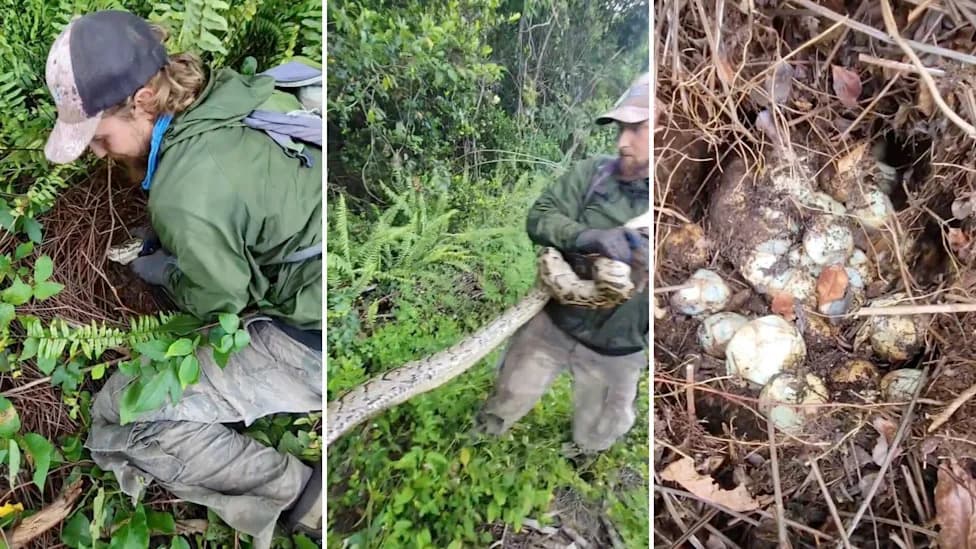
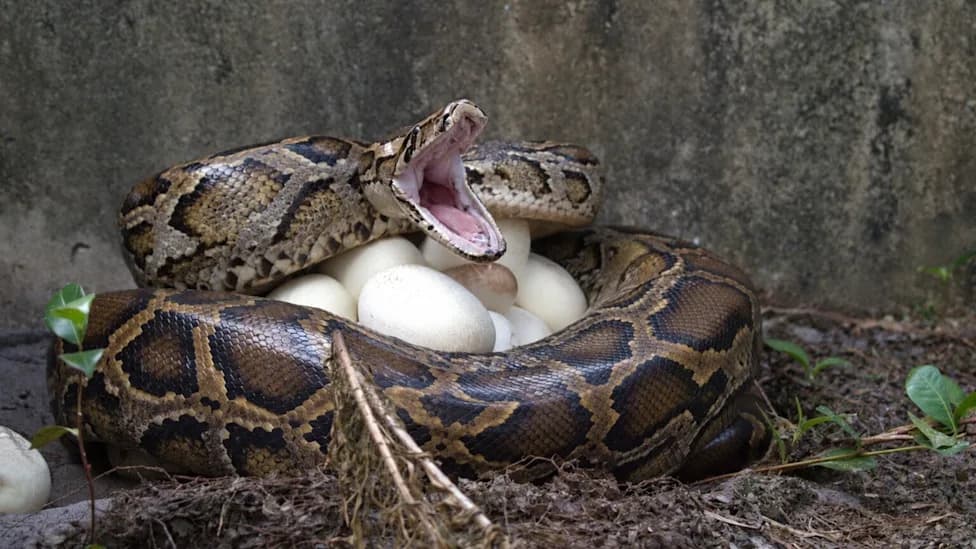
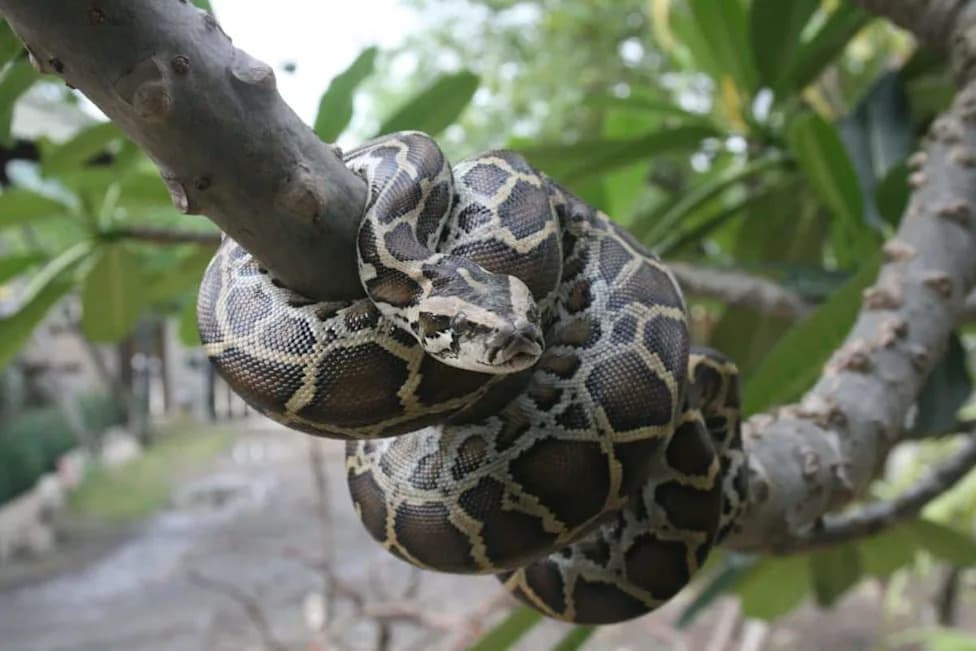
Researchers warn that the lungworm Raillietiella orientalis, likely introduced by escaped or released Burmese pythons, is infecting and suffocating native Florida snakes. The parasite moves from python feces to cockroaches to frogs or lizards and then to snakes. Scientists report roughly 90% declines of pygmy rattlesnakes in parts of the Everglades and detections in at least 18 native species; there is currently no cure. Researchers ask the public to submit photos via Instagram, email, or iNaturalist to help track the outbreak.
Invasive Lungworm From Burmese Pythons Is Suffocating Native Florida Snakes
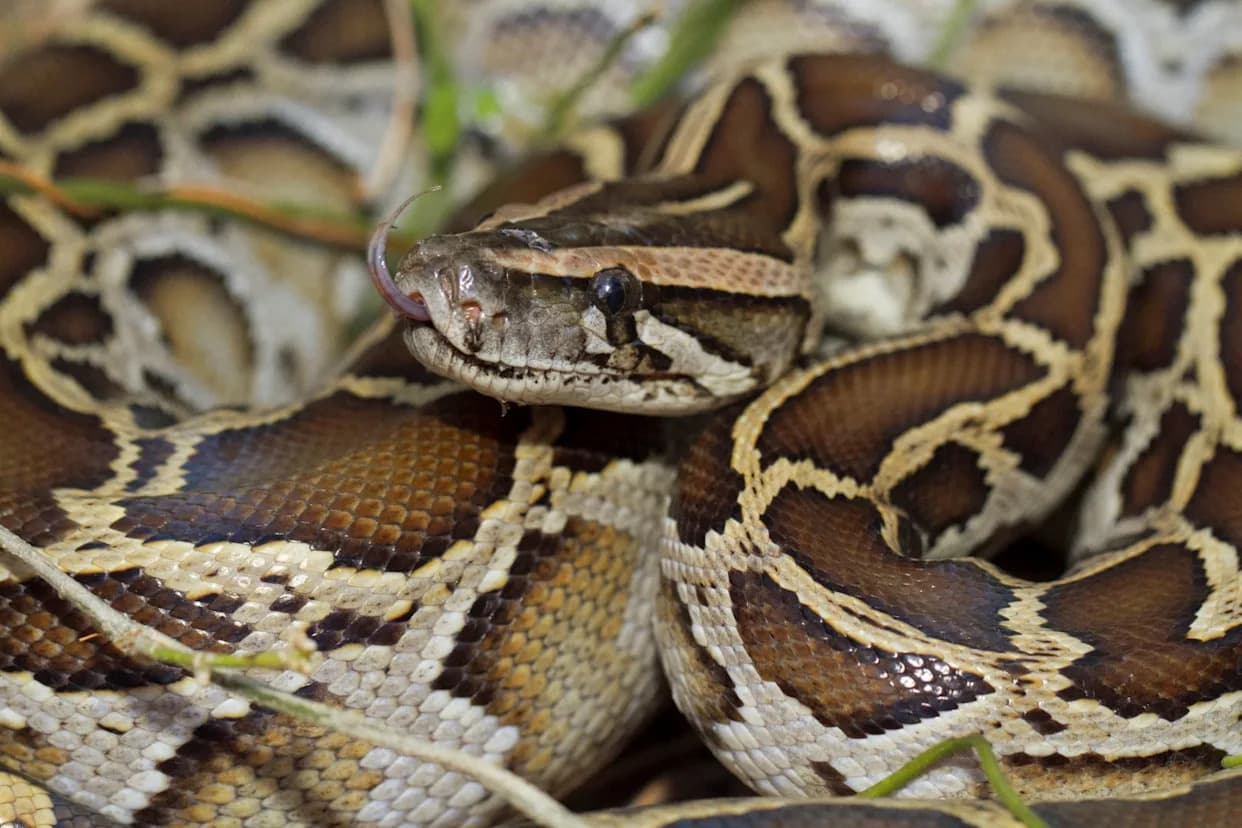
Photo Credit: iStock
A recent episode of the Coast to Canopy podcast highlighted a growing wildlife crisis in Florida: researchers believe an invasive lungworm, Raillietiella orientalis, was likely introduced via nonnative Burmese pythons from the pet trade and is now killing smaller native snake species.
Reporting from WFSU Public Media and comments from field researchers describe how the parasite moves through the Everglades food web: eggs shed in python feces are eaten by cockroaches; frogs and lizards that feed on those cockroaches become infected; and native snakes that eat the infected frogs or lizards pick up the lungworm.
Why Native Snakes Are Vulnerable
Biological monitoring coordinator Kim Sash explained that Burmese pythons — among the world’s largest snakes — can tolerate the parasite because their lungs are large enough for the parasite’s growth. Many smaller native snakes cannot, and the parasite’s pentastome stages can literally fill and suffocate their lungs. "The pentastomes are actually suffocating these [native] snakes to death," Sash said.
Researchers report dramatic declines in some areas: roughly 90% losses of pygmy rattlesnake populations have been observed in parts of the Everglades. To date, the lungworm has been detected in at least 18 native snake species and has been reported as far north as Jacksonville, across multiple Florida Panhandle counties, and even in Illinois. At present, there is no known cure for infected animals.
Ecological Consequences and Response
Native snakes play a critical role in controlling pests and rodents; steep declines can ripple through ecosystems and affect farms, neighborhoods, and public lands. FWC Fish and Wildlife Research Institute research associate Pierson Hill noted that fragmented habitats and small isolated populations make many species less able to tolerate new threats, reducing genetic diversity and resilience.
"Those are the populations you lose first — isolated, small groups," Hill said. "For now, it's largely a wait-and-see as researchers monitor which populations persist."
Scientists and volunteer networks — including groups monitoring under names such as the Snakeworm/Lungworm Alliance — are asking the public to help map the outbreak. People are encouraged to submit clear photos and location details via Instagram, email, or iNaturalist so researchers can track spread and prioritize field work.
What scientists say is needed: increased monitoring, broader surveillance across Florida and neighboring states, research into the parasite's ecology and potential treatments, and public engagement to report sightings. Preventing future introductions requires tighter oversight of the pet trade and public education about releasing exotic species into the wild.
Sources: Coast to Canopy podcast, WFSU Public Media, FWC Fish and Wildlife Research Institute.
Help us improve.