Amnesty International says Iran is exploiting "wartime conditions" to justify intensified repression, using IRGC warnings, mass arrests and a new digital system to identify and seize property from alleged "agents." The NGO reviewed 11 IRGC messages that threatened people who bypassed internet curbs with prosecution under the Espionage Act. Amnesty documents thousands of arrests (including children), forced disappearances, suspicious deaths in custody and accelerated use of the death penalty, and urges urgent international diplomatic and legal action.
Amnesty: Iran Using ‘Wartime Conditions’ to Intensify Repression — IRGC Warnings, Mass Arrests and Asset Seizures
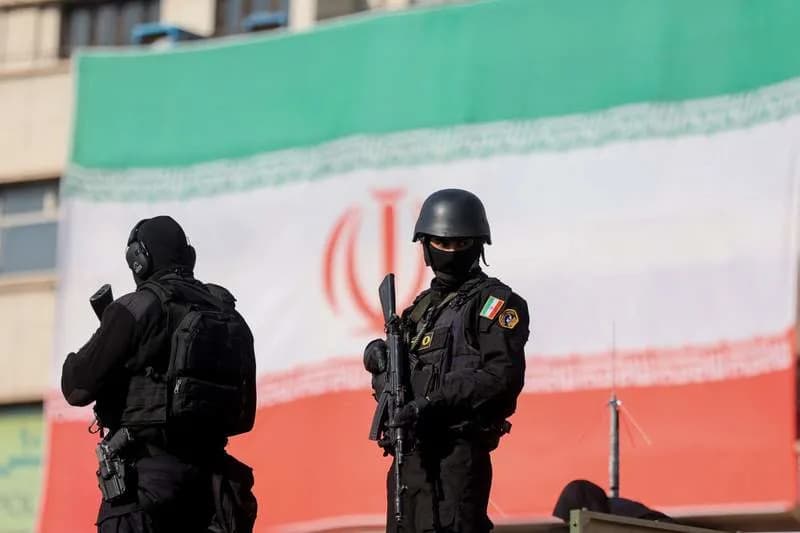
Members of the Iranian police attend a pro-government rally in Tehran, Iran, January 12, 2026. (photo credit: STRINGER/WANA (WEST ASIA NEWS AGENCY) VIA REUTERS ATTENTION EDITORS)
Amnesty International says information it reviewed shows Iranian authorities are exploiting so-called "wartime conditions" to tighten repression across the country, using the security environment created by recent attacks and countermeasures as justification for harsher controls.
IRGC Warnings and Internet Restrictions
Amnesty reviewed text messages attributed to the Islamic Revolutionary Guard Corps (IRGC) that directly warned people who attempted to bypass state internet limits that they could be prosecuted under Iran’s Espionage Act — an offense that can carry the death penalty. The messages framed routine online activity as a threat to national security.
In multiple cases, the messages named individuals believed to have circumvented restrictions and referenced technical details such as IP addresses, VPN use or satellite internet services. Recipients were threatened with blocked SIM cards and mobile service, referral to judicial authorities, and prosecution if any alleged link to "hostile states" or the "Zionist regime" was claimed.
Legal Framework and Penalties
Under Article 508 of Iran’s Islamic Penal Code, anyone found to be cooperating with "hostile states" against the Islamic Republic — if not treated as a Mohareb (waging war against God) — can face one to 10 years in prison. A separate 2020 law, the Law on Countering Hostile Actions of the Zionist Regime, carries harsher penalties: it can result in the death penalty for cases prosecuted as intelligence sharing or five to 10 years’ imprisonment plus a permanent ban from public-sector jobs for individuals found to have contacts with Israelis at any diplomatic or informal level.
Documented Incidents and Human Rights Concerns
Amnesty said it examined 11 instances of IRGC warning messages sent to civilians. Eight of those messages explicitly warned that photographing areas hit by airstrikes and sharing images — either online or with the media — would be treated as "collaboration with the enemy" and could prompt legal action.
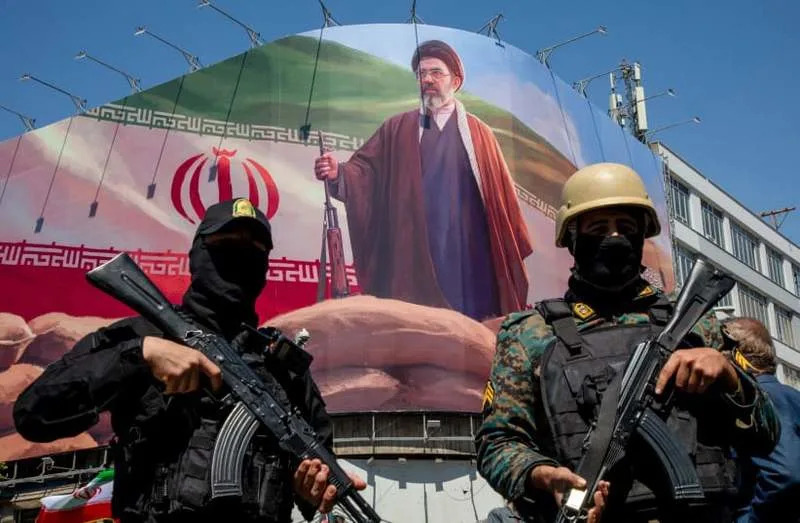
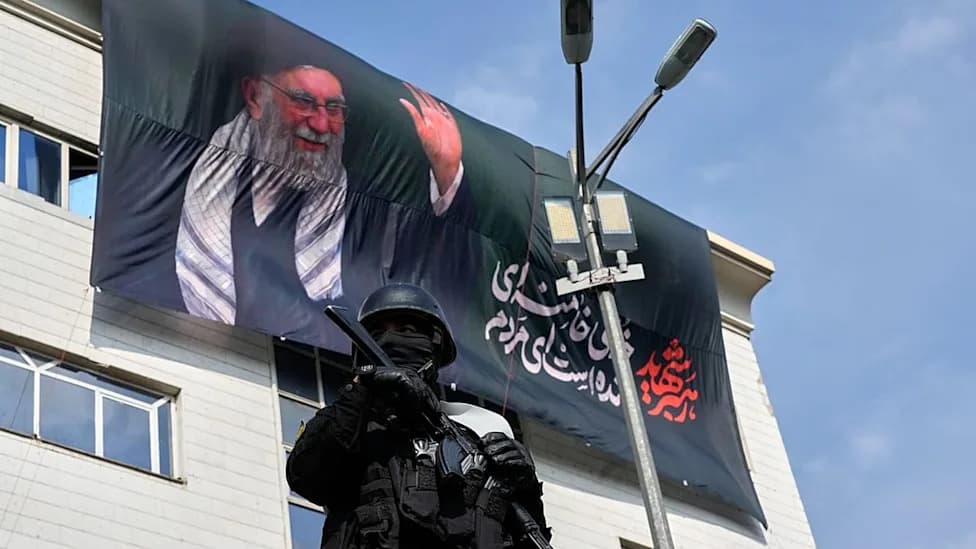
MEMBERS OF the Iranian security forces stand guard under a large portrait of Iran’s new Supreme Leader, Mojtaba Khamenei. (credit: Majid Saeedi/Getty Images)
The report also documents a broader campaign of repression. Authorities have reportedly arrested thousands of people, including children; Iran’s police chief, Ahmadreza Radan, said more than 6,500 "traitors and spies" had been arrested since 28 February 2026. Amnesty corroborated official statements with information from victims’ families and human rights defenders, finding intensified crackdowns on civil society — particularly minority religious and ethnic groups, journalists and human rights advocates.
Lawyers representing politically sensitive cases have themselves faced charges. Attorneys for Amir Raisian and Milad Panahipour, both arrested on 29 April 2026, were charged with offenses such as "spreading lies" and "propaganda against the system" after publicly raising due-process concerns in their client’s case. Their client, 18-year-old Ehsan Hosseinipour Hesarloo, is reported to be at risk of execution.
Disappearances, Deaths in Custody and Property Seizures
Amnesty reported enforced disappearances and heightened risks of torture and ill-treatment in custody. Several suspicious deaths in detention were flagged, including the case of Hesam Alaeddin, who died after being detained while pursuing information about his brother’s arrest for possession of a Starlink device.
Authorities have also used a new digital system called "Saham" to identify "terrorist and mercenary agents affiliated with the Zionist enemy and other hostile countries," resulting in the seizure of private property belonging to more than 750 people since March.
"Iranian authorities are exploiting the crisis to further erode the human rights of people in Iran who are already suffering…" — Erika Guevara Rosas, Amnesty International Senior Director of Research, Policy, Advocacy and Campaigns.
Calls For International Action
Amnesty warned that the authorities are using the conflict as a pretext to deepen systems of repression, expedite politically motivated prosecutions and expand the use of the death penalty — including executions following confessions allegedly obtained under torture. The organization called for sustained international diplomatic pressure and legal pathways for accountability, including referral of Iran’s situation to the International Criminal Court via the UN Security Council.
Methodology note: Amnesty’s findings are based on text messages, official statements, interviews with victims’ families and human rights defenders, and corroborating documentation reviewed by the organization.
Help us improve.