South Korea's highest court recently overturned a 1992 ruling that classified tattooing as a medical act, and lawmakers moved to legalise tattooing by non-medical professionals after a long campaign. More than 90 tattooists publicly celebrated the change at an Ink Bomb event in Seoul, marking a major step toward recognition and safety. The health ministry plans to introduce licensing tests next year, but social stigma and several legal cases still remain.
South Korea’s Tattooists Step Into the Light After Decades Underground
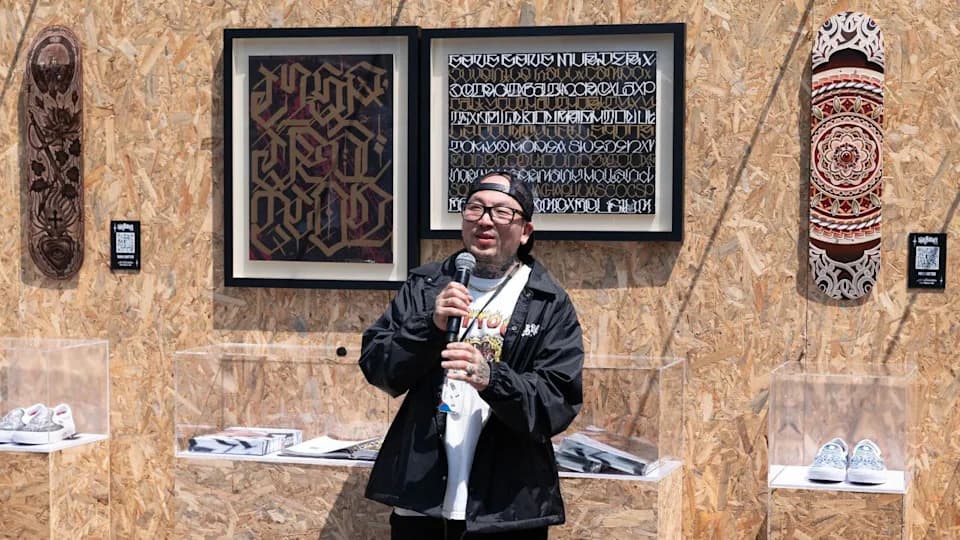
Tattooist Kim Tae-nam says he has been waiting for this day for years [Hwang Jiho]
When Kim Tae-nam climbed onto a rooftop stage in Seoul last Saturday, the moment marked the end of a long struggle: the profession he had chosen was no longer criminalised. He smiled as he told the crowd, "This was only possible because of our effort, all your sweat and tears. Let's hear it from everyone: Tattoos are art!"
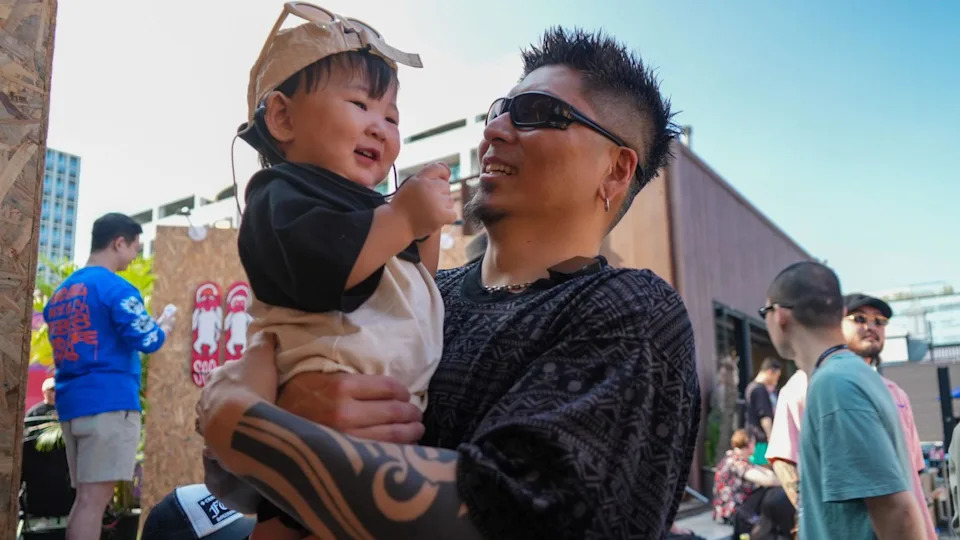
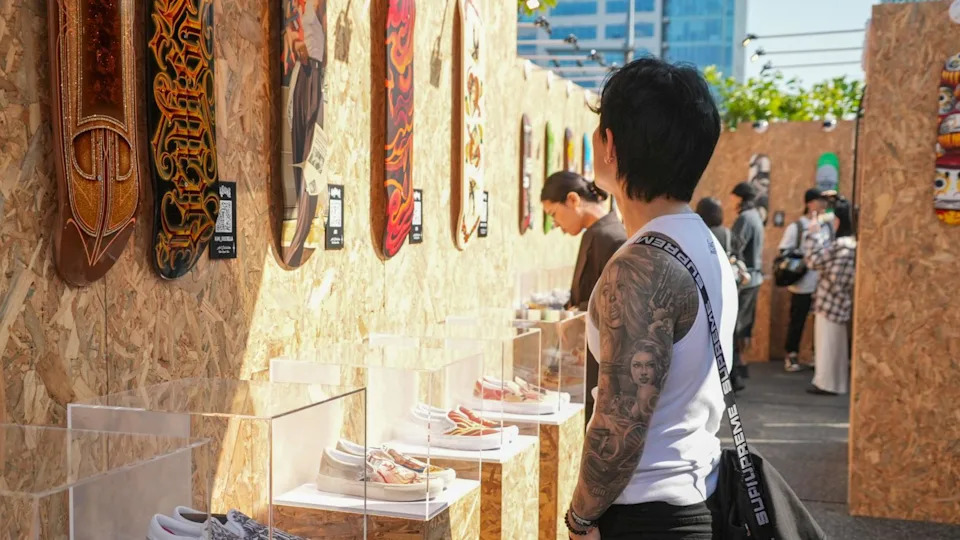
The event drew a mixed crowd who just wanted to celebrate the ruling [BBC/ Hosu Lee]
Ink Bomb: A Public Celebration
The gathering in Seongsu, a trendy Seoul neighbourhood, was Ink Bomb — an event where more than 90 local tattooists and supporters publicly celebrated body art that had been practised largely out of sight for decades. For many attendees, the rooftop party felt like a long-overdue public vindication.
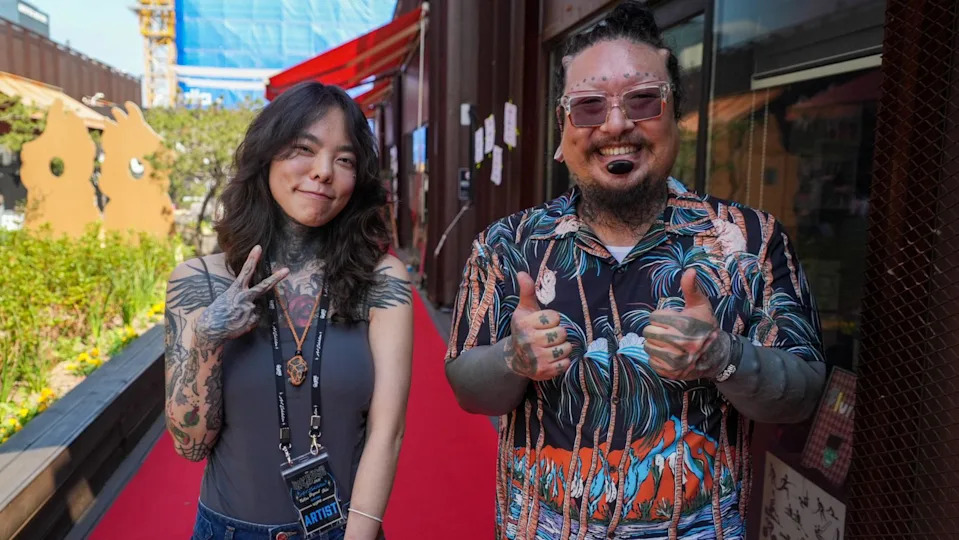
Kali (L) says she can finally do her job without anxiety [BBC/ Hosu Lee]
Legal Turning Point
Just days earlier, South Korea's highest court overturned a 1992 decision that had classified tattooing as a medical act. That ruling, together with a September move by lawmakers to legalise tattooing by non-medical professionals after sustained campaigning, effectively ends years in which only licensed doctors were permitted to apply tattoos. For 34 years, practitioners who inked tattoos could face heavy fines or jail.
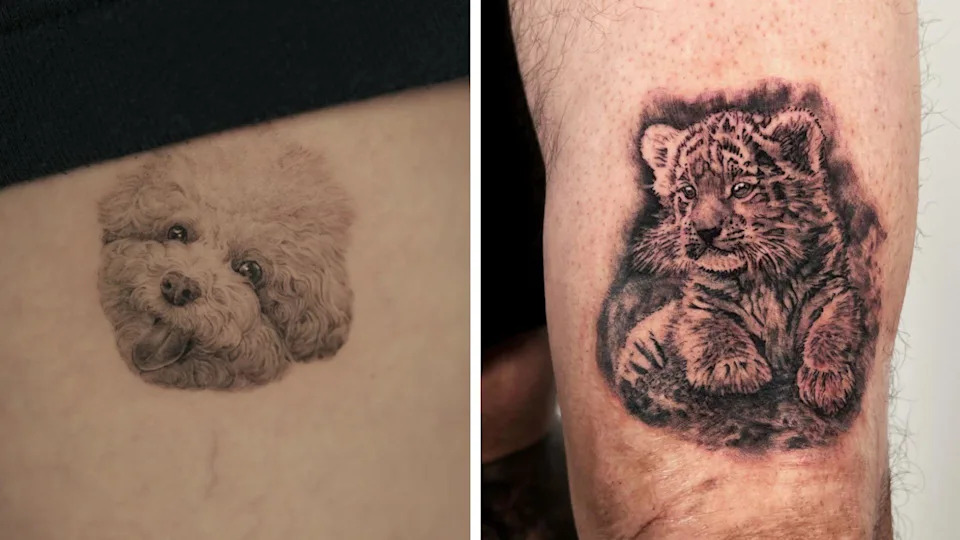
Fine-line Korean tattoos have gained a global reputation [Instagram - Doy (left) and Kali (right)]
What Changed — And What Comes Next
The legal change addresses the criminal exposure of thousands of artists, but uncertainty remains. The health ministry has said it will introduce a licensing and testing system next year to standardise the profession, and several legal cases are still pending. Many tattooists who were charged under the old interpretation of the Medical Act now expect charges to be dropped.
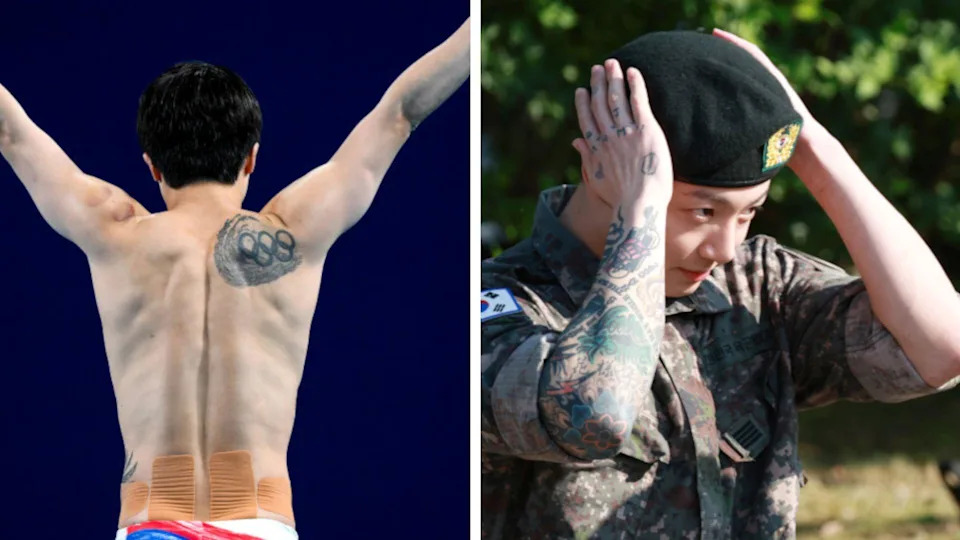
Woo Ha-ram at the Paris Olympics in 2024, and Jungkook after completing his military service [Getty Images]
From Basement Studios To Glass-Front Shops
Kim recalls starting tattooing in 2004 under the alias Sunrat Tattoo, working from a basement studio with no signage and taking clients by invitation only. When he launched Ink Bomb in 2008, events were routinely shut down by police. "We had to stop because they threatened to arrest or charge us. We're back this year for the first time since 2014, and it's incredible that we can now gather without any fear," he said.
Kim says there was a time when police threatened to charge him for holding events promoting tattoos [BBC/Hosu Lee]
Beginning in the 2010s, more artists opened visible studios with glass fronts and signage, and social media helped Korean fine-line styles gain international attention. Celebrities and public figures showing tattoos also played a role in shifting attitudes.
Scale, Risks And Human Cost
Government figures from 2021 estimated about 350,000 tattooists in Korea. The South Korea Tattoo Union said it provided legal support to at least 50 artists each year and that many others were fined. Working outside the law left artists vulnerable to exploitation: blackmail, sexual harassment and violence by disgruntled clients who threatened to report them. The union says many victims were young women who feared reporting abuses because doing so might expose them to criminal charges.
"Because of such horrible legal struggles, some women took their own lives," said Kim Do-yoon (Doy), the union's founder. His account helped spur the union's fight for safer, legal working conditions.
Stigma Persists — But Norms Are Shifting
Tattoos remain stigmatized in some settings: they can affect job prospects, and certain gyms and traditional saunas still enforce "no tattoo" policies. "Korean society is very conformist," Kim said. "There's strong pressure to follow a given standard. But the younger generation is breaking these norms."
Despite lingering stigma, the recent court ruling and legislative changes mark a major cultural and legal shift for a community that has operated in the shadows for decades.
Help us improve.