Scientists have described Solenostomus snuffleupagus, a new species of ghost pipefish named for its resemblance to Sesame Street’s Mr. Snuffleupagus. The fish is tiny (4–5 cm), cloaked in hair-like filaments that mimic algae, and was confirmed by DNA analysis and CT scans that even revealed a small fish in one specimen’s stomach. Sightings across the South Pacific and its effective camouflage show how this species escaped notice for years, and researchers say more undescribed ghost pipefishes may remain to be found.
Scientists Discover the Sea’s 'Snuffleupagus': A Tiny New Ghost Pipefish (Solenostomus snuffleupagus)
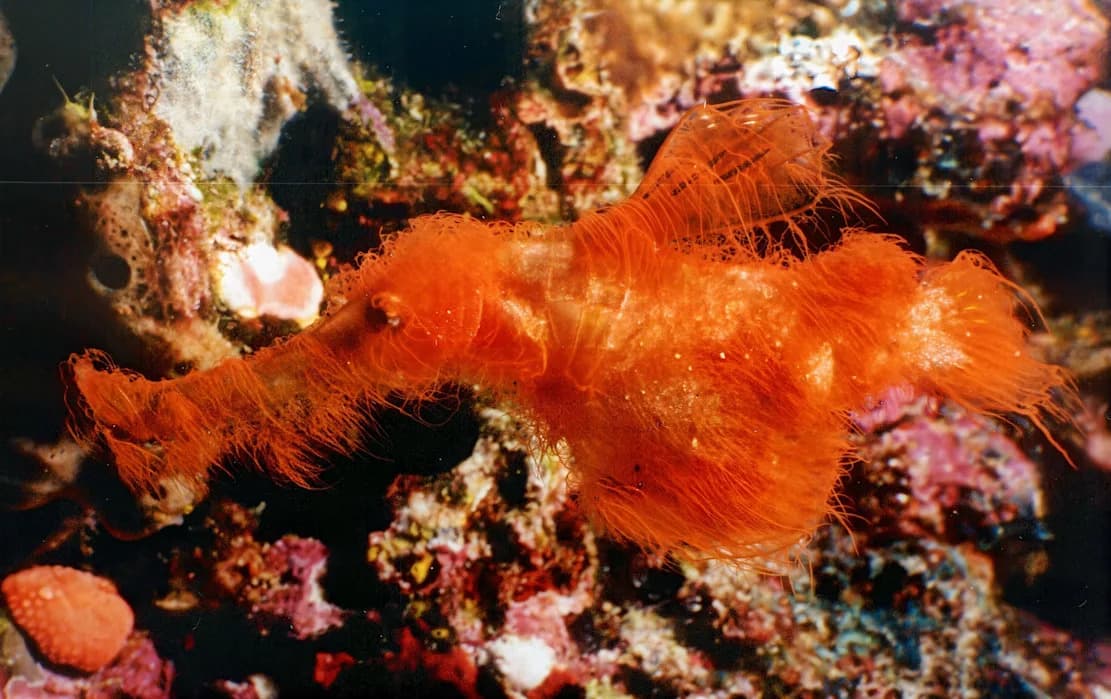
Researchers discovered the Solenostomus snuffleupagus, a tiny ghost pipefish, off the Great Barrier Reef.David Harasti
Researchers have formally described a new, tiny species of ghost pipefish—Solenostomus snuffleupagus—named for its uncanny resemblance to Mr. Snuffleupagus from Sesame Street. Found across parts of the South Pacific, the fish is remarkable for its diminutive size, dense filamentous camouflage, and unexpected diet.
How It Was Found
More than two decades after marine scientist David Harasti first spotted an unusual, fuzzy pipefish while diving off Papua New Guinea, he and ichthyologist Graham Short mounted a targeted search. Harasti made multiple return trips and Short combed museum collections before a tip from recreational divers on the Great Barrier Reef led to a confirmed sighting in 2021. The team collected specimens and carried out laboratory analyses to describe the species.
What Makes This Ghost Pipefish Unique
Size: Individuals measure roughly 4–5 centimeters—about the length of a golf tee—roughly half the size of a typical ghost pipefish.
The Solenostomus snuffleupagus are about 4–5 centimeters or the size of a golf tee.Kerryn Parkinson, Australian Museum
Camouflage: They are densely covered in hair-like filaments that make them resemble floating tufts of algae. Their drift-like movements enhance this disguise, helping them blend into seaweed and debris.
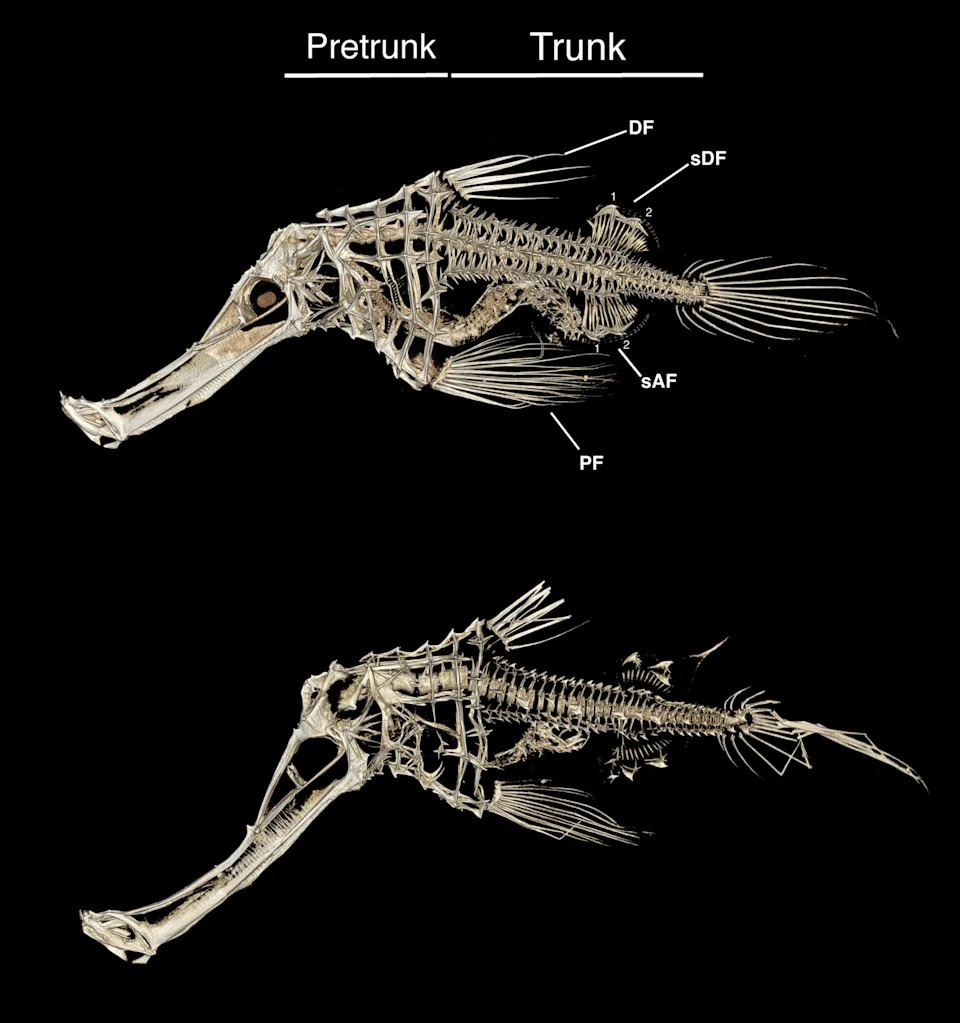
Diet: CT scans revealed a small fish in the stomach of one specimen, suggesting that S. snuffleupagus may sometimes prey on other fish—an unusual behavior for ghost pipefishes that typically feed on tiny crustaceans through tube-like mouths.
Range and Color: Citizen-science photos on iNaturalist indicate the species occurs across the South Pacific, with confirmed sightings from Tonga, Papua New Guinea and New Caledonia. Individuals vary in color from bright reds and purples to earthy oranges and browns.
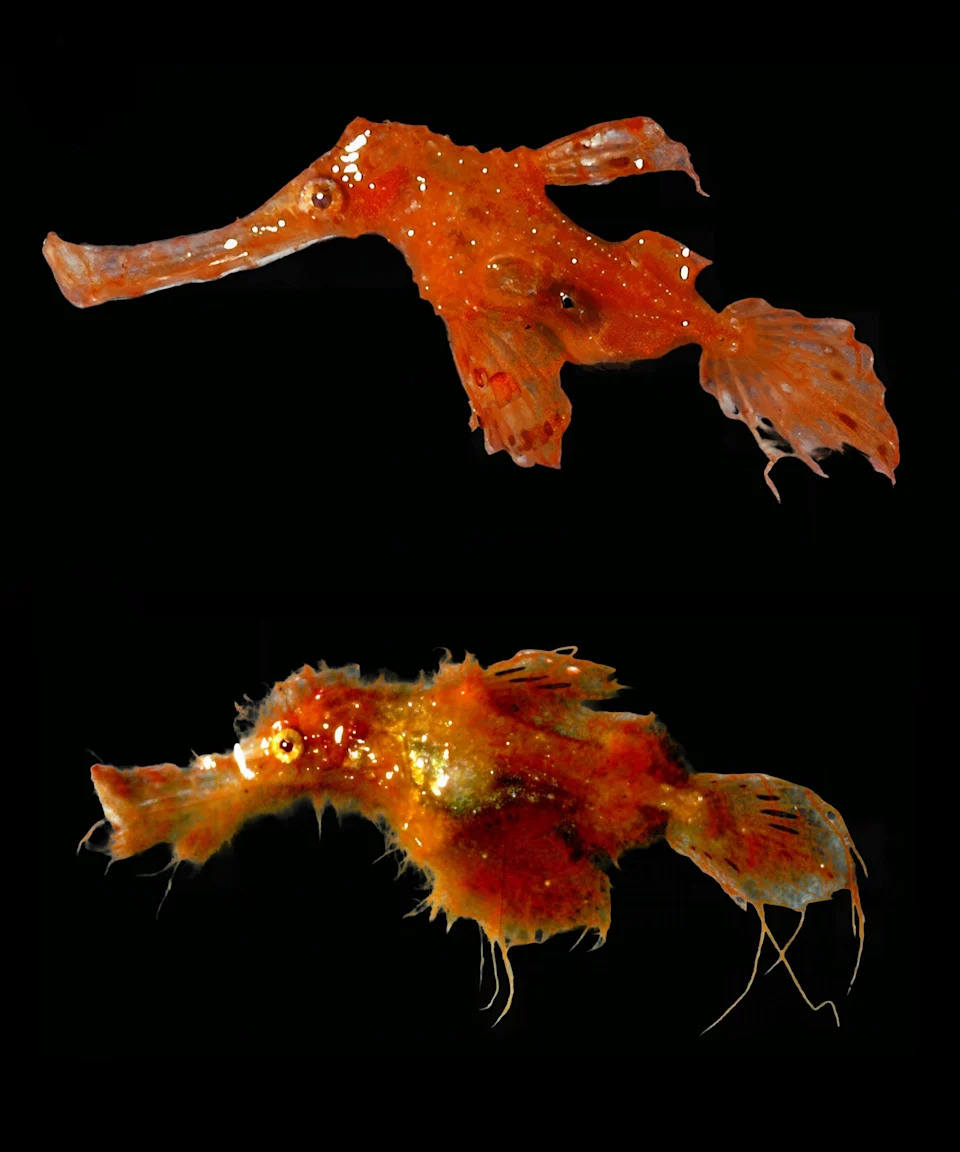
The Snuffleupagus ghost pipefish is covered in hair-like filaments that float like algae.Graham Short, Australian Museum
“We were just high-fiving, hugging underwater. I was actually screaming, I was so happy,”
—Graham Short, recalling the moment the researchers first encountered the fish in the wild.
Scientific Significance
Genetic (DNA) analysis confirmed that the specimens represent a species previously undescribed by science. Ghost pipefishes are closely related to pipefish and seahorses but belong to a distinct evolutionary lineage. The discovery of S. snuffleupagus—previously overlooked because of its size and effective camouflage—underscores how much marine biodiversity remains to be documented, especially in well-studied regions like the Coral Triangle and Great Barrier Reef.
Outlook: Researchers believe additional, undescribed ghost pipefishes may still be hiding in plain sight, and the discovery highlights the value of combining field observations, museum collections, citizen-science records, and modern imaging and genetic tools.
Help us improve.