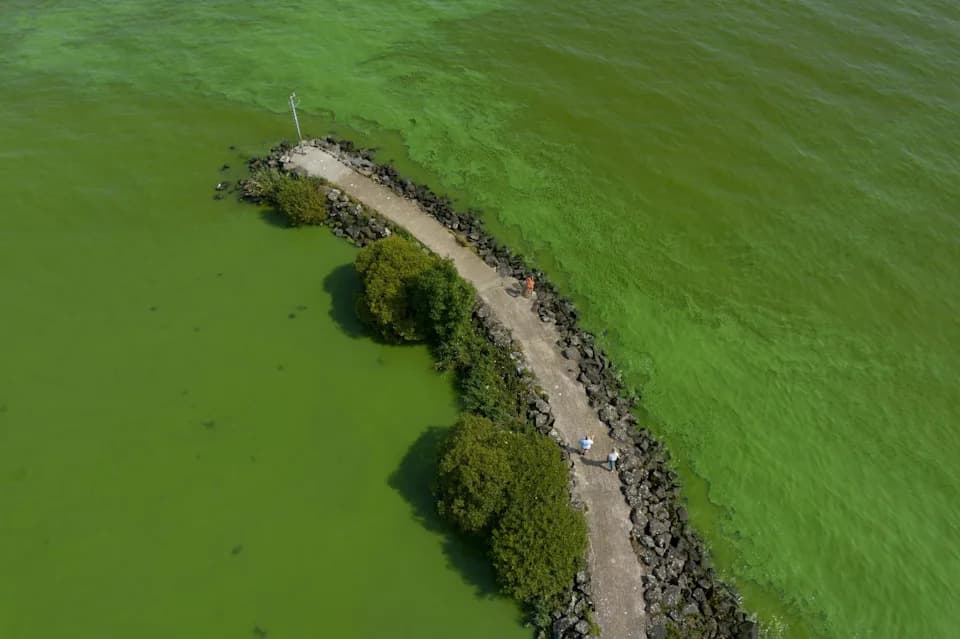
Satellite images are showing vibrant turquoise and blue‑green water along the Mid‑Atlantic coast from New Jersey through Virginia. NASA and other agencies attribute the colors to seasonal phytoplankton blooms amplified by spring sunlight, nutrient upwelling and coastal mixing. The phenomenon is mainly visual and typically harmless to beachgoers, though very large blooms can temporarily reduce oxygen and stress marine life. Scientists expect the color to fade within weeks unless nutrients are replenished.
Mid‑Atlantic Turns Turquoise: Satellite Images Reveal Spectacular Phytoplankton Bloom
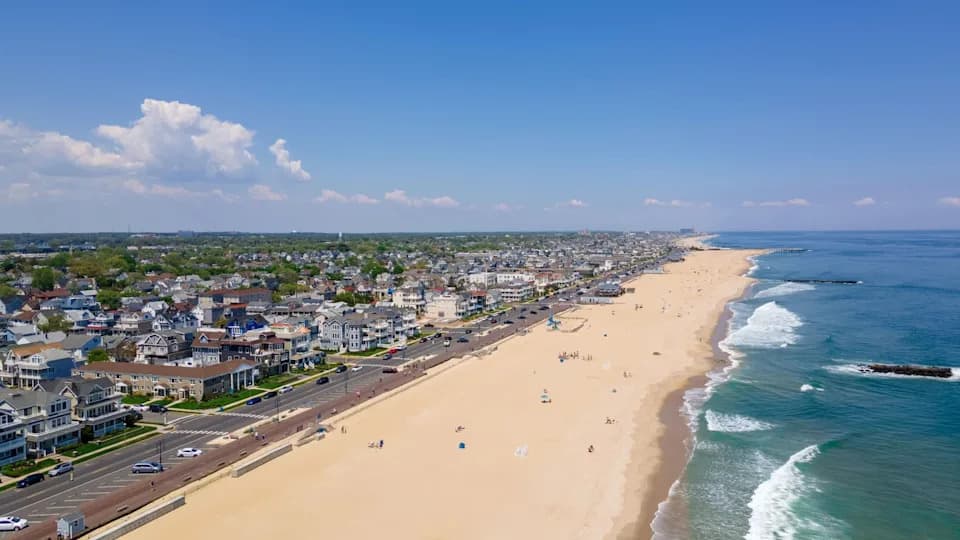
A drone shot of the Belmar Beach and coastal road and buildings on a sunny day in Belmar, New Jersey, USA
Satellite imagery is revealing an unusually bright, tropical‑looking stretch of turquoise water along the Mid‑Atlantic coast this spring, with striking blue‑green swirls visible offshore of New Jersey, Delaware, Maryland and Virginia.

A view of the Lifegaurd chair on the beach in Cape May, New Jersey
What’s happening? Beginning in early April, NASA satellites detected large, swirling patches of brownish to blue‑green water in the shallow zone where Raritan Bay, Delaware Bay and Chesapeake Bay meet the Atlantic — the Mid‑Atlantic Bight. Scientists say the vivid color comes primarily from dense phytoplankton blooms. These microscopic, plant‑like organisms contain chlorophyll, which absorbs some wavelengths of sunlight and reflects blue‑green light when concentrations are high.
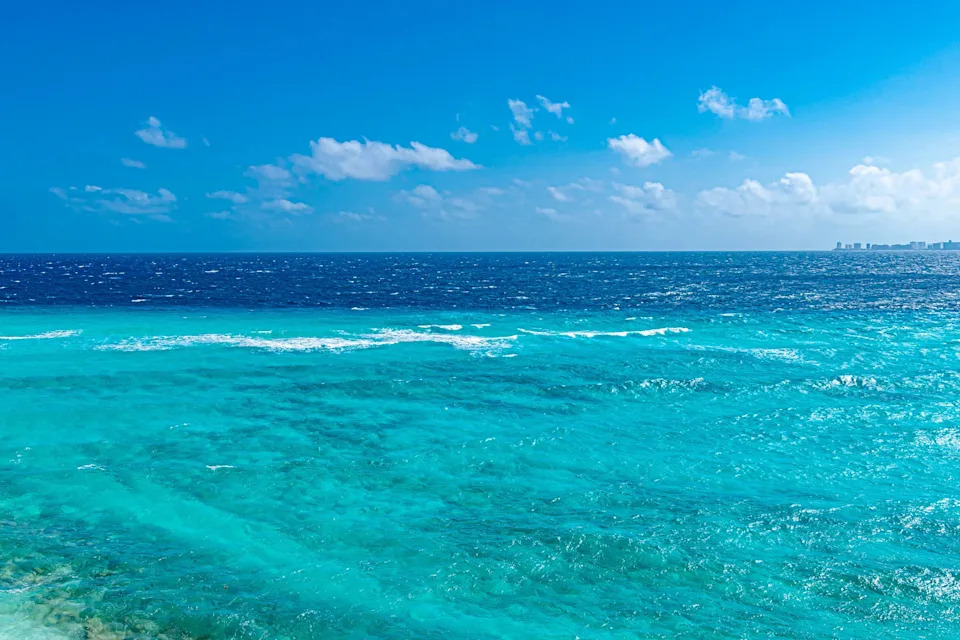
Ocean view from Punta Sur at Isla Mujeres
Why The Color Is So Intense
The dramatic appearance is the result of several seasonal factors combining this spring: bright sunlight, plentiful nutrients near the surface supplied by upwelling and river inputs, and ocean currents that concentrate the plankton. The Mid‑Atlantic is often "noisy" or discolored by sediments and organic matter carried by rivers, which usually makes coastal waters darker. In this case, phytoplankton concentrations are strong enough to change the visible color in satellite images.
Aerial view of beautiful white cruise ship above luxury cruise in the ocean sea at early in the morning time concept smart tourism travel on holiday vacation time on summer
What Agencies Are Seeing
NASA’s Earth Observatory and the Goddard Space Flight Center have closely tracked the bloom across the region. Rutgers oceanographers say the event will likely fade once available surface nutrients are consumed, unless storms, river runoff or additional upwelling replenish those nutrients.
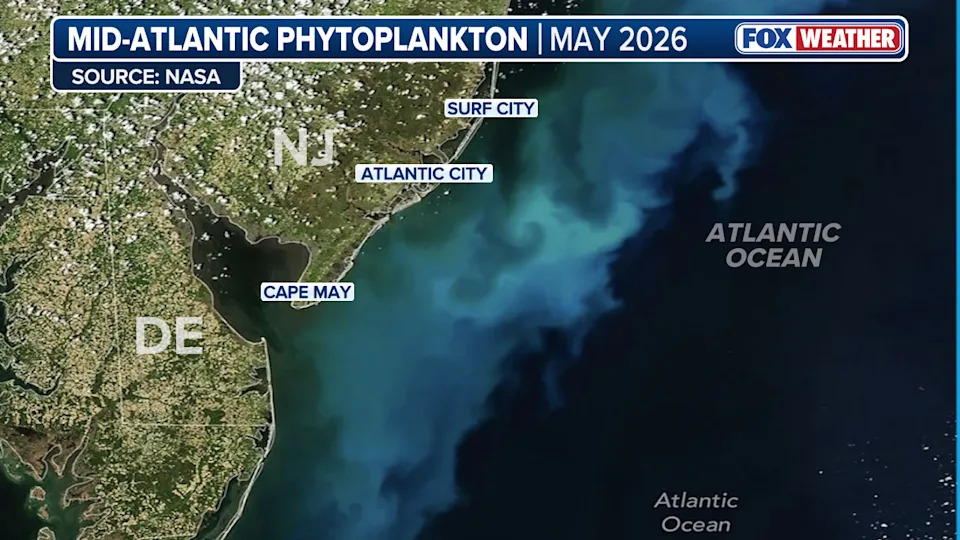
Phytoplankton bloom seen on satellite imagery in the Mid-Atlantic.
Is It Dangerous?
For most people the bloom is a visual spectacle rather than a hazard: officials say it generally poses little risk to swimmers, surfers or beachgoers. Phytoplankton are the base of the marine food web and a normal seasonal feature. However, scientists caution that extremely large blooms can occasionally cause localized, short‑lived impacts. When massive amounts of plankton die and decompose, bacteria consume oxygen and can create temporary low‑oxygen zones that stress or kill fish and shellfish.
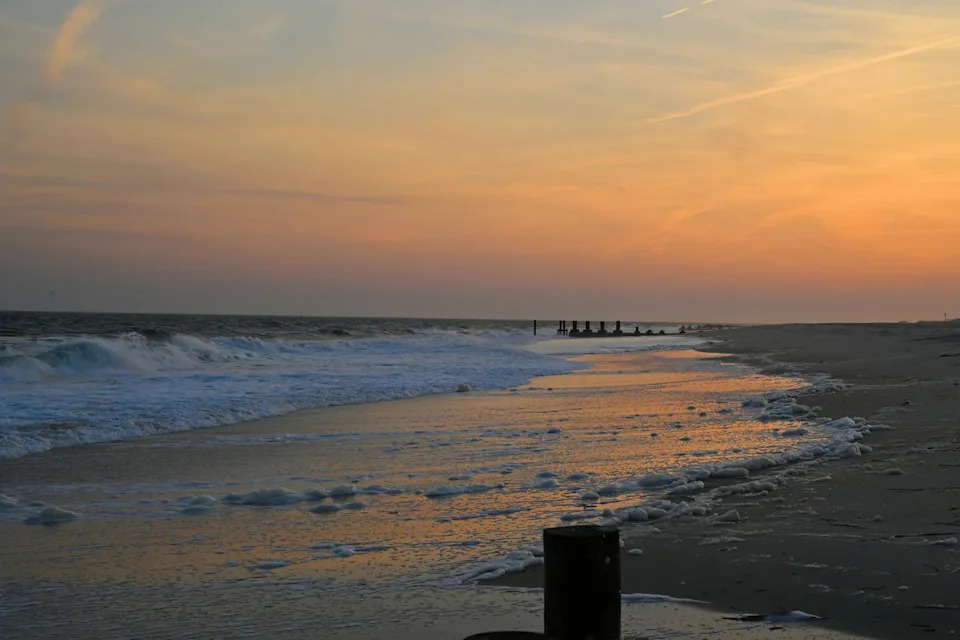
Beach sunsets cape May NJ
What To Expect
Unless nutrient inputs are renewed, experts expect the turquoise appearance to fade within weeks as the bloom diminishes and ocean conditions return to their usual hues. Meanwhile, the satellite images offer a vivid reminder of how dynamic coastal systems are and how weather, currents and nutrient cycles can transform the sea’s color during peak tourism season.
Bottom line: The Mid‑Atlantic’s tropical look is a seasonal phytoplankton bloom captured from space — visually striking and mostly harmless, but ecologically important and worth watching.
Help us improve.