This year’s hajj has offered many Iranian pilgrims a temporary refuge from conflict at home, with about 30,000 attending out of an expected 86,700. Pilgrims such as Hassan Qadiri say the pilgrimage has provided emotional relief after weeks of bombing in Isfahan. Saudi authorities have tightened security and banned flags and political slogans to keep the ritual focused on religion amid fraught regional tensions and a fraught recent history between Riyadh and Tehran.
Iranians Find Refuge and Safety in Mecca as Hajj Offers Relief from War
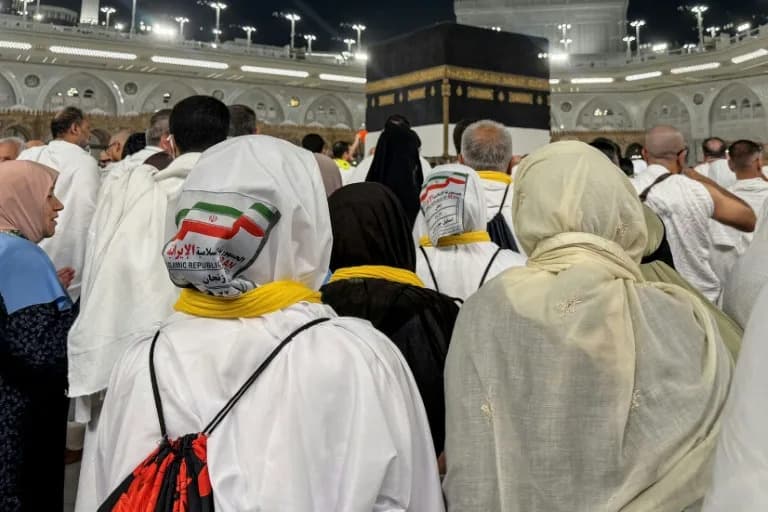
Iranian pilgrims perform the Umrah pilgrimage around the Kaaba, Islam's holiest shrine, at the Grand Mosque complex in Saudi Arabia's holy city of Mecca (-)(-/AFP/AFP)
For many Iranian pilgrims, the hajj in Mecca this year has provided a rare respite from the violence and uncertainty back home. Hassan Qadiri described the pilgrimage as a balm after weeks of heavy bombing in his native city of Isfahan, saying the experience has helped him and his family cope with recent trauma.
"We hear the call to prayer every day, not explosions here," Qadiri told AFP. "I'm very happy." He and his relatives sheltered from intense strikes until an April ceasefire eased immediate danger.
Like many Iranians attending this year's hajj, Qadiri and his family are staying in a hotel near the Grand Mosque and are accompanied by Saudi security personnel who limit access so other visitors cannot approach the pilgrims. That protective protocol has not been extended to all foreign pilgrims.
"The Saudi treatment of us is good and everything is fine," Qadiri added. His wife, who declined to give her name and wore a black abaya with a turquoise vest labeled "Isfahan," said: "Being here makes the war easier for us to bear." Small Iranian flags and emblems could be seen on garments, bags and buses across the holy city.
Tense Historical Context
According to Iran's IRNA state news agency, just over 30,000 Iranians travelled to Saudi Arabia for the hajj this year out of about 86,700 initially expected, a shortfall attributed to the "wartime situation." The hajj has long been a diplomatic flashpoint between Sunni-ruled Saudi Arabia and Shia-led Iran.
After the 1979 Islamic Revolution, tensions occasionally flared when Saudi officials accused some Iranian pilgrims of chanting political slogans or contributing to dangerous crowd movements. The two countries' last major rupture followed the 2015 stampede in Mina, which killed roughly 2,300 people, including 464 Iranians. Relations were cut in 2016 after attacks on Saudi diplomatic posts in Iran, and no Iranian pilgrims attended that year. Tehran and Riyadh restored ties in 2023 under a China-brokered agreement.
Relations were again strained after strikes in late February prompted broader retaliation across the Gulf, with infrastructure and shipping affected. The wider conflict helped make this year's hajj a sensitive diplomatic and security challenge.
Depoliticising the Pilgrimage
Saudi authorities have worked to keep the hajj focused on religious observance, discouraging political expression. Posters in hotels hosting Iranian pilgrims — in both Arabic and English — state: "Raising flags and saying religious or political slogans is prohibited," echoing warnings from the interior ministry. Officials from the Iranian delegation declined to speak with reporters.
While the international outlook remains uncertain, many pilgrims said they were determined to make the most of their time in Mecca. "It is a very beautiful feeling to be here for the hajj," said Ali Reza, speaking outside his hotel. Pardis, a woman from Tehran whose relative was killed in an air strike, added: "I feel peace and safety here."
Note: Figures and accounts in this report are based on AFP reporting and statements cited by Iranian state media.
Help us improve.