Space debris is increasingly forcing climate satellites to perform avoidance maneuvers that can corrupt data and shorten mission lifetimes. NASA’s Aqua — vital for fire detection and long-term climate records — has executed dozens of such maneuvers and will be retired this year with under 66 lb (30 kg) of fuel remaining. Tracked debris rose from ~16,000 in 2005 to over 44,000 by 2026, while many small fragments remain untracked, raising collision risk, insurance costs and the chance of more frequent data gaps.
Space Junk Is Forcing Climate Satellites To Dodge — Threatening Data and Lifetimes
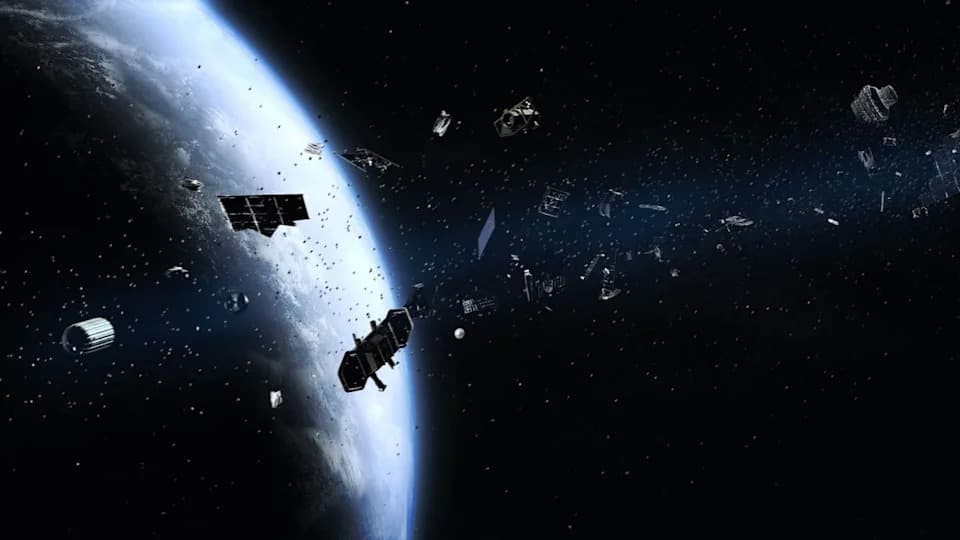
Space debris is only going to get worse as satellite companies ramp up production. What might this mean for our science observation satellites?. | Credit: janiecbros/Getty Images
On the morning of Jan. 8, 2025, a red marker lit up NASA’s Fire Information for Resource Management System: the first sign of one of California’s deadliest wildfires, which killed a dozen people and destroyed thousands of homes in the Palisades. Over the blaze, NASA’s Aqua satellite was passing overhead, collecting infrared observations and relaying them to ground stations in Alaska and Svalbard.
Aqua carries infrared instruments that detect heat and surface changes invisible to the human eye. NASA converts those measurements from the Moderate Resolution Imaging Spectroradiometer (MODIS) into GPS coordinates so emergency crews can map fires rapidly — often faster than 911 reports reach authorities.
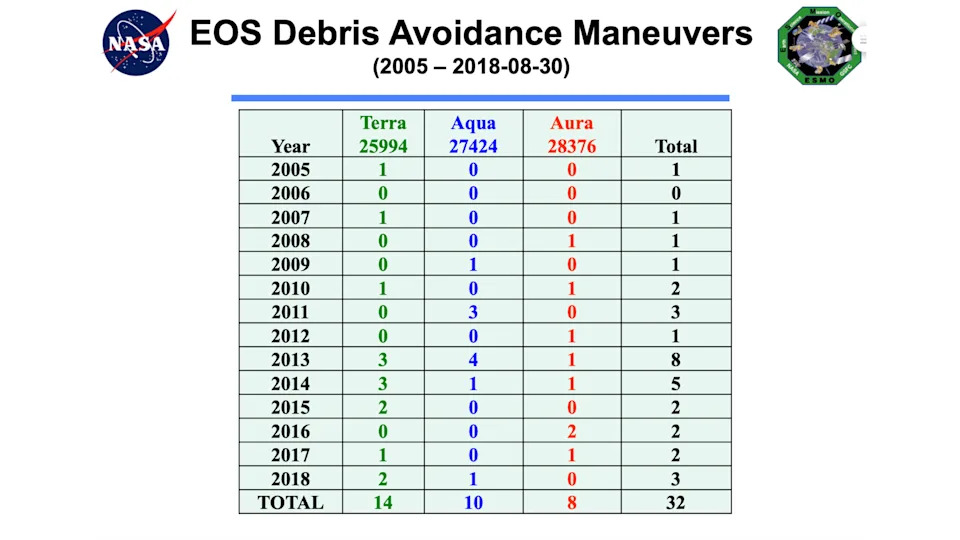
A graph showing how many maneuvers the EOS satellites had to take between the years of 2005 and 2018 in order to avoid debris in orbit. | Credit: NASA
Gaps in Data — And an Unseen Culprit
Recently, scientists have spotted unexpected gaps and corrupted entries in fire-tracking datasets. NASA logs indicate multiple instances where datasets contained errors or missing swaths of observations. Increasingly, the culprit is not weather or hardware alone but incoming orbital debris that forces satellites to perform avoidance maneuvers or temporarily suspend data collection.
Why Maneuvers Matter
Avoidance burns protect spacecraft from collisions, but they have trade-offs. Each maneuver consumes finite propellant, shortens operational lifetime and can interrupt or degrade scientific records. Since 2005, NASA’s Earth Observing System (EOS) fleet — including Aqua, Terra and Aura — has executed at least 32 documented debris-avoidance maneuvers. According to mission logs and the Land Data Products Evaluations Assessment, several of those maneuvers coincide with compromised climate datasets.
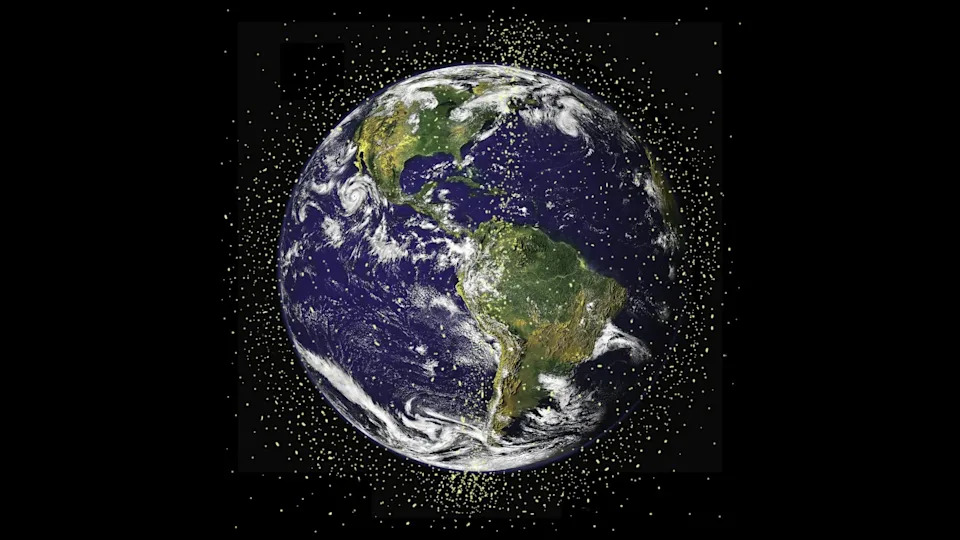
Space debris depicted around Earth. | Credit: NASA
"Even without collisions, space debris has an economic cost," said Andrew Bonwick, vice president at RelmInsurance. "Each time a satellite has to maneuver to avoid a potential collision, it uses fuel which is a finite and precious resource."
Aqua: Mission, Risks and Remaining Fuel
At its nominal altitude — roughly 438 miles (705 km) in sun-synchronous Low Earth Orbit (LEO) — Aqua makes about 14 passes per day from pole to pole, collecting data on oceans, atmosphere and land. Over nearly a quarter-century in orbit the satellite has endured hardware setbacks (a battery short, a failed solar-panel thermistor and the loss of 23 solar cell strings) but has remained productive thanks to careful fuel management, lasting roughly 18 years beyond its intended lifetime.
Project scientist Claire Parkinson noted in 2022 that if teams had expected a 20-year mission, they might have provisioned more propellant. Today, Aqua holds less than 66 pounds (30 kg) of fuel, reserved for a controlled deorbit that will safely burn the spacecraft in Earth’s atmosphere when it is retired later this year. After decommissioning, Aqua will no longer be able to perform collision-avoidance maneuvers.
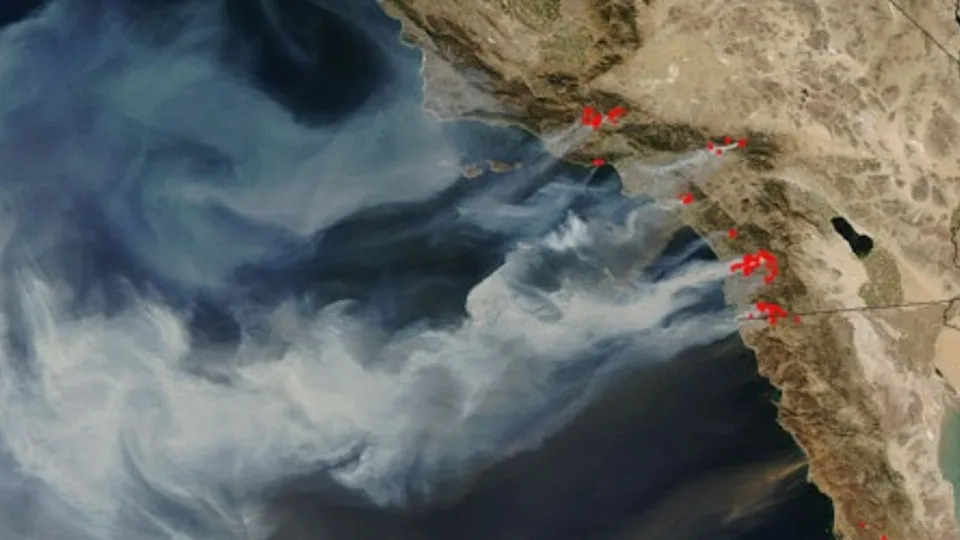
MODIS satellite tracking of California wildfires in 2007. | Credit: Wikimedia Commons
Growing Debris, Rising Risk
LEO contains the densest population of debris. The European Space Agency tracked roughly 16,000 cataloged objects in 2005; by 2026 that figure exceeded 44,000 — a rise of about 180 percent. ESA also estimates more than a million smaller fragments are untracked. Even tiny particles—down to paint flecks—can damage or disable a satellite traveling at orbital velocities.
Debris comes from accidental breakups, deliberate anti-satellite (ASAT) tests, and past collisions. Near-misses are also rising: on April 28, two Russian spacecraft passed within roughly 10 feet (3 meters) of one another. ESA estimates a roughly 20 percent increase in collision risk since 2024.
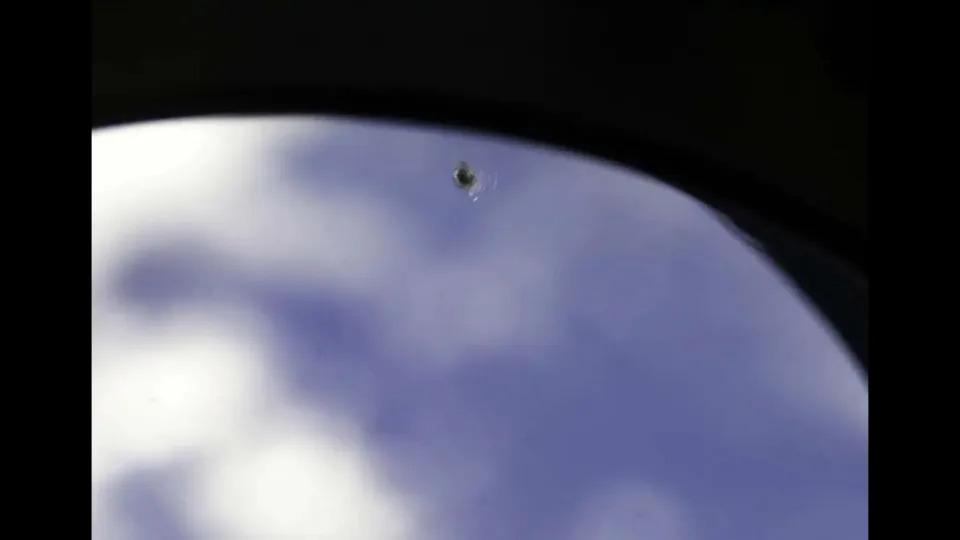
Micrometeoroid orbital debris (MMOD) impact on window # 7 of the International Space Station (ISS) Zvezda Service Module (SM) during Expedition Four. Some orbital debris is natural while a ton of it is humanmade. | Credit: NASA
Consequences Beyond Science
Collision risk and the growing debris population are affecting insurance markets and mission planning. Satellite insurance is becoming harder and more expensive to obtain; without coverage, small operators or NGOs could face existential threats after a single loss. MethaneSAT, for example, stopped transmitting in 2025 after just 15 months; investigators have not reached consensus on the cause, but the loss underscores program vulnerability.
There have been four confirmed on-orbit collisions to date, including a 2021 incident in which debris from a Russian Zenit-2 rocket struck China’s Yunhai-1 02 meteorological satellite. The 2007 Chinese ASAT test that fragmented one of its own satellites remains a cautionary example of how debris can cascade (the so-called Kessler Syndrome).
What Comes Next
NASA continues fire monitoring through instruments such as the Visible Infrared Imaging Radiometer Suite (VIIRS) aboard multiple platforms, and MODIS products will persist until Aqua and Terra are retired. Budget constraints and rising operational costs have also opened space for private initiatives: firms including Google have proposed dedicated constellations for fire detection that could offer higher resolution and faster revisit rates.
As Aqua nears retirement after more than 126,000 orbits and contributions to some 30,000 scientific publications, the satellite leaves one of the longest continuous climate data records from a single platform. Replacing that record and preserving data continuity will require coordinated investment, better debris mitigation, improved tracking of small fragments and robust insurance and policy solutions.
Bottom line: Growing orbital debris is already forcing maneuvers that can corrupt climate observations and consume precious fuel. Without stronger debris mitigation and new observational systems, data gaps and mission losses will become more frequent — just as the demand for reliable climate and disaster-monitoring data rises.
Help us improve.