The AfD is gaining momentum in Saxony-Anhalt as Ulrich Siegmund campaigns locally and national polls show the party leading in some surveys. Economic anxieties and immigration debates have boosted support, with regional polls putting AfD backing as high as 41%, despite being labelled "far-right extremist" by the state's Verfassungsschutz. Mainstream parties maintain a "firewall" against coalitions with the AfD, but Siegmund says his party aims to govern alone, a prospect with significant implications for state control of police, education and the Bundesrat.
AfD Surge in Saxony-Anhalt: Ulrich Siegmund Courts Voters Locally as Merz’s Ratings Slide
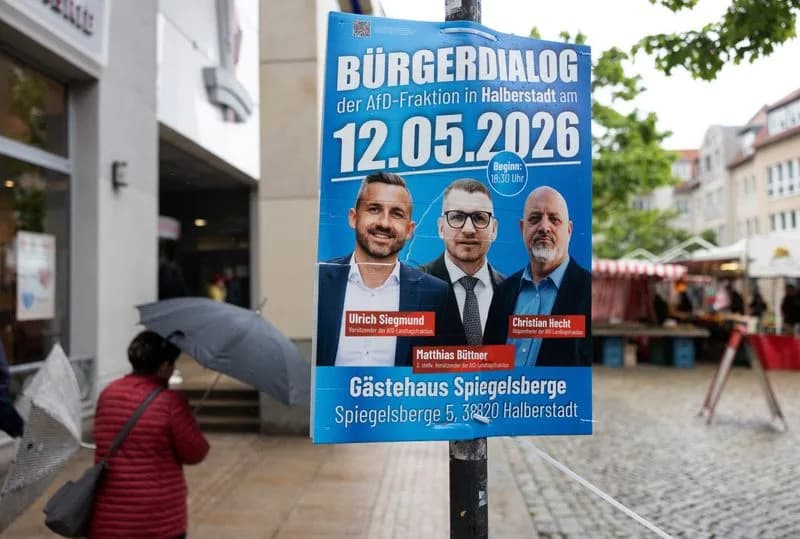
A placard advertises for a citizen dialogue with Ulrich Siegmund, top candidate of the far-right Alternative for Germany (AfD) party in Germany's Saxony-Anhalt state election, in Halberstadt, Germany, May 12, 2026. REUTERS/Liesa Johannssen
As Chancellor Friedrich Merz grapples with falling approval ratings, Ulrich Siegmund of the far-right Alternative for Germany (AfD) has intensified local campaigning in Saxony-Anhalt, positioning the party for a potential state victory in September.
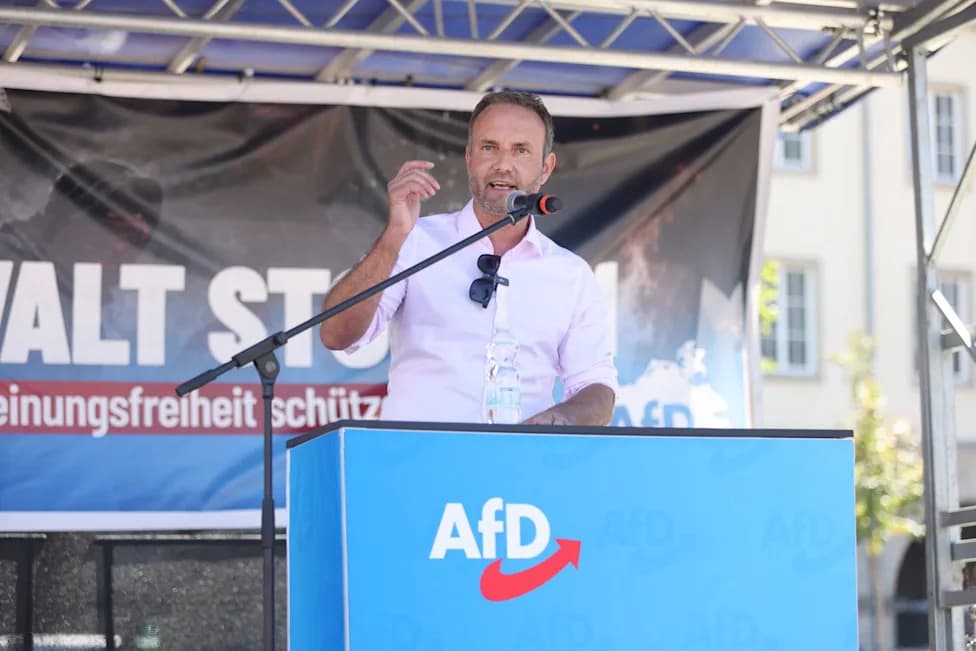
Siegmund, 35, has been holding "citizen dialogues" across towns such as Halberstadt, where he told supporters queuing for selfies: "People have simply had enough. They want their old, safe Germany back." Polls cited by INSA put the AfD up to seven percentage points ahead of Merz's conservatives nationally, and some regional surveys show AfD support in Saxony-Anhalt as high as 41%.
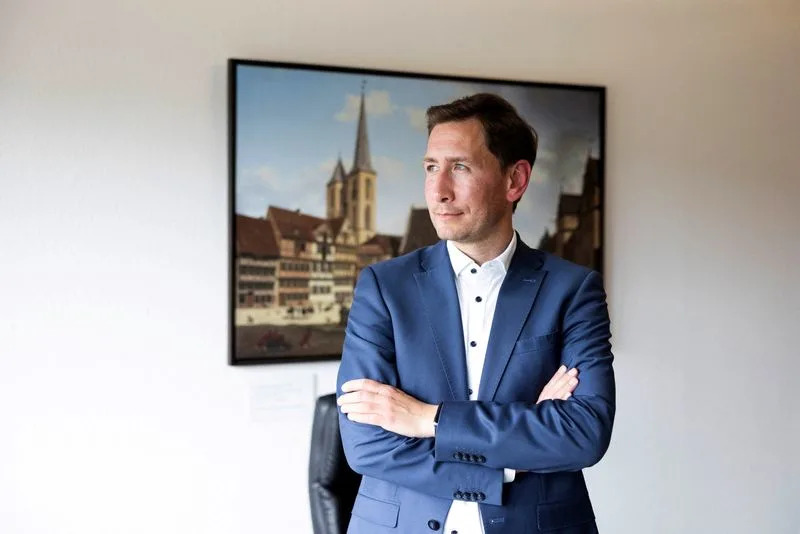
Mayor Daniel Szarata poses for a photograph on the day of a citizen dialogue with Ulrich Siegmund, top candidate of the far-right Alternative for Germany (AfD) party in Germany's Saxony-Anhalt state election, in Halberstadt, Germany, May 12, 2026. REUTERS/Liesa Johannssen
Local Voter Concerns and Economic Context
Halberstadt, an eastern town of around 40,000 with a medieval cathedral and a preserved old town, contradicts the bleak stereotype of the former communist east. While a historic smoked sausage maker has struggled, Daimler Truck recently invested €500 million ($580 million) in a logistics centre employing about 450 people, and a renovated pedestrian precinct is due to open next month.
Still, broader economic anxieties — rising energy and fuel prices, job losses in industry and competition from China — have fueled voter unease. "People aren't actually doing that badly," said Halberstadt mayor Daniel Szarata of the Christian Democrats. "But uncertain times always fuel fear."
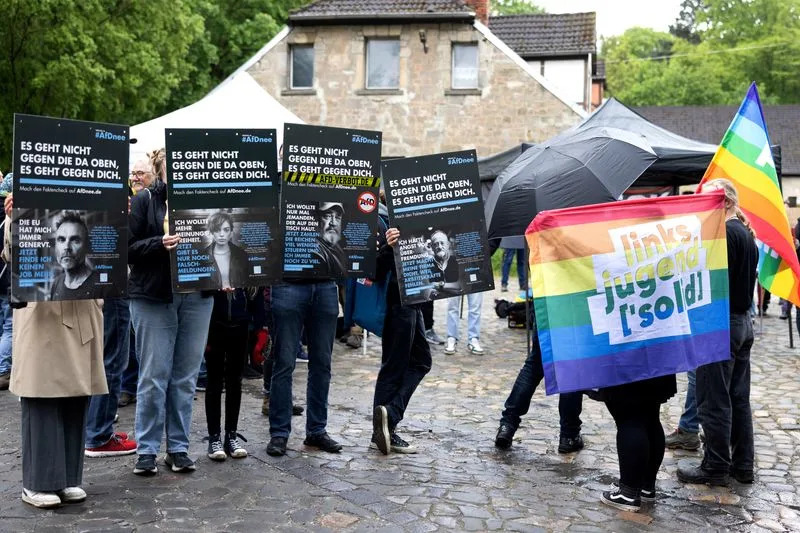
People protest against a citizen dialogue with Ulrich Siegmund, top candidate of the far-right Alternative for Germany (AfD) party in Germany's Saxony-Anhalt state election, in Halberstadt, Germany, May 12, 2026. REUTERS/Liesa Johannssen
Politics, Polls and Security Concerns
Merz's coalition of conservatives and the centre-left Social Democrats has struggled to push reforms while steering a slowing economy. His approval rating has fallen to as low as 16% in an Infratest dimap poll. The national debate over immigration, intensified after former Chancellor Angela Merkel admitted more than a million refugees in 2015, remains a core driver of AfD support.
The Saxony-Anhalt state office of the Verfassungsschutz, Germany's domestic security agency, has classified the local AfD as "far-right extremist." That label has not, however, blunted the party's appeal in parts of the state where foreign resident shares are lower and economic worries are pronounced.

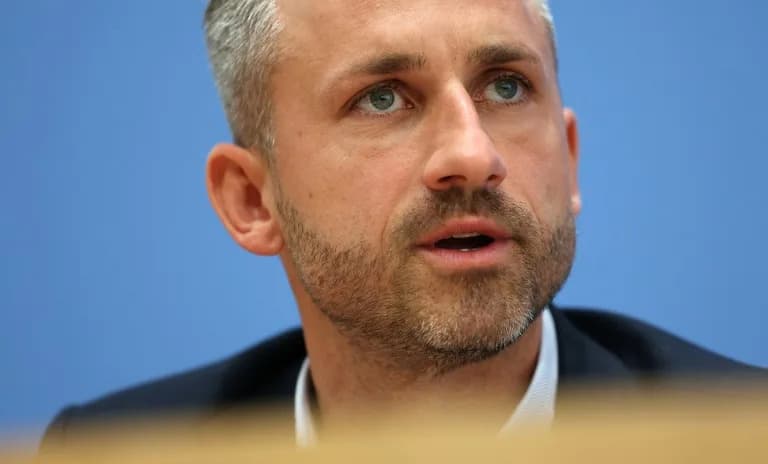
Ulrich Siegmund, top candidate of the far-right Alternative for Germany (AfD) party in Germany's Saxony-Anhalt state election, talks to people before an AfD citizen dialogue in Halberstadt, Germany, May 12, 2026. REUTERS/Liesa Johannssen
"I like the fact they want to do something for us Germans," said Ruediger Printky, one of hundreds who attended a Siegmund event, citing rising prices and dissatisfaction with government policy.
What Victory Would Mean
Under Germany's federal system, state governments control education, policing and internal security, and they influence national policy through the Bundesrat, the upper house. A far-right win in Saxony-Anhalt would therefore have implications beyond the state.
Mainstream parties have pledged a political "firewall" refusing coalitions with the AfD. Siegmund rejects that approach as undemocratic and says the AfD aims to "go it alone" in Saxony-Anhalt. "If we take control of the interior ministry, we will be responsible for the Verfassungsschutz. Then we'll have a look at the files," said Christian Hecht, an AfD state parliamentarian speaking beside Siegmund.
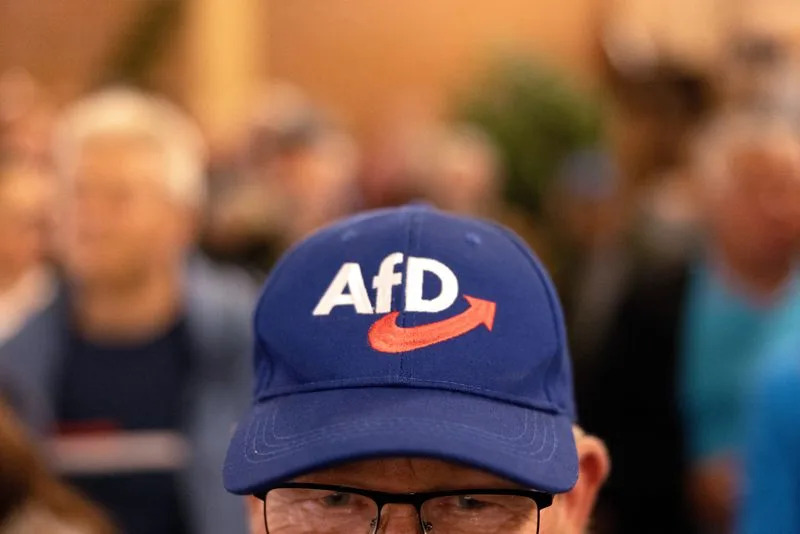
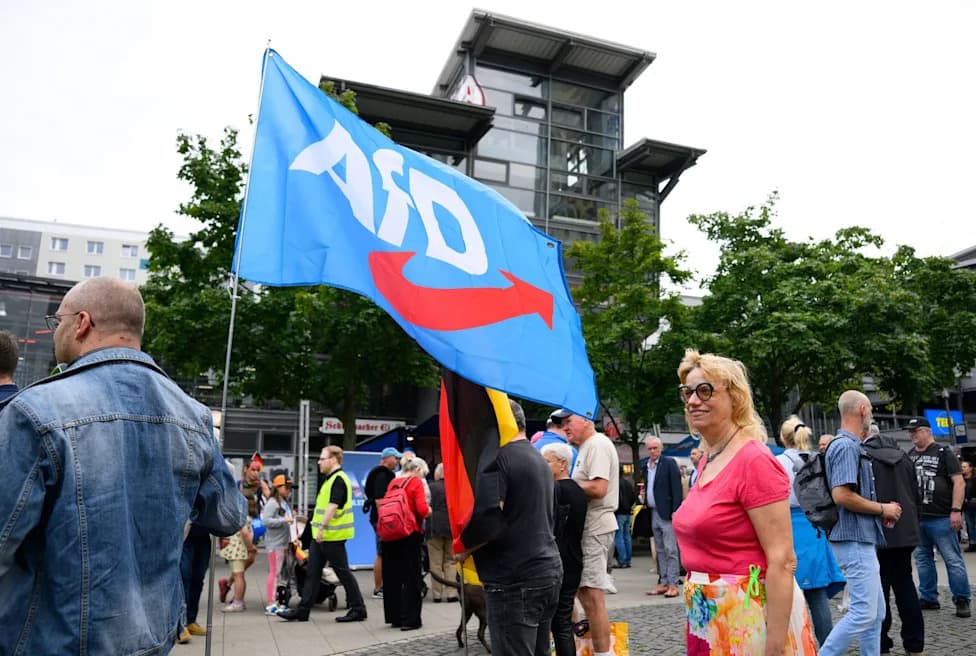
A spectator wears an AfD base cap during a citizen dialogue with Ulrich Siegmund, top candidate of the far-right Alternative for Germany (AfD) party in Germany's Saxony-Anhalt state election, in Halberstadt, Germany, May 12, 2026. REUTERS/Liesa Johannssen
Mayor Szarata called current polling "very, very alarming" but expressed hope voters will reconsider at the ballot box: "They have the advantage that they have never had to prove they can run anything," he said.
Siegmund, who combines a personable on-stage style with a substantial TikTok following, dismisses accusations of inexperience and criticizes established parties, the media, trans-rights advocates and climate activists. Among attendees at a packed meeting, Rene Doering urged caution about writing off the AfD: "You just have to give them a chance," he said.
($1 = 0.8607 euros)
Help us improve.