The article argues that placing successful businesspeople in government roles does not make public institutions behave like private firms. It explains that markets rely on prices, competition, and profit-and-loss signals that public agencies lack, and it cites the DFC's roughly $205 billion portfolio and the DOGE attempt to cut $2 trillion in waste as instructive examples. The piece warns that state-led investment programs risk replicating the cronyism they intend to counter and concludes that politics—not market discipline—will ultimately shape government allocations.
Putting Business Leaders In Charge Won’t Turn Government Into A Company
When Businesspeople Run Government, the Government Doesn't Become a Business
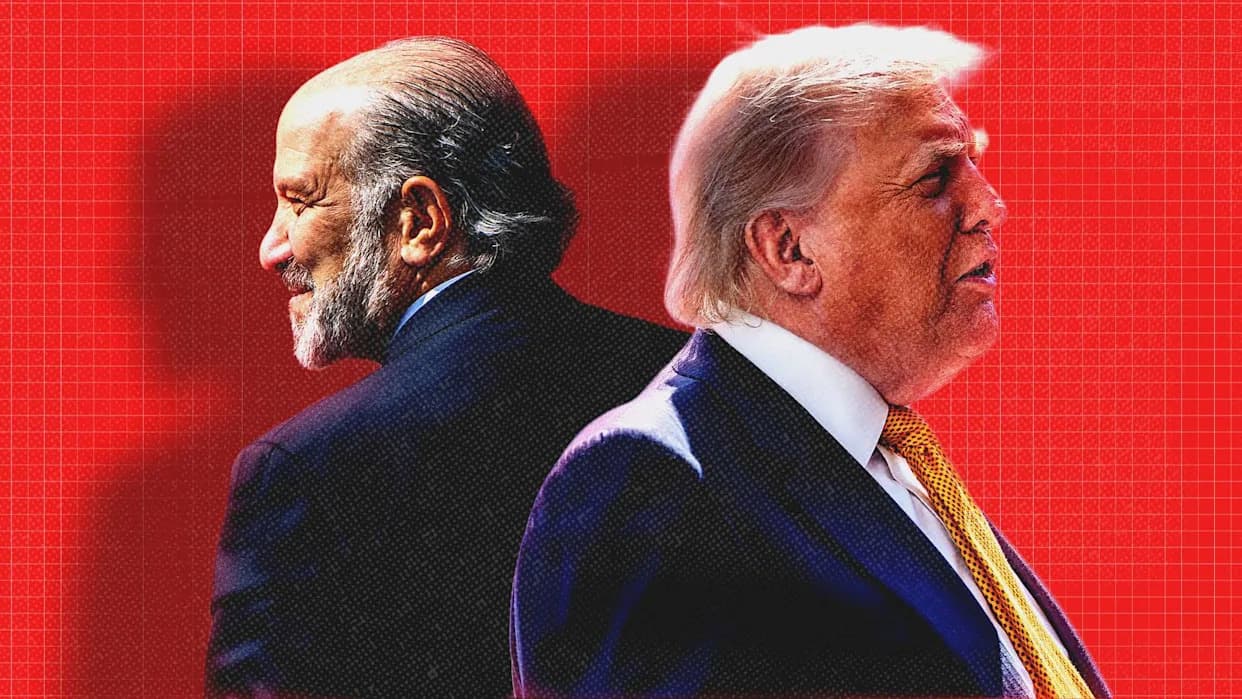
Washington has seen an influx of investors and entrepreneurs into senior government roles who promise to apply private-sector discipline to public money. From Commerce Secretary Howard Lutnick to former Commerce official Michael Grimes and the proposed idea of a U.S. sovereign wealth fund, these appointees now oversee or influence hundreds of billions of taxpayer dollars. Their confidence is understandable, but treating government like a firm misunderstands the institutional differences that make markets work.
Why Markets And Government Operate Differently
Private markets rely on prices, competition, and profit-and-loss signals to allocate capital and reveal what works. Those mechanisms create fast, personal accountability: winners are rewarded and losers bear the cost. Government lacks equivalent market signals. Political incentives, opaque objectives, and dispersed accountability replace the clear feedback loops investors face in private firms.
Insulated Incentives And Real-World Examples
Consider the U.S. International Development Finance Corporation (DFC). Its new CEO, Ben Black, now oversees roughly $205 billion "to invest in U.S. strategic interests, build new markets, and deliver real returns for taxpayers." Even experienced dealmakers like Black and others who rose on Wall Street are now operating in a system that does not impose the same kinds of personal or financial consequences for bad bets.
Similarly, Commerce Secretary Howard Lutnick has advocated tariffs and active industrial policy, while figures such as Michael Grimes—known for leading major tech IPOs—have pushed for federal venture-style programs. The impulse to substitute market allocation with directed state action risks politicizing investment decisions and diluting accountability.
The DOGE Episode: A Cautionary Tale
The Department of Government Efficiency (DOGE) episode illustrates the limits of transplanting private-sector methods into government. Elon Musk arrived with a mandate to cut as much as $2 trillion in waste but found he lacked the unilateral authority of a private CEO. He faced entrenched lawyers, lobbyists, contractors, and congressional interests whose livelihoods depend on existing structures—showing how political frictions blunt the kinds of rapid, decisive choices common in private firms.
State-Led Investment Risks Becoming Cronyism
Efforts to build an American counterpart to initiatives like China’s Belt and Road—whether through targeted DFC projects or a proposed sovereign wealth fund—look less like free-market competition and more like state-directed industrial planning. That approach can encourage cronyism: resources get allocated based on political priorities, not objective market returns. The result is often misallocated capital, weakened institutions, and politicized economic decision-making.
Markets run on competition and objective signals; government runs on politics and public accountability. Appointing business leaders does not recreate market discipline inside public institutions.
Bottom line: Bringing skilled businesspeople into government can improve processes and inject useful expertise, but it does not restore the market signals—prices, profits, and losses—that drive efficient capital allocation. Without those signals, large-scale public investments remain vulnerable to political influence, lobbying, and the very misallocation these reformers set out to fix.
Help us improve.