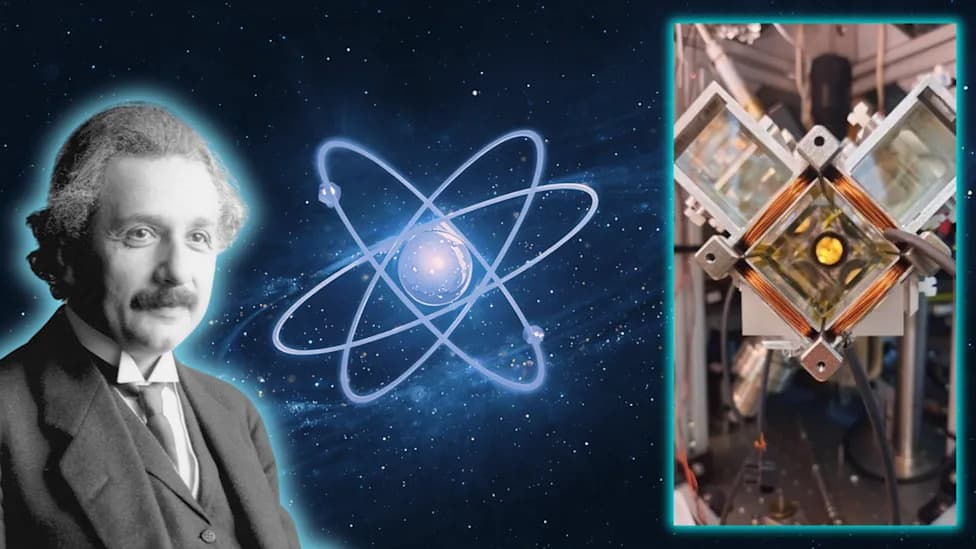
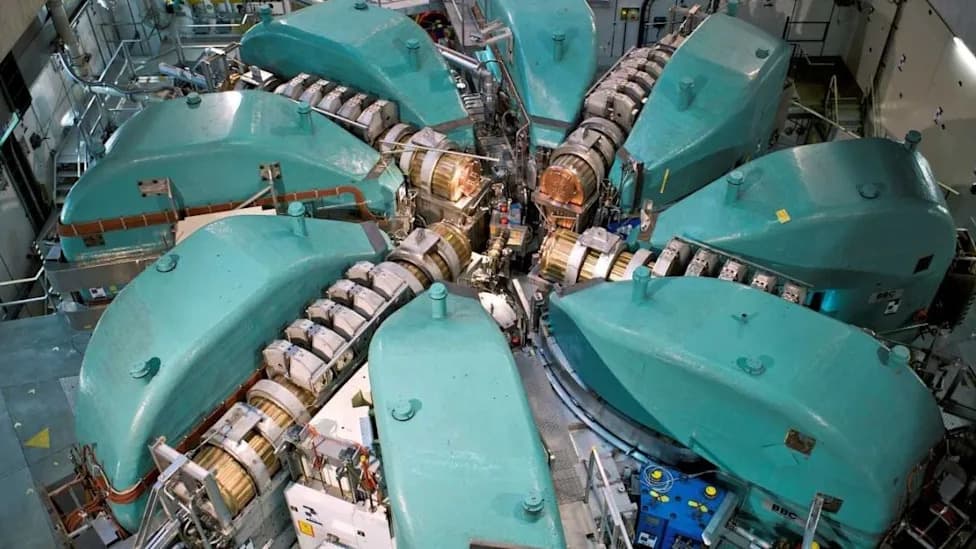
Physicists long assume that atoms with identical proton, neutron and electron counts are indistinguishable, a premise central to modern physics and technologies such as quantum computing. Mark Raizen has proposed experiments, published in Physics Letters B, to test this assumption by laser-cooling and trapping individual isotopes in an atomic clock and measuring tiny differences via nuclear magnetic moments. The proposal builds on Raizen’s decades of work at NIST and on isotope-separation advances used in medicine. Researchers say experimental evidence must decide whether the assumption holds.
Could Every Atom Be Unique? Raizen Proposes a Direct Test of Atomic Indistinguishability
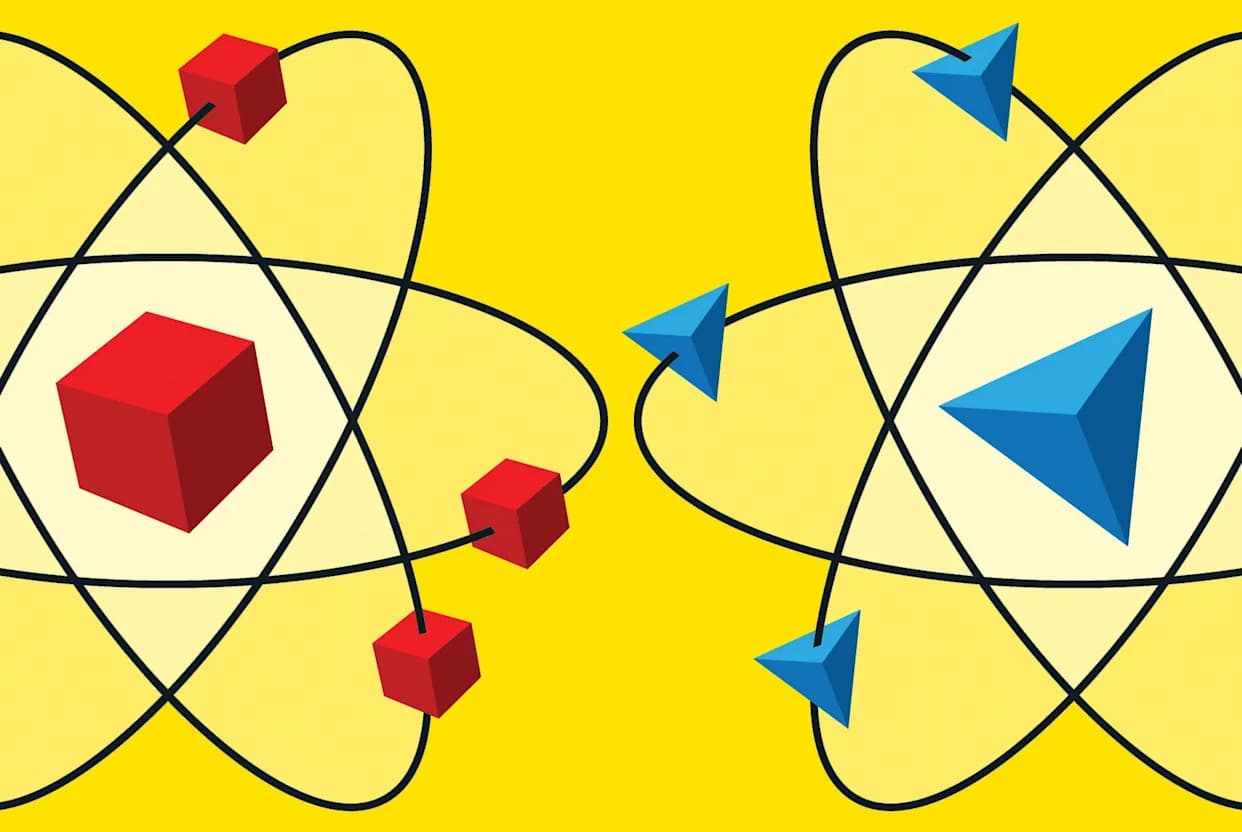
One foundational assumption of physics is that atoms with the same numbers of protons, neutrons and electrons are indistinguishable: they behave and appear identically. This principle underlies much of modern physics and enables technologies that depend on predictability, including quantum computing. Yet atomic indistinguishability has never been directly tested, and a new experimental proposal aims to change that.
What Researchers Propose
In a paper published in Physics Letters B, physicist Mark Raizen of the University of Texas at Austin outlines a sequence of precision experiments designed to expose any tiny, previously undetected differences between atoms of the same species. The plan centers on laser-cooling and trapping individual isotopes inside an exceptionally stable atomic clock and probing minute shifts in their energy levels.
How the Test Would Work
Raizen suggests using lasers to cool and confine single isotopes, then measuring subtle variations in each nucleus's magnetic field—known as the nuclear magnetic moment—to detect minute differences in energy states. By isolating and characterizing individual particles with extreme precision, the experiment aims to reveal any departures from perfect indistinguishability.
“We like to have theory and experiment march together,” Raizen says. “This question has never been tested experimentally before, so that’s what, to me, makes it interesting.”
Roots In Decades Of Work
The proposal builds on decades of Raizen's previous research. As a postdoctoral researcher at the National Institute of Standards and Technology (NIST), he helped develop techniques that let atomic clocks cool and trap strings of charged atoms “like pearls on a necklace.” Later work produced improved methods for controlling trapped particles and enabled more efficient isotope separation—techniques now used in radiation-based cancer treatments and diagnostic imaging. Those same capabilities form a practical foundation for the new experimental test.
“It does close a circle that started for me 30 or 35 years ago, and in that regard, it’s very gratifying and exciting to be able to combine these things which I never anticipated going back to,” Raizen says.
Why This Matters
Even scientists who remain skeptical that atoms could be unique emphasize the value of testing foundational assumptions. Christian Sanner, a physicist at Colorado State University who was not involved in the study, offers an analogy: two cars of the same make and model may appear identical at a glance, but precise inspection can reveal tiny manufacturing differences. Similarly, probing atoms at unprecedented precision could either reaffirm a core principle of physics or open the door to new physics.
Whether the experiments confirm indistinguishability or uncover subtle differences, researchers say the result will sharpen our understanding of matter and inform technologies—from precision timekeeping to quantum information—that depend on that understanding.
Help us improve.