The Atlantic Meridional Overturning Circulation (AMOC)—an ocean conveyor that redistributes heat—is showing signs of long-term weakening. Researchers Jelle Soons and Henk Dijkstra propose an artificial closure of the Bering Strait (CBS) to reduce Arctic freshwater flow into the North Atlantic and strengthen the AMOC. Climate-model simulations suggest a barrier built by about 2050 could prevent catastrophic weakening under certain CO2 scenarios, but the approach carries substantial ecological, political, and scientific uncertainties. The authors stress that cutting CO2 emissions remains the preferred solution.
Scientists Propose Damming the Bering Strait to Protect the Ocean's 'Conveyor Belt'
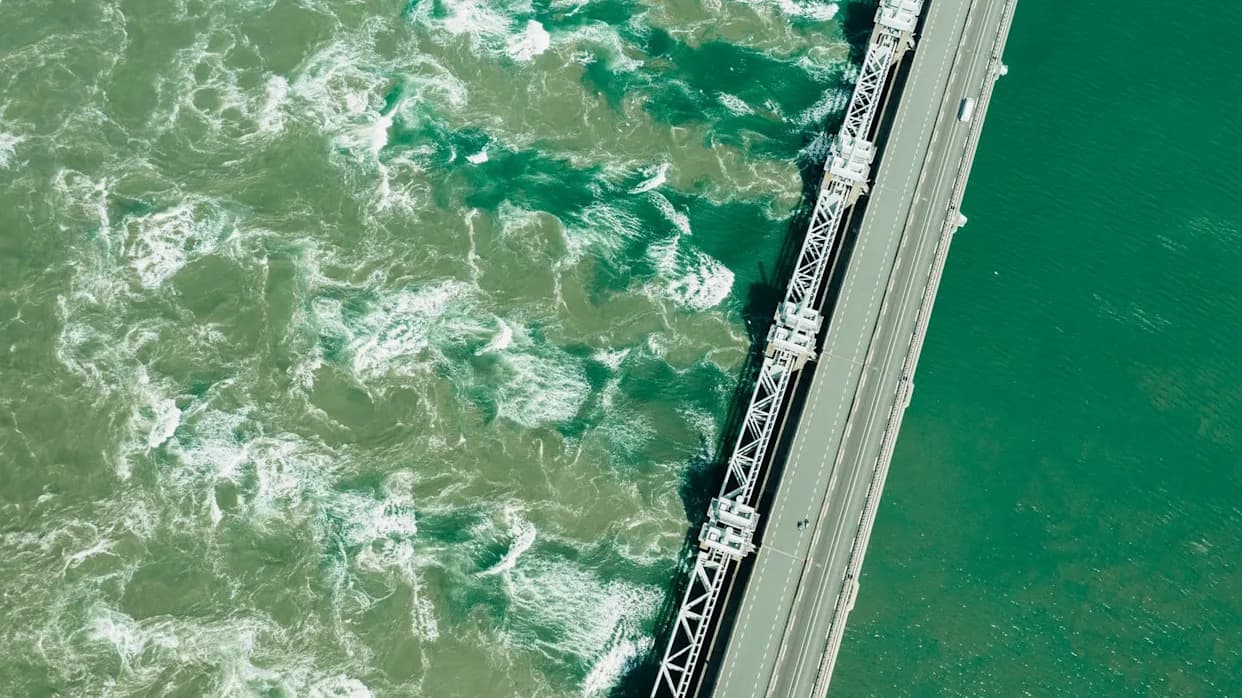
Scientists Want to Build a Huge Ocean DamKarl Hendon - Getty Images
Researchers warn that a major ocean circulation system that redistributes heat across the globe is slowing—and they have proposed a radical engineering intervention to try to stop it.
What Is the AMOC—and Why It Matters
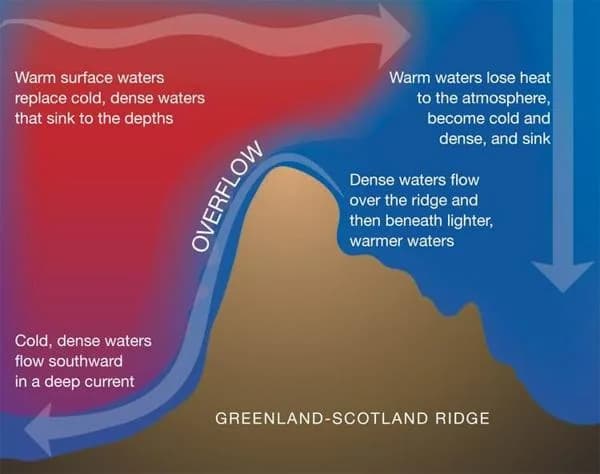
The Atlantic Meridional Overturning Circulation (AMOC) is a large-scale ocean current system that moves warm surface water from the tropics toward the North Atlantic and returns colder, denser water southward at depth. This circulation helps regulate regional climates, especially in western Europe, and influences rainfall patterns and sea levels across much of the Atlantic basin.
The Problem: A Slowing Circulation
Climate records and models show the AMOC has weakened as global temperatures have risen. Past collapses—most notably around 12,000 years ago—were associated with rapid freshwater inputs from melting ice, which freshened surface waters, reduced their density, and halted the sinking that drives overturning. A severe AMOC weakening today could shift rainfall belts, increase drought risk in some regions, bring colder winters to parts of Europe, and raise sea levels along the U.S. and European Atlantic coasts.
The Proposal: An Artificial Closure of the Bering Strait
Jelle Soons and Henk Dijkstra of Utrecht University have published model-based research proposing an artificial closure of the Bering Strait (CBS)—a large, controlled barrier across portions of the strait—to reduce the flow of relatively fresh Arctic water into the North Atlantic. Their reasoning: limiting Pacific-to-Atlantic freshwater exchange could keep North Atlantic surface waters saltier and denser, helping maintain the sinking that sustains the AMOC.
How the Idea Was Tested
The team ran climate simulations that reproduced periods when the Bering Land Bridge was exposed (tens of thousands of years ago) and then tested equivalent modern scenarios with an engineered closure. Early model runs were mixed, but upgraded simulations run on high-performance computers suggested a consistent outcome in many cases: a barrier installed by about 2050 could, under certain CO2-increase scenarios, prevent catastrophic AMOC weakening in those model runs.
Major Caveats, Risks, and Uncertainties
The authors and other scientists emphasize large uncertainties. Models differ on the timing and likelihood of a full AMOC collapse—predictions range from decades to centuries—and natural variability may play a role alongside human-driven warming. An engineered closure would be a planetary-scale intervention with far-reaching ecological, geopolitical, and logistical consequences:
- Ecosystems in the Arctic and North Pacific could be disrupted by altered circulation, nutrient flows, and sea-ice dynamics.
- Indigenous communities and international stakeholders around the Bering Strait would face political and legal challenges.
- Unintended climate side effects could emerge in regions outside the North Atlantic.
Soons and Dijkstra explicitly say that reducing CO2 emissions remains the preferred and far less risky path to avoid AMOC collapse. Their study frames the CBS as a potential last-resort, model-supported option if mitigation fails and certain climate forcings materialize.
What Comes Next
The proposal highlights the urgent need for better observations and more sophisticated models to refine projections of the AMOC’s future. Before any real-world engineering could be considered, scientists would need far more data on ocean salinity trends, freshwater sources, and ecosystem responses, as well as robust international governance frameworks to weigh risks and responsibilities.
Conclusion
The Bering Strait dam idea is bold and controversial. It underlines how seriously researchers are taking the risk of continued AMOC weakening while reinforcing that emissions reductions remain the safest, most responsible path. Whether considered as a theoretical exercise or a future contingency, the proposal sharpens the debate about how to manage planetary-scale climate risks.
Help us improve.