South Korea has recorded a modest increase in births after years of decline, with nearly 23,000 babies born in February and a 13.6% year-on-year rise. Expanded government support—cash payments, monthly allowances, vouchers and other family policies—is cited by some parents as helping ease costs, while experts warn much of the gain could be a short-term effect of a larger 1990s cohort and postponed pandemic-era births. The total fertility rate edged up to 0.8 from 0.75 but remains far below the 2.1 replacement level, and sustained policy effort will be needed to make the trend durable.
South Korea Sees Modest Baby Bump: Nearly 23,000 Births in February as Experts Weigh Causes
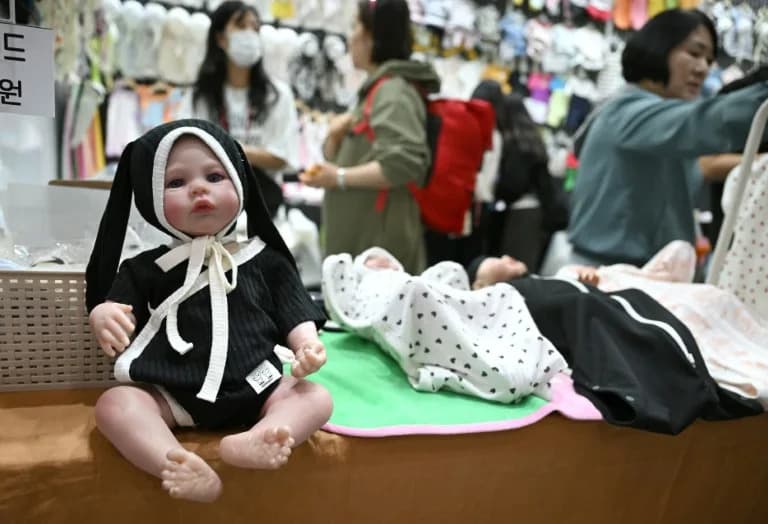
Baby clothes are displayed at a booth during a baby fair in Seoul (Jung Yeon-je)(Jung Yeon-je/AFP/AFP)
South Korea has recorded a modest rise in births after years of decline, a development that has prompted cautious optimism and debate among policymakers and demographers. Couples such as Kim Su-jin and her husband represent a small but visible wave of new parents who decided to start families despite economic and social worries.
The Numbers
After hitting record lows in 2023, several birth indicators have inched upward. In February nearly 23,000 babies were born—the most for that month in seven years—and year-on-year births rose 13.6%, the biggest February increase since records began in 1981. South Korea's total fertility rate rose slightly from 0.75 to 0.8 last year, but remains far below the 2.1 level needed for population replacement.
Government Support And Incentives
The government has expanded a range of pro-natalist measures aimed at reducing the financial and logistical costs of parenthood. Current policies include lump-sum birth payments (reported by some parents as around two million won), a one-million-won monthly allowance during a child’s first year, maternity vouchers, subsidised transport and postnatal care, low-interest housing loans for young families, expanded parental leave, and subsidised fertility treatments. Some employers also offer bonuses to staff who have children.
Voices From Families
For some parents, state support made a tangible difference. Office worker Kim Woo-jin, 33, said vouchers and cash payments eased the financial burden of pregnancy and early childcare. By contrast, freelance music worker Kim Su-jin, 32, said the measures remain insufficient and highlighted deeper social pressures such as high private tutoring costs, school bullying, and fears about job displacement from advancing artificial intelligence.
“We set aside worries about housing, schooling and work because we believed that having a baby would bring us happiness,” Kim Su-jin told AFP.
What Experts Say
Experts are divided on how much of the uptick reflects policy success versus temporary demographic or behavioural effects. Hong Sok-chul, an economics professor at Seoul National University (SNU), argues that policies lowering direct and indirect costs have been "quite effective." Demographer Lee Sang-lim of SNU cautions that many recent initiatives began only in early 2024 and that the observed rise could largely reflect a demographic "echo" (a relatively large cohort born in the early 1990s now at peak childbearing age) and delayed marriages and births following the pandemic.
Outlook And Limits
While the short-term data are encouraging, most analysts stress the increase is small relative to the scale of South Korea’s demographic challenge. The slight rise in fertility offers limited relief given how far rates are below replacement level, and researchers warn births could fall again once the current cohort ages out of peak fertility years. Many call for sustained, comprehensive policy efforts to address the deeper social and economic barriers to family formation.
Key statistics: February births nearly 23,000; 13.6% year-on-year rise for February; total fertility rate rose to 0.8 from 0.75; births outside marriage were 5.8% in 2024 (about double compared with 2002).
Help us improve.