Amid a fragile ceasefire and a severe humanitarian crisis, only three or four Palestinian men still surf off Gaza because of a chronic shortage of surfboards and repair materials. Sea access has been heavily restricted by Israeli naval patrols and a designated "no-go zone," making fishing, swimming and surfing hazardous. For these surfers, rare high swells provide brief psychological relief and a momentary escape from the hardships of war.
Gaza Surfers Find Fleeting Joy Riding Rare Mediterranean Waves Amid Conflict
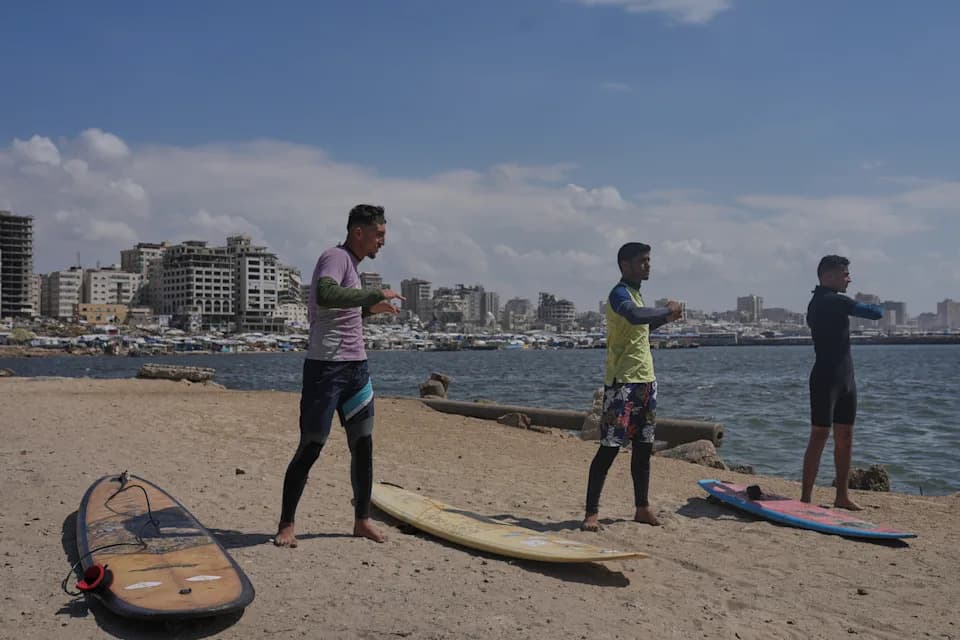
Palestinians Tahseen Abu Assi, left, Khalil Abu Jayyab, center, and Abed Rahim Alostaz warm up before surfing on the beach in Gaza City, Monday, May 4, 2026. (AP Photo/Jehad Alshrafi)(ASSOCIATED PRESS)
Deir al-Balah, Gaza Strip — Amid a severe humanitarian crisis and a fragile ceasefire, a handful of Palestinian men are finding brief moments of joy and normalcy by taking to the Mediterranean off Gaza’s coastline.
Only three or four men still surf regularly, according to Tahseen Abu Assi, a Gaza City surfer. A chronic shortage of surfboards and the materials needed to repair them has thinned the ranks; Abu Assi says he carried his board through repeated displacement during the two-year war because replacing it would be impossible.
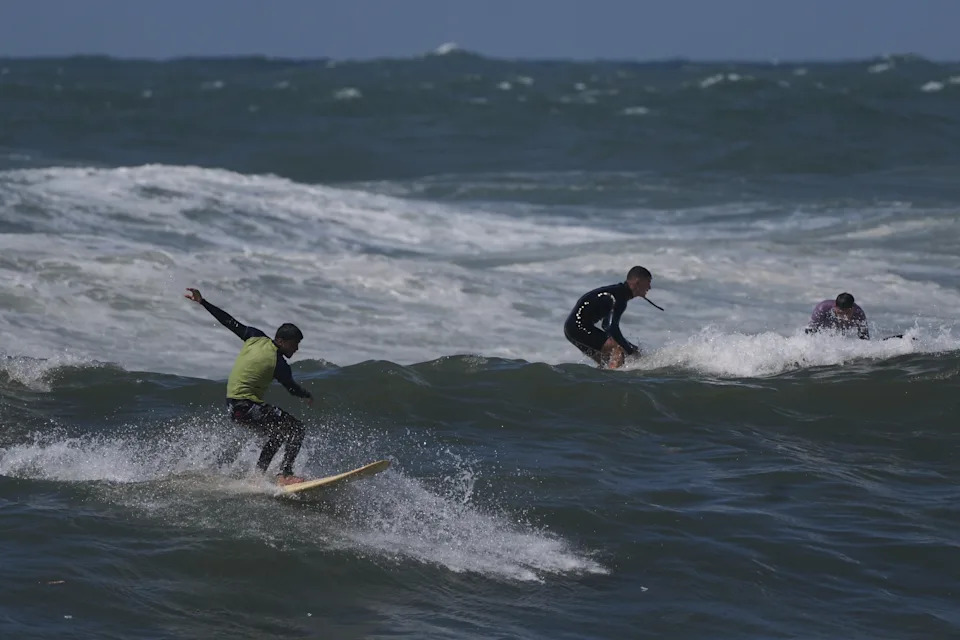
Palestinian Khalil Abu Jayyab rides a wave at a beach along the Mediterranean Sea in Gaza City, Monday, May 4, 2026. (AP Photo/Jehad Alshrafi)(ASSOCIATED PRESS)
“If something happened to it I won’t be able to get another one,”he said, noting that, he believes, no surfboards have entered Gaza since 2007 and that boards are included among items restricted by Israeli authorities.
On a recent day off Gaza City’s port, Abu Assi and two other surfers entered the water to ride rare high swells. One of them, Khalil Abu Jiab, threw his arms up in celebration as he rode a wave — a small, defiant moment of relief amid the wider suffering on land.
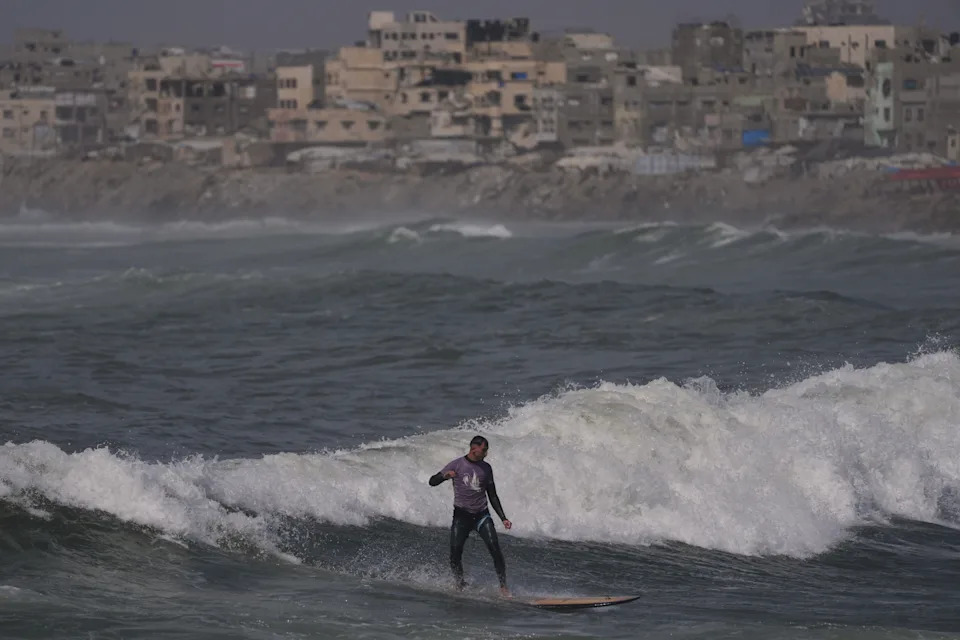
Palestinian Tahseen Abu Assi rides a wave at a beach along the Mediterranean Sea in Gaza City, Monday, May 4, 2026. (AP Photo/Jehad Alshrafi)(ASSOCIATED PRESS)
The Risks and Restrictions
Since the conflict began, the Israeli military has heavily restricted sea access. The United Nations has documented incidents of fishermen and small boats being attacked onshore and at sea. Last year, Israel designated much of Gaza’s waters a “no-go zone,” effectively banning fishing, swimming and recreational use in large stretches and making maritime activities hazardous.
Fishing and swimming are especially dangerous off northern and southern Gaza; even the central coastal waters near Gaza City remain risky because of naval patrols and other restrictions. Despite the danger, surfers say they continue because the sea offers a rare sense of freedom.
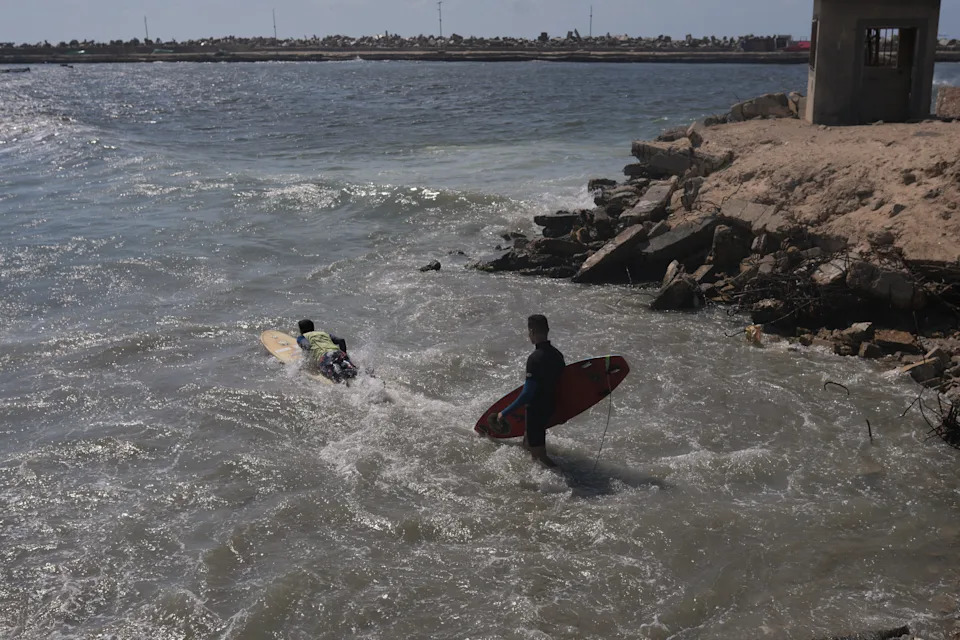
Palestinians Khalil Abu Jayyab, left, and Abed Rahim Alostaz enter the waters of the Mediterranean Sea to surf at the beach in Gaza City, Monday, May 4, 2026. (AP Photo/Jehad Alshrafi)(ASSOCIATED PRESS)
Context and Human Cost
Heavy fighting across the enclave eased after a shaky ceasefire took effect on Oct. 10, but deadly strikes have continued and both Hamas and Israel have accused each other of violations. The conflict began on Oct. 7, 2023, after militants attacked southern Israel, killing about 1,200 people and seizing roughly 251 hostages. According to the Gaza Health Ministry, Israel’s military offensive has resulted in 72,628 Palestinian deaths and 172,520 injuries.
Beyond the immediate toll, residents face acute shortages of food, clean water, medical care and shelter after widespread destruction damaged health infrastructure and displaced large portions of the population.
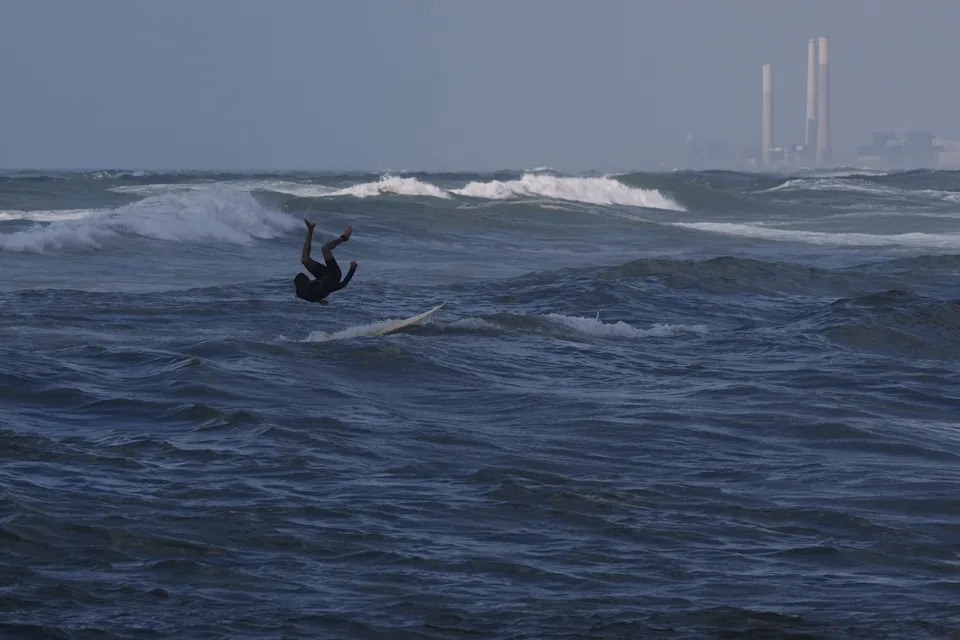
A Palestinian jumps into the waters of the Mediterranean Sea as he surfs on the beach in Gaza City, Monday, May 4, 2026. (AP Photo/Jehad Alshrafi)(ASSOCIATED PRESS)
Why It Matters
For the few remaining surfers in Gaza, catching a wave is more than a sport: it is a brief psychological respite from trauma and deprivation. As Abu Assi put it:
“As soon as the sea gets high, you leave your work and leave your whole life. Work can be caught up on, as they say. We go practice this sport.”
These small acts of normalcy highlight the human desire for recreation and dignity even in the midst of prolonged conflict.
Help us improve.