This article examines reports that Trump-era health officials delayed or blocked several government vaccine studies, including a CDC MMWR on 2025–2026 COVID-19 vaccine effectiveness and FDA-supported safety analyses. The held-back MMWR estimated about 50%–55% protection against emergency visits and hospitalization, using the common test-negative design. Blocked safety studies — covering millions of vaccinees — reportedly found no new safety signals after 2023–2024 COVID-19 vaccinations. Critics say withholding these studies risks eroding public trust and undermines scientific transparency.
Trump-Era Health Officials Accused of Blocking Vaccine Studies, Raising Fears Over Public Trust

Trump's Health Bureaucrats Are Undermining Confidence in Vaccines
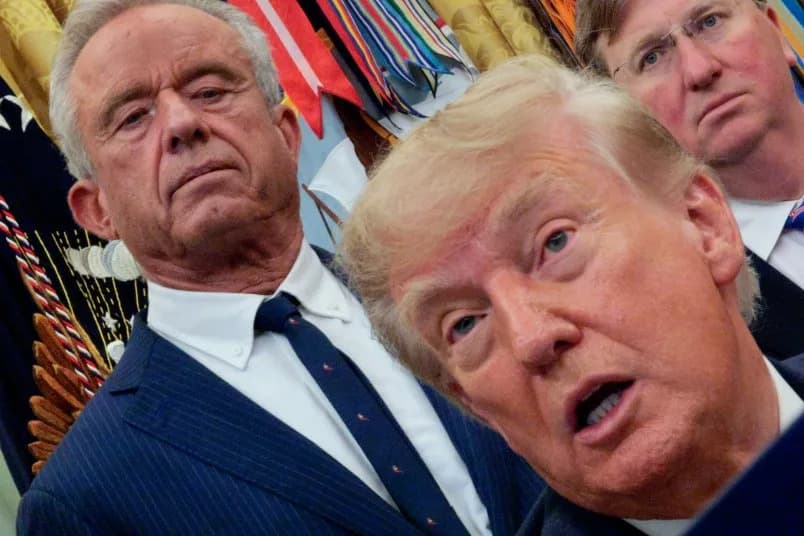
Critics say actions by senior health officials associated with the Trump administration have undermined public confidence in vaccines by delaying or blocking publication of government vaccine studies. The reporting centers on an internal claim by a former FDA official, the suppression of a CDC report on 2025–2026 COVID-19 vaccine effectiveness, and recent news that the FDA prevented submission of several agency-supported safety studies to peer-reviewed journals and conferences.
Unsubstantiated Internal Claim
In November, Vinay Prasad—then director of the FDA's Center for Biologics Evaluation and Research—sent an internal email asserting that "at least 10 children have died after and because of receiving COVID-19 vaccination." The claim was not accompanied by supporting evidence at the time, and no corroborating proof has since been made public. Prasad left the agency at the end of April.
The Held-Back MMWR Study
In April, Jay Bhattacharya, who has served in an acting leadership role at the Centers for Disease Control and Prevention, delayed and ultimately blocked publication of a study in the CDC's Morbidity and Mortality Weekly Report (MMWR). The study assessed effectiveness of the 2025–2026 COVID-19 vaccines against emergency department and urgent-care encounters and hospitalization.
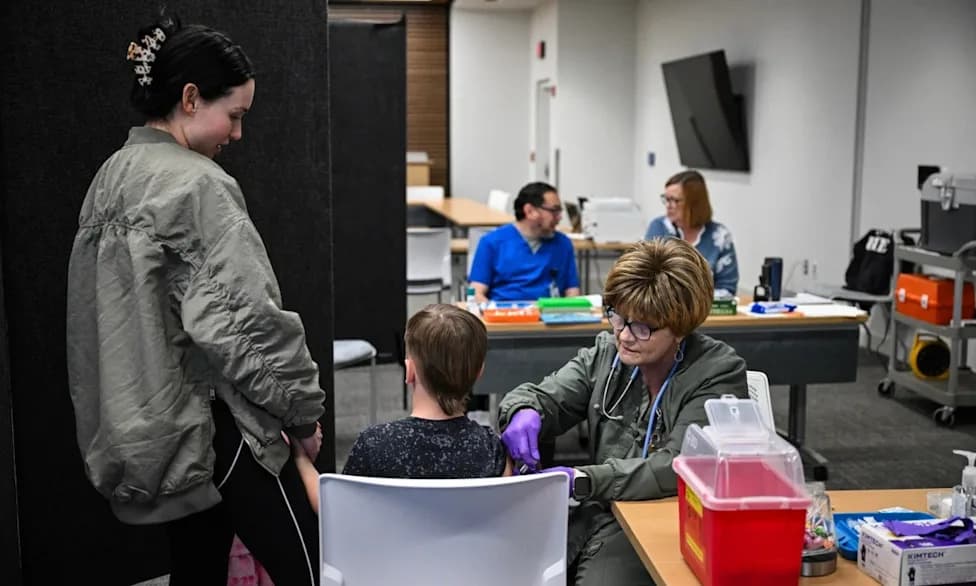
The researchers reported that, among adults 18 and older, the 2025–2026 vaccines were about 50% effective against COVID-19–associated emergency and urgent care visits and about 55% effective against COVID-19–associated hospitalization when compared with not having received a 2025–2026 vaccine dose. The paper noted these estimates represent the additional benefit of vaccination in a population with high levels of prior infection- or vaccine-induced immunity and acknowledged several limitations that the acting CDC official highlighted.
Bhattacharya criticized the study's use of the widely used "test-negative design," a standard approach adopted across many countries (including the U.K., Canada, Australia and nations across Europe) for estimating respiratory-vaccine effectiveness. In a Washington Post op-ed, he framed his intervention as a "scientific disagreement" over methodology and argued for greater scrutiny.
FDA Blocks Submission of Safety Studies
The New York Times reported that FDA leadership recently blocked agency staff from submitting several government-supported vaccine safety studies for peer review or conference presentation. One preprint of a blocked COVID-19 study examined 14 potential adverse events among roughly 7.5 million Medicare beneficiaries and concluded that "no new safety signals" were identified following 2023–2024 COVID-19 vaccinations in beneficiaries aged 65 and older.
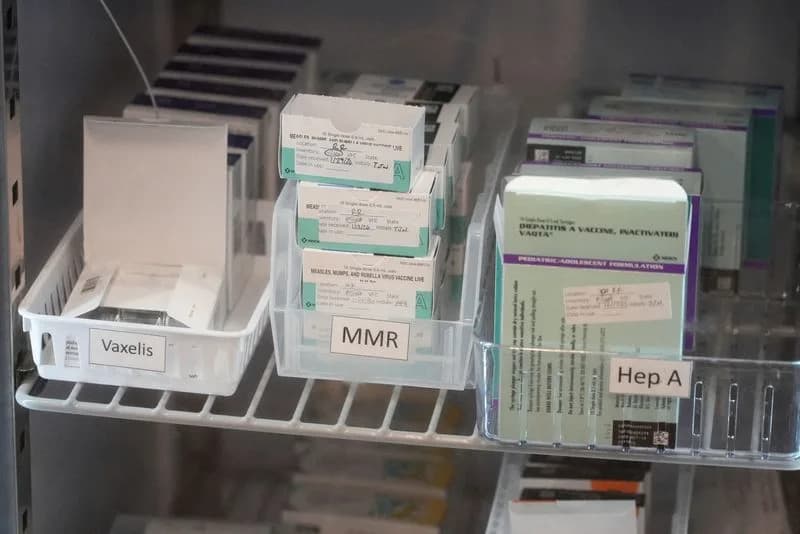
A separate now-canceled FDA study of roughly 4.2 million people vaccinated against COVID-19 likewise reported "no new safety concerns" following 2023–2024 vaccination among health-plan enrollees aged 6 months–64 years. The Times also reported that staff were prevented from submitting brief reports on the Shingrix (shingles) vaccine to a drug-safety conference.
Independent research has generally found Shingrix to be safe, though some studies have noted a small increased risk of Guillain-Barré syndrome after vaccination. Other studies have associated shingles vaccination with lower risks of heart disease, dementia and overall mortality in older adults.
Implications and Criticism
Observers warn that suppressing or delaying dissemination of vaccine effectiveness and safety data risks eroding public trust and could lead to weaker public-health guidance. A leaked account of the suppressed MMWR study suggested that Secretary Robert F. Kennedy Jr. and aides such as Bhattacharya might be seeking to alter CDC recommendations for seasonal COVID-19 vaccines, possibly softening guidance for higher-risk older adults.
In his op-ed, Bhattacharya wrote that "scientific integrity demands rigor, openness to challenge and a willingness to follow the evidence wherever it leads, especially when it is inconvenient." Critics argue that blocking publication of government studies is at odds with those principles and undermines transparency that public confidence depends on.
Conclusion
Whether motivated by methodological concerns, political considerations, or both, the reported actions to withhold or block vaccine-related publications have drawn strong criticism. Public health experts emphasize that transparent, timely release of safety and effectiveness data is essential to maintain trust in vaccination programs and informed public-health recommendations.
Help us improve.