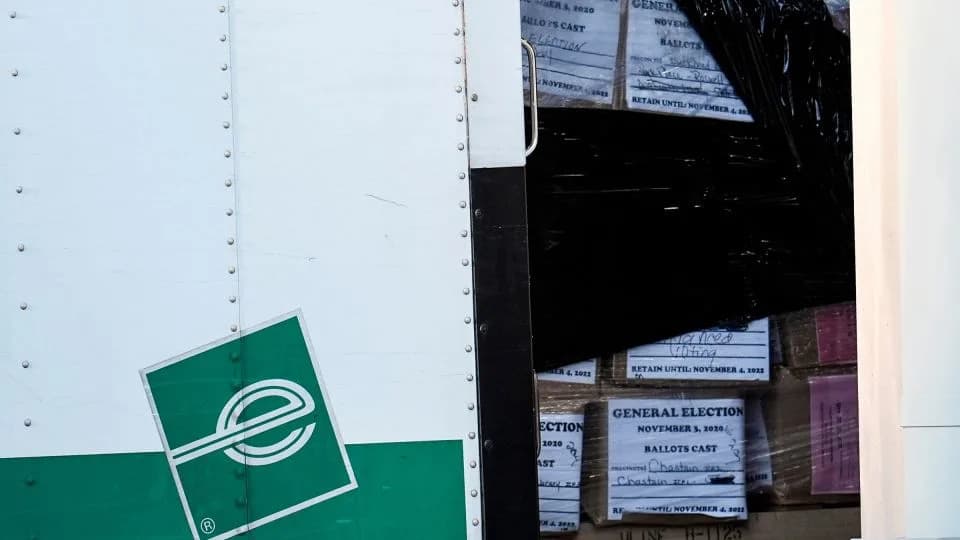
U.S. District Judge J.P. Boulee ruled the Justice Department may keep ballots and election materials seized from a Fulton County warehouse, finding flaws in the FBI affidavit but concluding the county failed to prove a constitutional violation or irreparable harm. The DOJ provided copies of the materials to Fulton County and is pursuing related subpoenas for election workers' contact information. The decision comes amid broader DOJ efforts to obtain election records in several swing states and ongoing political debate over federal involvement in election oversight.
Judge Rules DOJ May Keep 2020 Fulton County Ballots Seized by FBI

FILE - Crime scene tape is seen as FBI agents search at the Fulton County Election Hub and Operation Center, Jan. 28, 2026, in Union City, Ga., near Atlanta. (AP Photo/Mike Stewart, File)(ASSOCIATED PRESS)
The federal government may retain the 2020 election ballots and related materials seized from a Fulton County warehouse near Atlanta, U.S. District Judge J.P. Boulee ruled Wednesday.
Fulton County had asked the Department of Justice to return the physical ballots and any electronic copies, arguing the Jan. 28 seizure was improper and violated the Constitution. The county contended the raid demonstrated a "callous disregard" for Fourth Amendment protections against unreasonable searches and seizures.
Judge: Seizure Flawed But Not Constitutionally Defective
In a detailed 68-page opinion, Judge Boulee acknowledged the FBI affidavit and the manner of the seizure were "not perfect" and described some statements in the affidavit as "troubling." However, he concluded the county did not show that its rights were callously disregarded through lack of probable cause, omissions in the affidavit, or the way the seizure was executed.
Boulee also found Fulton County failed to demonstrate that it would suffer irreparable harm if the materials were not returned, noting the Justice Department provided the county with copies of the documents seized.
Ongoing Investigations and Subpoenas
The Justice Department says it is investigating "irregularities that occurred during the 2020 presidential election in the County" and has identified two statutes that may have been violated: one requiring election records to be retained for 22 months, and another that bars procuring, casting or tabulating false or fraudulent ballots.
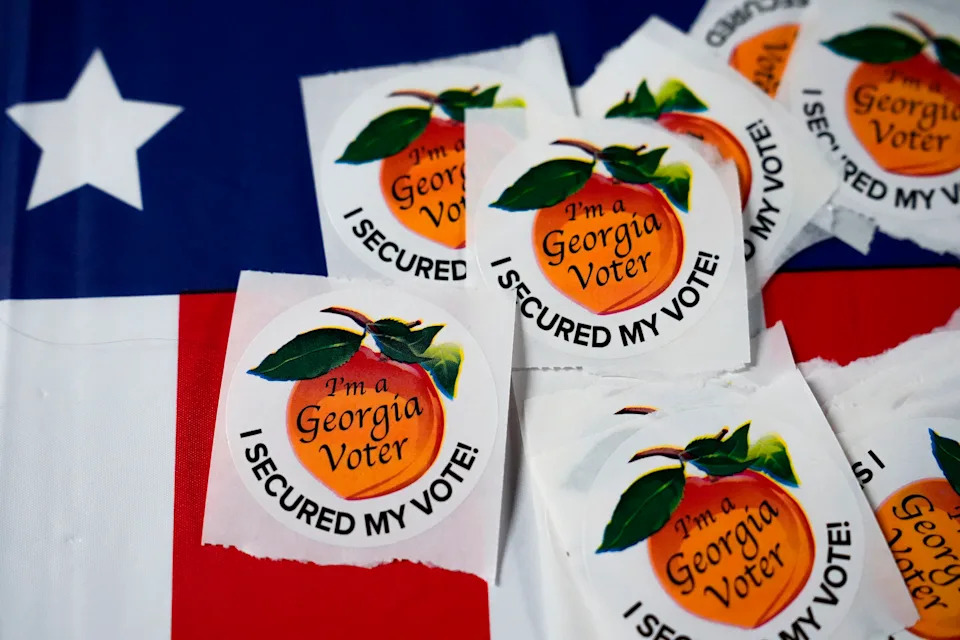
FILE - Stickers sit on a table inside a polling place, Nov. 5, 2024, in Atlanta. (AP Photo/Brynn Anderson, File)(ASSOCIATED PRESS)
Following the January seizure, the DOJ in April sought a grand jury subpoena for the names and contact information of Fulton County employees and volunteers involved in the 2020 election. Fulton County moved to quash that subpoena, calling it overly broad and alleging it is intended to harass political opponents of former President Donald Trump.
Context: Similar Actions in Other States
The DOJ and FBI have pursued related records in other pivotal states. In March the FBI subpoenaed records tied to the 2020 audit in Maricopa County, Arizona, and in April the Justice Department demanded that Wayne County, Michigan, turn over its 2024 election ballots. The DOJ is also seeking voter data containing sensitive personal information in several states, prompting privacy concerns from election officials, including some Republicans.
Reactions
Robb Pitts, chairman of the Fulton County Board of Commissioners, said he strongly disagrees with Boulee's ruling and vowed the county would "vigorously pursue all available legal options." The Justice Department did not immediately respond to requests for comment.
Critics, including many Democrats, say the actions suggest the federal government is being used to target political opponents and could affect future elections. The administration maintains it is investigating alleged past irregularities and working to protect election integrity going forward.
At a March 27 hearing, county attorneys argued the criminal search warrant was used after the DOJ grew tired of waiting for the outcome of earlier civil litigation seeking the same materials. DOJ attorneys countered that the government followed proper procedures to obtain a warrant and that civil and criminal investigations can lawfully proceed in parallel.
Judge Boulee ultimately determined that while the affidavit contained shortcomings, those deficiencies did not rise to the level of constitutional violation warranting return of the documents.
Help us improve.