
Todd Blanche must decide whether to act on a last‑minute request from the Georgia State Board of Elections asking the DOJ to ban QR‑code vote tabulation and force immediate voting‑machine patches days before early voting. State officials warn such changes could introduce technical problems and disenfranchise voters; critics say any DOJ intervention now risks fueling fresh conspiracy theories. Many observers recommend deferring major action until after early voting to minimize disruption and allow a fuller post‑election review.
Todd Blanche Faces a Crucial Choice as Georgia Board Asks DOJ To Intervene Before Early Voting
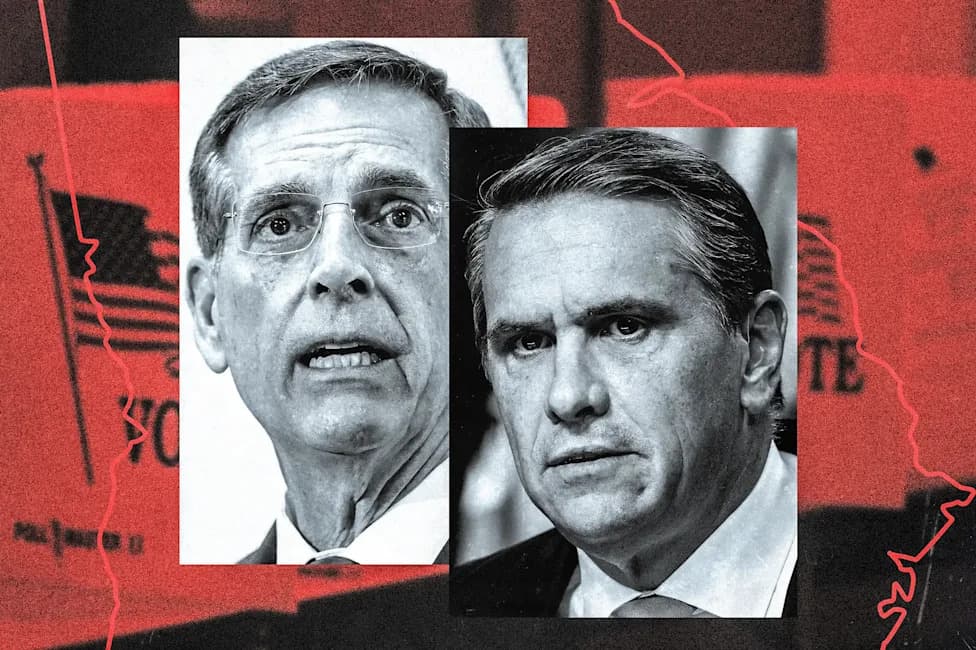
From left: Georgia Secretary of State Brad Raffensperger and Deputy Attorney General Todd Blanche.
The Georgia State Board of Elections last week asked the U.S. Department of Justice to intervene just days before in-person early voting begins for the midterm elections. Their emergency letter seeks sweeping changes — including a ban on QR-code ballot tabulation and an immediate rollout of software patches for voting machines — moves state officials warn are risky so close to the polls.
Attorney General Todd Blanche now faces a consequential decision: step in and act on the board's request, potentially drawing the Justice Department into a politically fraught dispute, or defer action until after early voting to avoid disrupting administration and fueling new conspiracy theories.
What the Board Asked For
The board urged the DOJ to prohibit Georgia's use of QR codes to tabulate ballots and to require an immediate software update to address an alleged vulnerability. It also asked Blumen (sic) — calling on Blanche to "hold the Secretary of State and any responsible officials accountable" — for any alleged alteration or destruction of election records.
State election officials told the Atlanta Journal-Constitution they have been addressing software concerns but warned that making major changes days before voting begins could introduce new, unforeseen problems. A spokesperson for Secretary of State Brad Raffensperger accused the board of "trying to cause chaos at the 11th hour."
Why This Matters
Georgia has remained a focal point of post‑2020 election disputes. FBI agents executed a search warrant in January to obtain Fulton County's 2020 election records as part of a renewed probe tied to President Joe Biden's 2020 victory over Donald Trump. The state's partisan dynamics and increasingly competitive races mean any DOJ involvement could be seized on by partisans on both sides.
Critics argue that acting now could do more harm than good by disrupting election processes and handing more ammunition to those who promote baseless claims of mass fraud. As in 2020, even suggestions of impropriety can be amplified into sustained efforts to cast doubt on outcomes.
Blanche's Political and Professional Context
Todd Blanche rose from serving on Trump's legal team through multiple post‑2020 cases to become Deputy Attorney General and later Attorney General. He avoided directly defending some post‑2020 actions at trial by advancing arguments about broad presidential immunity; the Supreme Court gave a framework that complicated prosecutions of certain pre‑January‑6 acts.
The American Civil Liberties Union has documented concerns about tactics used by Justice Department officials in pursuit of election records and investigations. Blanche has publicly defended recent investigative steps, including the Fulton County search, describing them as necessary for ongoing criminal inquiries.
"There is this idea that we're doing it for nefarious purposes. We're not," Blanche told reporters when questioned about the Fulton County raid.
Options And Risks
Legal and election experts argue the least disruptive path would be for Blanche to postpone any major DOJ action until after early voting begins and to pledge a thorough post‑election review. That approach would reduce the risk of accidental disenfranchisement or technical failures while allowing investigators to continue collecting evidence.
Refusing the board's request could draw political backlash from Trump allies who expect aggressive action; acquiescing could lend credibility to last‑minute changes that undermine public confidence. Either choice has potential consequences for Blanche's standing and for public trust in Georgia's election processes.
Ultimately, the decision rests with Blanche: act now and risk immediate disruption and political escalation, or delay and risk accusations of inaction from those demanding intervention.
Note: This article preserves reported facts and quotes from public reporting while clarifying timelines, stakes, and likely consequences for election administration.
Help us improve.





















