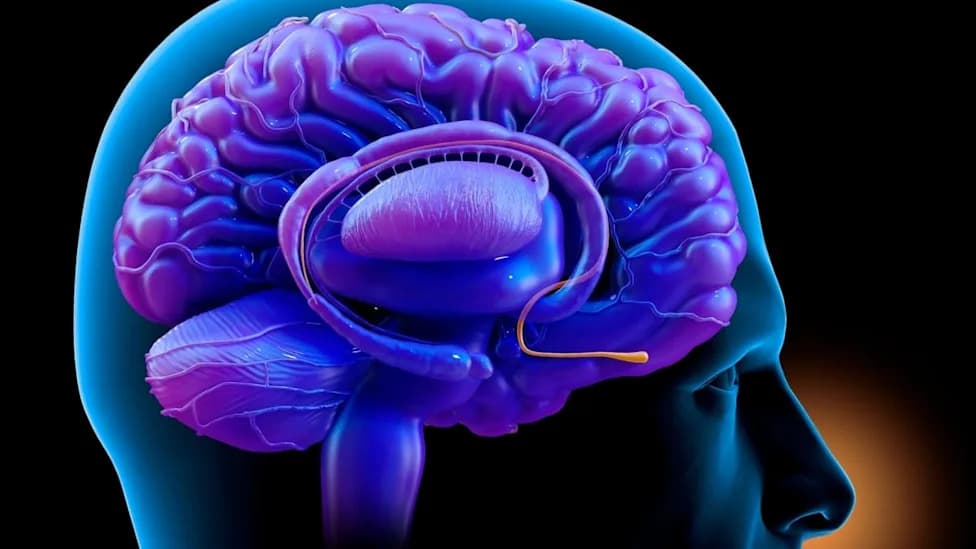
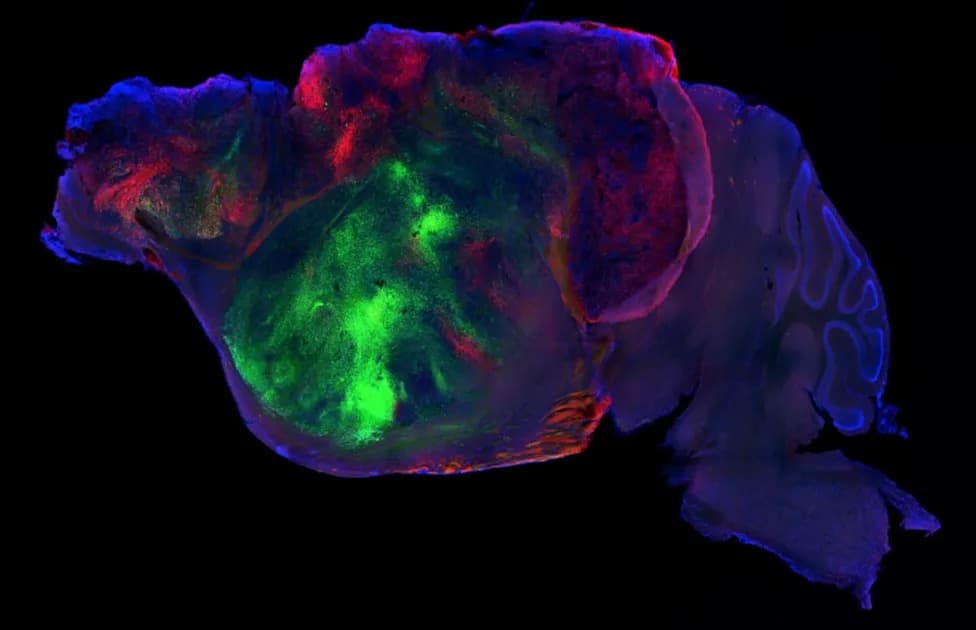
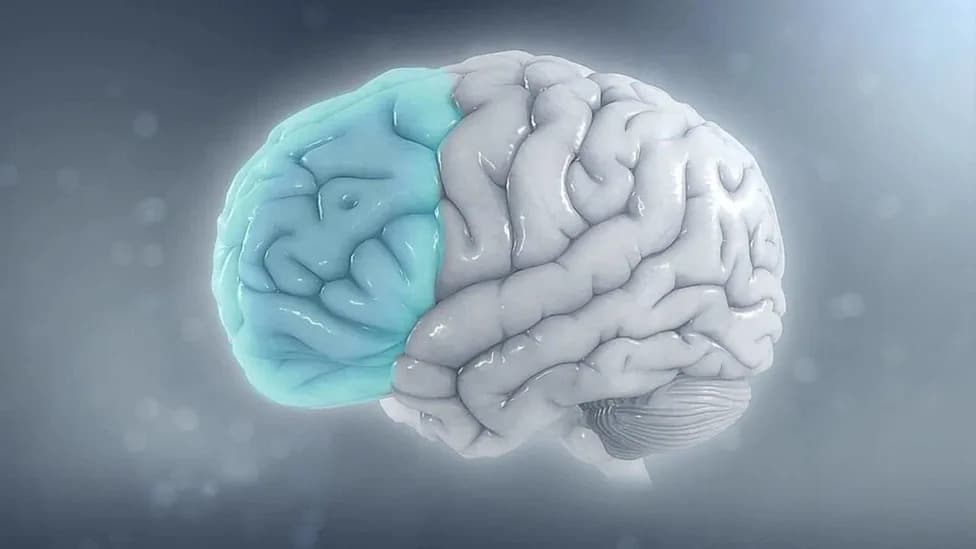
A Kobe University study mapped a thalamus-mediated pathway from the basal ganglia to the insular cortex in mice and found that blocking the thalamus-to-insula connection reduced tic-like behavior. The relay may explain why Tourette’s often overlaps with OCD, ADHD, and ASD by allowing motor signals to influence emotion-processing regions. Authors caution the mouse model cannot capture subjective premonitory urges and call for human validation before clinical translation.
New Thalamus Relay May Explain Why Tourette’s Often Overlaps With OCD
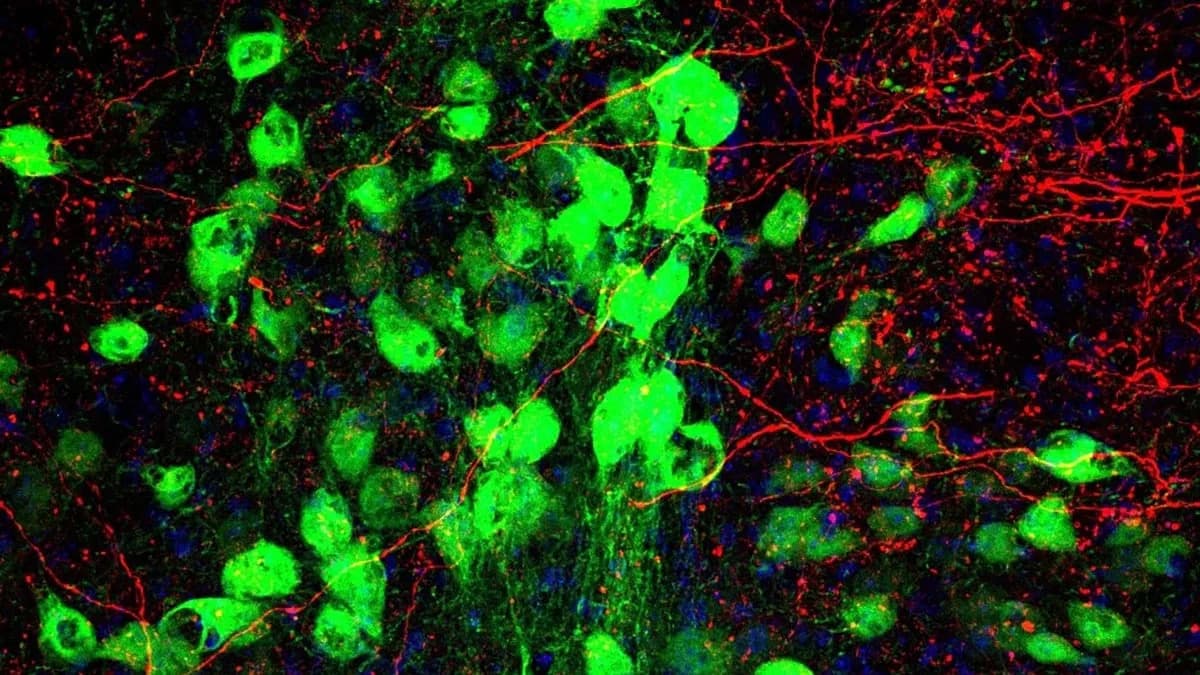
An intermediary thalamic relay station (incoming neurons in red, outgoing neurons in green). (Kuno et al., Cell Rep., 2026)
A new study from Kobe University maps a previously unrecognized brain pathway that could help explain why Tourette syndrome frequently co-occurs with obsessive-compulsive disorder (OCD) and other neurodevelopmental conditions. Using a mouse model of tic-like movements, researchers identified a functional relay from the basal ganglia to the insular cortex that passes through intralaminar thalamic nuclei.
Researchers combined neuron-tracing techniques with targeted interventions to trace and test this pathway. Blocking the thalamus-to-insula connection with a bespoke drug markedly reduced tic intensity in mice and suppressed associated neural activity, suggesting the relay plays a functional role in generating tic-like behavior.
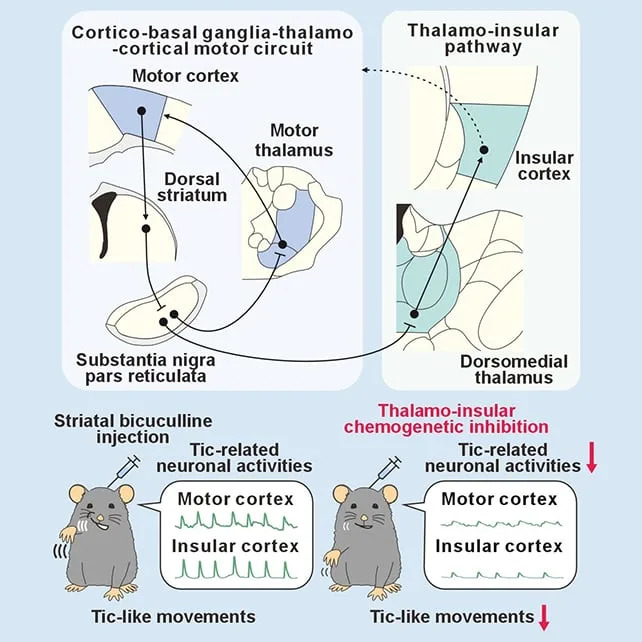
The researchers found a pathway controlling Tourette-like tics in mice. (Kuno et al.,Cell Rep., 2026)
"We believe that the neuronal circuit we found plays a crucial role as a bridge connecting brain regions that were previously thought to act independently from each other," says neurophysiologist Yoshihisa Tachibana of Kobe University.
The pathway links a major motor-control hub (the basal ganglia) with the insular cortex, a region involved in emotion and interoception that has been implicated in OCD. The relay runs via intralaminar thalamic nuclei—thalamic nodes that route activity between brain regions—offering a plausible route by which abnormal motor signals could influence emotional and sensory processing.
Previous findings helped motivate this work: for example, a study found that a dental mouthguard that stimulates jaw muscles can reduce tics through effects on the insular cortex. The current study builds on that by mapping the wiring that could carry disrupted movement signals into emotion-processing areas.
YouTube Thumbnail
Importantly, the authors emphasize limitations. Rodents cannot report subjective phenomena such as premonitory urges (the internal sensations that often precede tics in people), so the mouse model captures selected tic-like features but cannot recreate all human symptoms. The team calls for validation in human patients before translating findings into clinical practice.
Clinically relevant implications include better understanding of why Tourette's often co-occurs with OCD, ADHD, and autism spectrum disorder (ASD). The discovery also sheds light on why deep brain stimulation (DBS) of thalamic targets can reduce severe tics—this thalamic relay may be a mechanism through which DBS exerts benefits.

Subscribe to ScienceAlert's free fact-checked newsletter
Looking ahead, the researchers propose that less invasive neuromodulation techniques—such as focused ultrasound—might be developed to target this pathway, potentially offering safer alternatives to invasive DBS. However, extensive human research and safety testing will be required.
The study appears in Cell Reports. While the discovery is promising, experts emphasize caution: the finding is an important step toward mapping the circuits behind tics and comorbid psychiatric features, but translational work is still needed.
Help us improve.