New fossils from South Australia show that the ancient platypus Obdurodon insignis, about 25 million years old, retained a full set of crushing teeth and otherwise closely resembled the modern platypus. Scientists recovered a larger-than-expected molar, a pointed premolar and part of a scapulocoracoid from a thin fish-rich lens in the Namba Formation. Tooth morphology indicates an ability to crush armored prey, while the shoulder fragment suggests a swimming-adapted forelimb that was perhaps less specialized than in living platypuses. The finds extend the species’ known age range and refine our picture of monotreme evolution.
25-Million-Year-Old Platypus Had Crushing Teeth — New South Australian Fossils Reveal
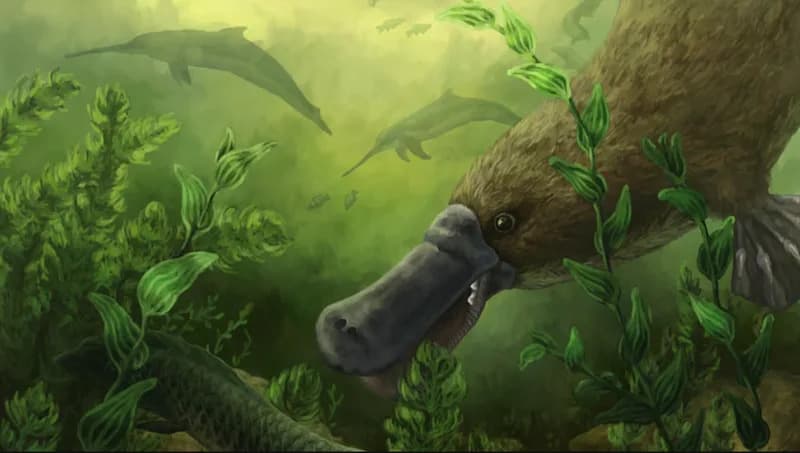
Ancient platypus fossils from South Australia reveal a toothed species with a body plan close to today’s platypus. (CREDIT: Gen Conway / Flinders University Palaeontology Lab)
The platypus, already famed for its unusual combination of features, has yielded a surprising new chapter in its evolutionary story. Fossils recovered from the Namba Formation at Frome Downs Station in South Australia identify an ancient species, Obdurodon insignis, that closely resembled the modern platypus but retained a full set of robust, crushing teeth.
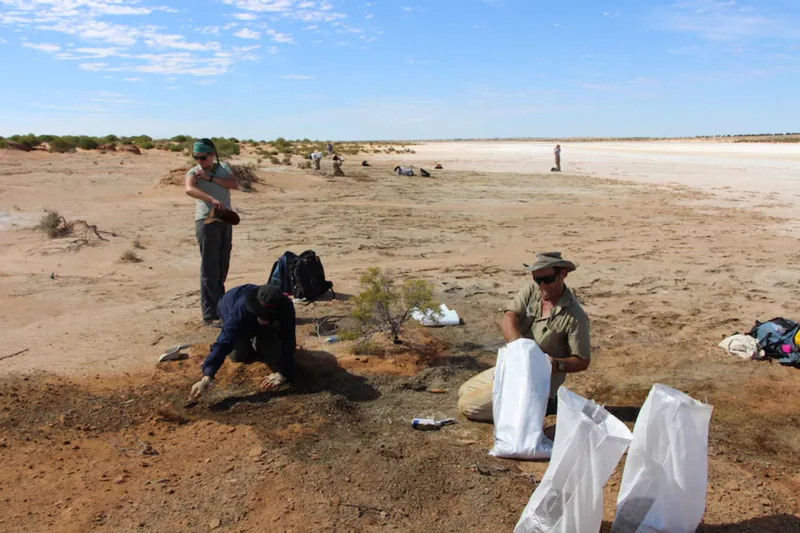
Palaeontologists found one fossil at the Billeroo Creek site in 2017. (CREDIT: Aaron Camens)
Key Specimens and What They Reveal
The material comes from a thin, fossil-rich layer known locally as the "fish lens" at the Wells' Bog site (Pinpa Local Fauna). Researchers recovered three elements attributed to O. insignis: a right first lower molar, a right second premolar, and part of a shoulder bone (scapulocoracoid). Together these fragments sharpen the picture of an animal that, while recognizably platypus-like, used a different feeding strategy and may have had a slightly different swimming style.
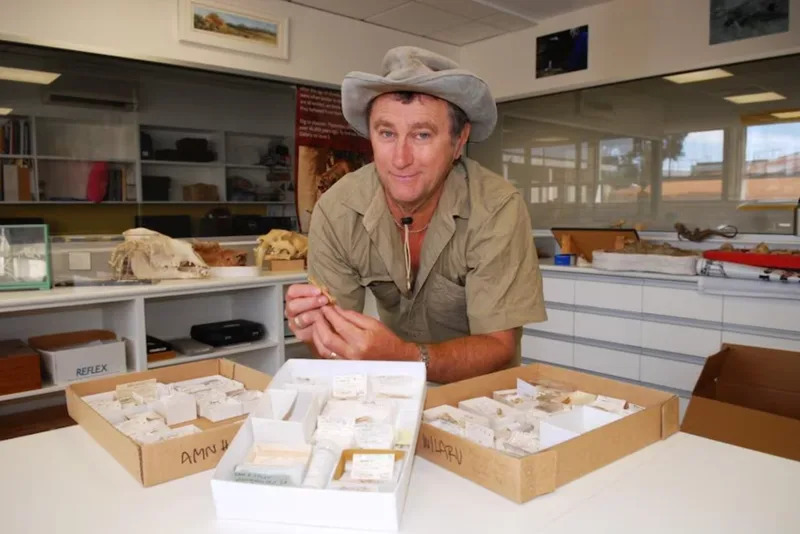
Trevor Worthy says the discovery extends our knowledge of the species further into the past. (CREDIT: Flinders University)
Teeth Built to Crush
The molar matches the known shape for O. insignis but is about 25% larger than the holotype tooth, suggesting notable size variation within the species. Its ridges, roots and general morphology indicate it was adapted for forceful crushing rather than soft-item grinding. The newly described premolar has a pointed cusp and crest and likely sat near the front of the tooth row, helping the animal seize and crack armored prey such as yabbies and other crustaceans.
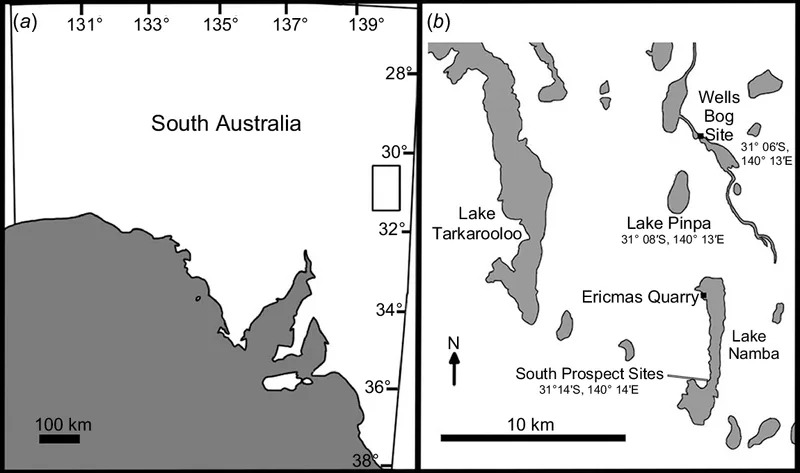
Location of the key sites in the Namba Formation on Frome Downs Station, South Australia. (a) Location of the study area in South Australia shown by the rectangle; (b) The study area and the mentioned sites. (CREDIT: Australian Zoologist)
"The new premolar for Obdurodon insignis shows this species also had large, pointed front teeth...which could easily have crushed animals with shells or robust exoskeletons like yabbies," said Trevor Worthy of the Flinders Paleontology Lab.
Forelimb Adapted for Swimming — But Slightly Different
The scapulocoracoid is only the second known body fossil for O. insignis and offers rare insight into locomotion. Its overall shape resembles the modern platypus: the glenoid fossa suggests the humerus was held roughly horizontal, a posture well suited to powerful swimming strokes. However, subtle differences—such as a more robust scapula-coracoid connection and a broader glenoid—suggest a more flexible pectoral girdle and a shoulder capable of greater up-and-down movement. The authors interpret this as evidence that O. insignis may have been a competent but less highly specialized swimmer than the living platypus.
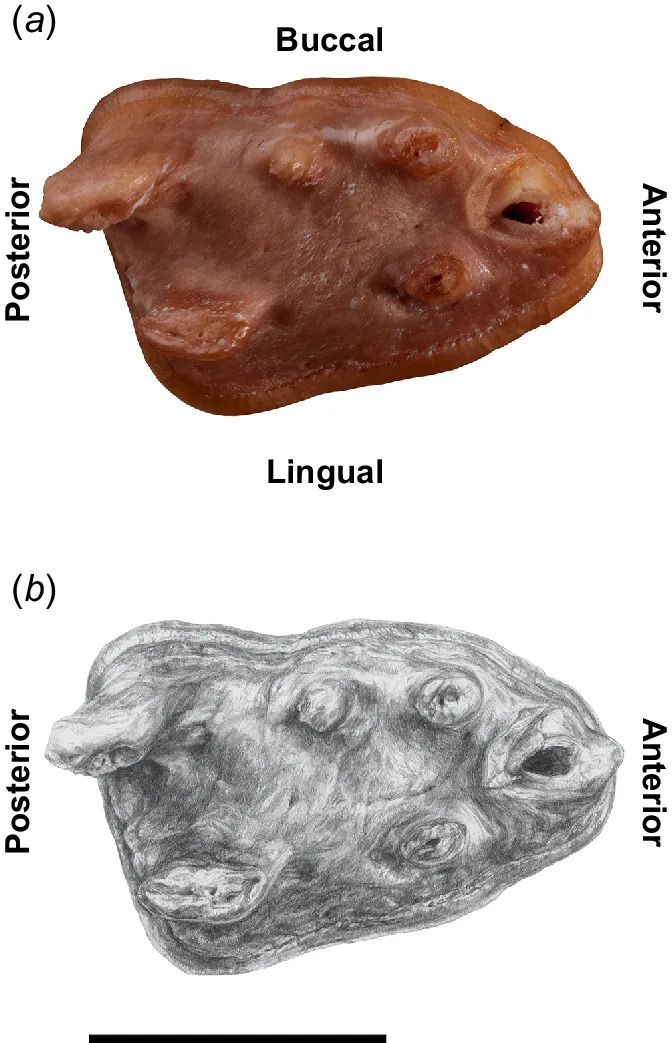
(a) Lower first molar of Obdurodon insignis SAMA P55061 showing the roots. (b) Interpretative drawing of the same by G. Conway. (CREDIT: Australian Zoologist)
Ecology, Rarity, and Evolutionary Significance
The fossils were found in a freshwater lake deposit abundant in aquatic life: lungfish, teleosts, turtles, a crocodylian, a small cetacean, and water birds, among others. The fish lens is a thin (≈100 mm) but bone-dense layer, likely formed where shorelines concentrated carcasses during seasonal changes. Even in this rich assemblage, O. insignis remains rare; the three specimens may represent a single individual, and the species appears less frequent than lungfish or the small cetacean in the same fauna. This suggests O. insignis may have preferred stream or margin habitats rather than the open lake environment full time—similar to habitat preferences of the modern platypus.
The study links O. insignis to late Oligocene deposits (about 25 million years ago) and revisits earlier taxonomic uncertainties from South Australia. The authors regard one previously named species, Obdurodon griffithsi, as a nomen dubium, arguing it does not reliably add diversity to the genus.
What This Means
These fossils reinforce a pattern of long-term functional stability in the platypus lineage: by the late Oligocene the basic platypus body plan was largely in place, even while features such as teeth and some shoulder details continued to evolve. The finds help clarify when and how key traits changed (for example, the loss of adult teeth in the living species) while underscoring how incomplete the monotreme fossil record remains.
The research is published in Australian Zoologist. As study co-author Dr. Aaron Camens (Flinders University) noted, platypus fossils are rare, so even a few additional bones can substantially improve our understanding of monotreme evolution.
Help us improve.