Two men were stabbed in Golders Green, north London, leaving the local Jewish community shaken and demanding stronger government action. Both victims are in stable condition. Prime Minister Keir Starmer pledged extra funding for community policing and new legislation aimed at preventing attacks, but many residents and community leaders say official statements have become predictable. The incident has heightened political tensions ahead of local elections on May 7, with opposition leaders seizing on safety concerns.
Golders Green Stabbing Sparks Outcry — British Jews Demand Government Action
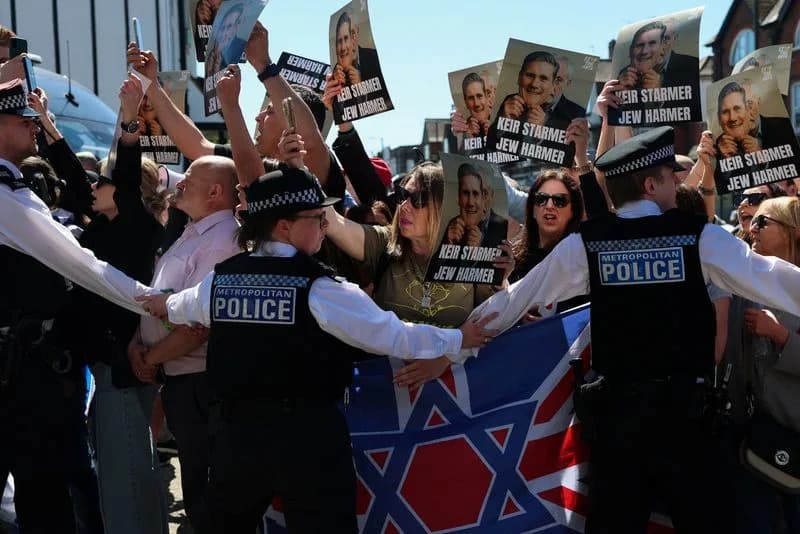
People protest against British Prime Minister Keir Starmer, as he arrives to make a visit to the Golders Green area, which is home to a large Jewish population, after a man was arrested on Wednesday following a stabbing incident in which two Jewish men were wounded, in London, Britain, April 30, 2026. REUTERS/Hannah McKay
LONDON, April 30 — Residents of Golders Green in north London were shaken and angry a day after an attacker stabbed two men in the street, leaving members of the local Jewish community calling on the government for concrete steps to improve safety.
Community Shock and Calls for Action
Both victims were reported in a stable condition. Shilome Rand, one of the men stabbed, told ITV News:
"People are really concerned, people are afraid, people are uncomfortable walking in the street... people are blaming obviously the government for not doing anything about what's going on."
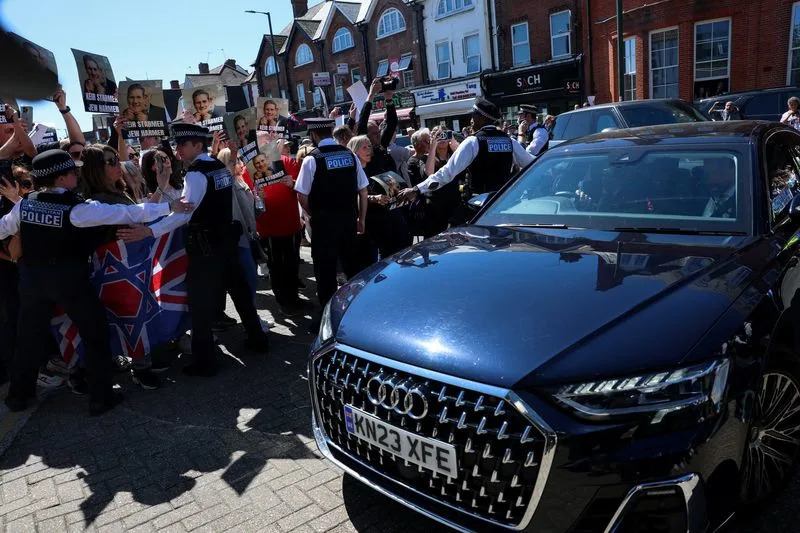
British Prime Minister Keir Starmer arrives to make a visit to the Golders Green area, which is home to a large Jewish population, after a man was arrested on Wednesday following a stabbing incident in which two Jewish men were wounded, in London, Britain, April 30, 2026. REUTERS/Hannah McKay
Wednesday's knife attack was the most violent in a recent string of incidents targeting Jews in London and comes less than a year after the deadly synagogue attack in Manchester. Local residents say the pace and severity of such incidents have left many feeling unsafe in areas they have long considered home.
Political Response and Criticism
Prime Minister Keir Starmer, whose wife is Jewish, pledged additional funding for community policing groups — including the organisation that helped stop Wednesday's attacker — and promised legislation to prevent "malign state actors" from using proxies to carry out attacks. "We must absolutely deal with the root causes of both antisemitism and extremism," he said after meeting criminal justice agencies.
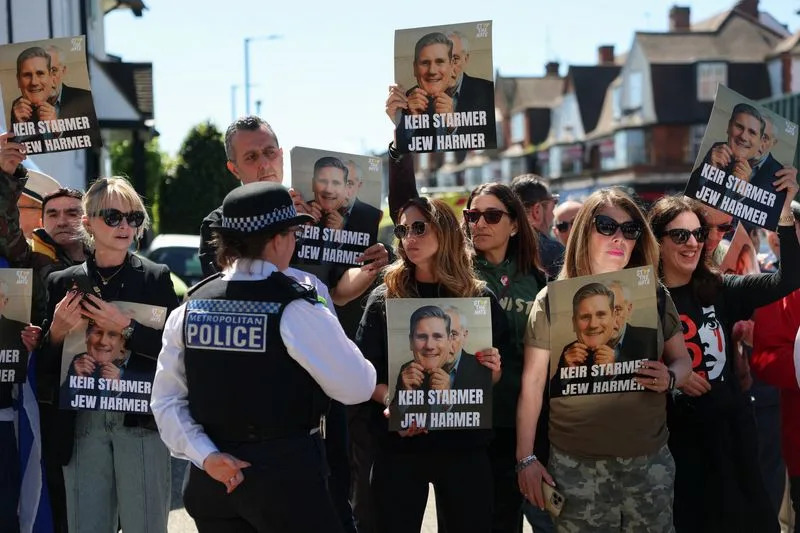
People hold signs in protest against British Prime Minister Keir Starmer, in the Golders Green area, which is home to a large Jewish population, after a man was arrested on Wednesday following a stabbing incident in which two Jewish men were wounded, in London, Britain, April 30, 2026. REUTERS/Hannah McKay
But for some community members the official response felt familiar and inadequate. A Jewish News digital front page criticised routine statements of solidarity as a "Bull$#@# Bingo," listing predictable political responses that often follow such incidents. Local lawmakers and senior police officials were heckled while speaking to the media.
Solicitor David Pearl, 69, told Reuters he doubted meaningful action would follow. "Are the government going to do anything meaningful? Well, let's wait and see. Don't hold your breath," he said, adding that he no longer feels safe in Britain though his children do not want to leave. Intern Calev Swabel, 21, said the fear was new to him despite his strong attachment to England.
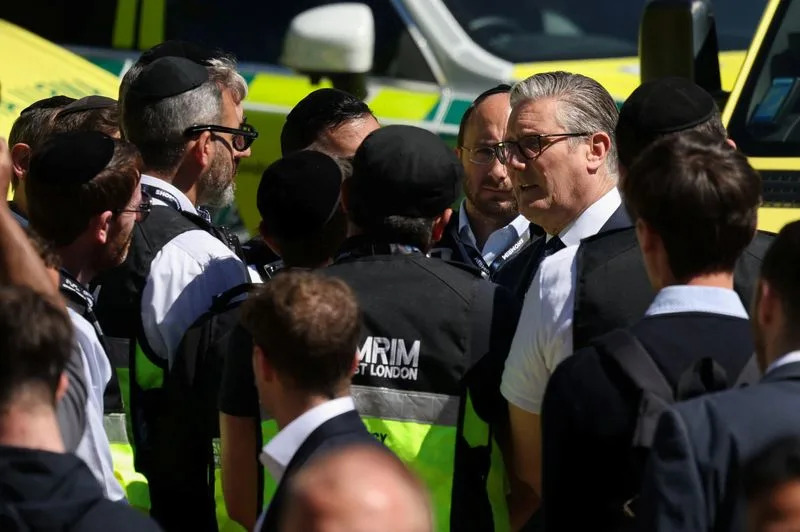
British Prime Minister Keir Starmer makes a visit to the Golders Green area, which is home to a large Jewish population, after a man was arrested on Wednesday following a stabbing incident in which two Jewish men were wounded, in London, Britain, April 30, 2026. REUTERS/Hannah McKay
Election Climate and Opposition Visits
The attack has taken on political significance ahead of local elections on May 7. Starmer visited Golders Green on Thursday and faced protesters; opposition figures also rushed to the scene. Conservative leader Kemi Badenoch described antisemitism as a "national emergency," while Reform UK leader Nigel Farage suggested parts of Labour's voter base had been prioritised over the safety of British Jews.
Interior Minister Shabana Mahmood acknowledged that the scale of pro-Palestinian protests has placed pressure on the Jewish community while saying the government has tried to limit demonstrations. "When I take the stand that I am taking against antisemitism, I am doing so as a practising Muslim. It is absolutely in line with my faith," she told BBC radio. She urged people of all faiths and viewpoints to speak out against antisemitism.
What residents want now: community leaders and residents are calling for tangible steps beyond statements — better resourcing for policing and community safety, clearer plans to tackle the root causes of antisemitism and extremism, and greater political accountability.
Help us improve.