Researchers examined stingers and pincers from 18 scorpion species using X-ray mapping and electron microscopy and found distinct metal-enrichment patterns. Zinc commonly concentrates at stinger tips while manganese dominates further down the tail; zinc and iron are enriched along the pincer’s cutting edge. Species often trade off zinc between pincers and stingers, linking metal composition to weapon use and durability.
Metal-Armed Scorpions: How Zinc and Manganese Reinforce Stingers and Pincers
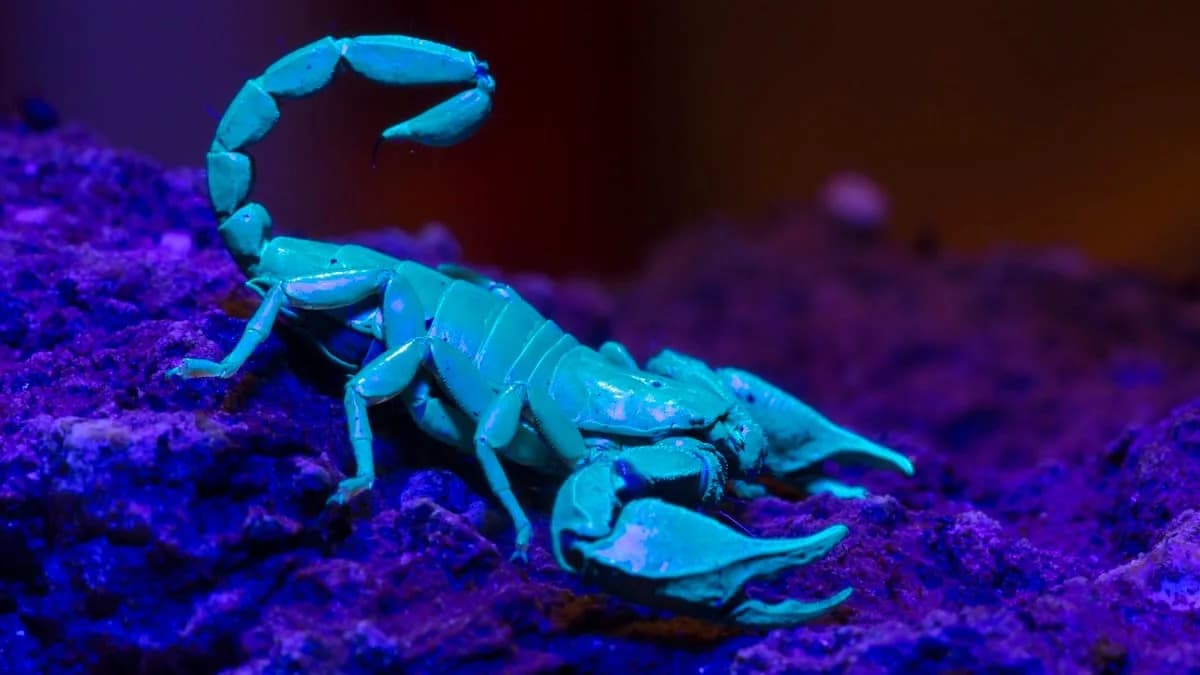
(Fabrizio Moglia/Moment Open/Getty Images)
Scorpions are equipped with two primary biological weapons — stingers and pincers — and new research shows those tools are often strengthened with heavy metals embedded in the cuticle. A comparative study of 18 species mapped where elements such as zinc, iron and manganese concentrate, revealing patterns tied to how each species hunts and defends itself.
Study and Methods
Researchers used X-ray mapping and electron microscopy to examine stingers and pincers from 18 scorpion species. These microscopic-scale techniques allowed the team to identify and localize transition metals within the exoskeleton at high resolution.
Key Findings
- Zinc At The Tip: Zinc is frequently concentrated at the very tip of the stinger, where sharpness and penetration are critical.
- Manganese Further Back: Manganese tends to dominate further down the tail, suggesting different roles for different metals along the same structure.
- Pincer Reinforcement: Zinc and iron are often enriched along the inner surface of the pincer’s cutting edge, helping resist the stresses of gripping and crushing prey.
- Species-Level Trade-Offs: Enrichment patterns typically do not coincide within the same species: higher zinc in pincers generally correlates with lower zinc in the stinger, and vice versa.
- Functional Surprise: Contrary to the initial hypothesis, species with long, slender pincers and weaker crushing force showed higher zinc enrichment than species with more robust crushing power — suggesting zinc may contribute more to durability and resistance to wear than to simple hardness.
“The microscopic-scale methods we used allowed us to identify individual transition metals in extremely high detail, showing us how nature skillfully engineered these metals in the scorpion's weapons,” said Edward Vicenzi of the Smithsonian Museum Conservation Institute.
Different scorpion genera emphasize different weapons. For example, Opistophthalmus species rely on powerful pincers and use the stinger less, while Parabuthus species have thick, venomous tails and relatively small pincers. These ecological and behavioral differences match the observed metal-distribution patterns.
“This points to a role for zinc beyond hardness, perhaps playing a bigger role in durability,” said Sam Campbell, an evolutionary biologist at the University of Queensland. “Long claws need to grasp prey and prevent it escaping before venom takes effect.”
Implications
The findings suggest an evolutionary link between weapon use and the specific mechanical properties conferred by different metals. Beyond scorpions, the results are relevant to other arthropods that incorporate metals into tools — for example, spider fangs, ant mandibles, and bee or wasp stingers — and may inform biomimetic materials research. The work was published in the Journal of the Royal Society Interface.
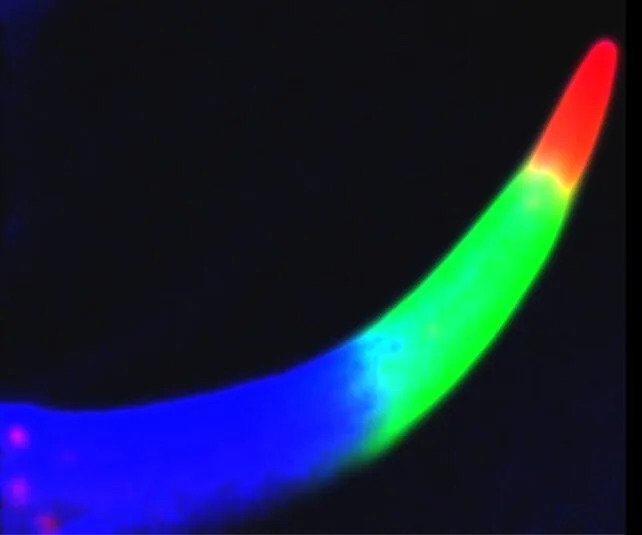
Micro X-ray fluorescence microscopy showing metals present in the stinger of an emperor scorpion (Pandinus imperator). Zinc (red) is concentrated towards the tip, and manganese (green) is concentrated farther down, with a clear line in between. (E.P. Vicenzi/Smithsonian Museum Conservation Institute and NIST)
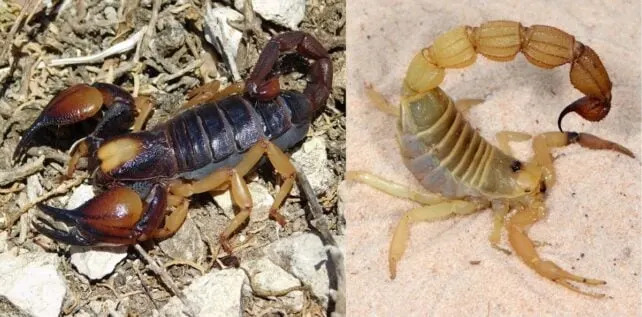
A comparison of different pincer and stinger sizes between species. Left: A peninsular burrowing scorpion (Opistophthalmus latro), which has large claws. Right: A rough thicktail scorpion (Parabuthus raudus), with its prominent stinger. (Paul Bester/Peter Webb/CC BY NC)
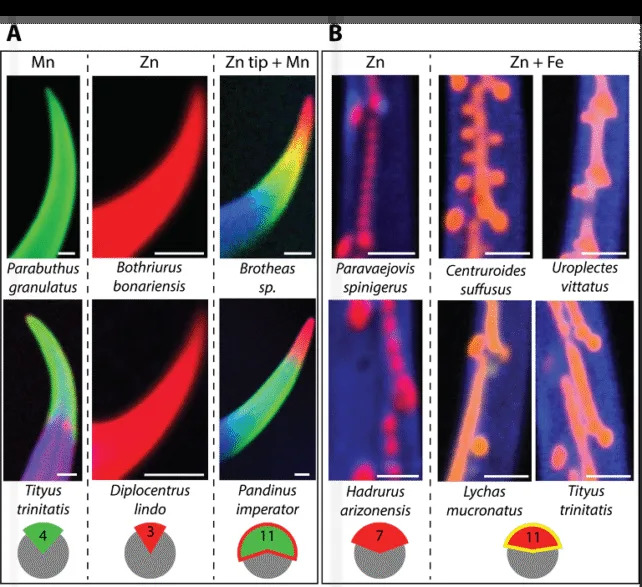
Microscope images revealed the metals present in scorpions' stingers (A) and claws (B). Zinc (Zn) is shown in red, manganese (Mn) in green, and iron (Fe) in yellow. (Campbell et al.,J. R. Soc. Interface, 2026)

Subscribe to ScienceAlert's free fact-checked newsletter
Help us improve.