The USS Gerald R. Ford carrier strike group is expected to begin leaving the Middle East as the Pentagon told Congress the cost of U.S. operations related to the Iran conflict is about $25 billion so far. Hezbollah has deployed fiber‑optic tethered drones that evade electronic jamming, while Brent crude topped $125 a barrel amid stalled talks and strains on the Strait of Hormuz. The U.S. naval blockade has redirected dozens of tankers, the IAEA says much of Iran's highly enriched uranium likely remains at Isfahan, and humanitarian and economic pressures in the region are escalating.
USS Gerald R. Ford Poised To Leave Mideast As Pentagon Discloses $25B Iran War Tab; Oil Surges, New Drone Threat Emerges
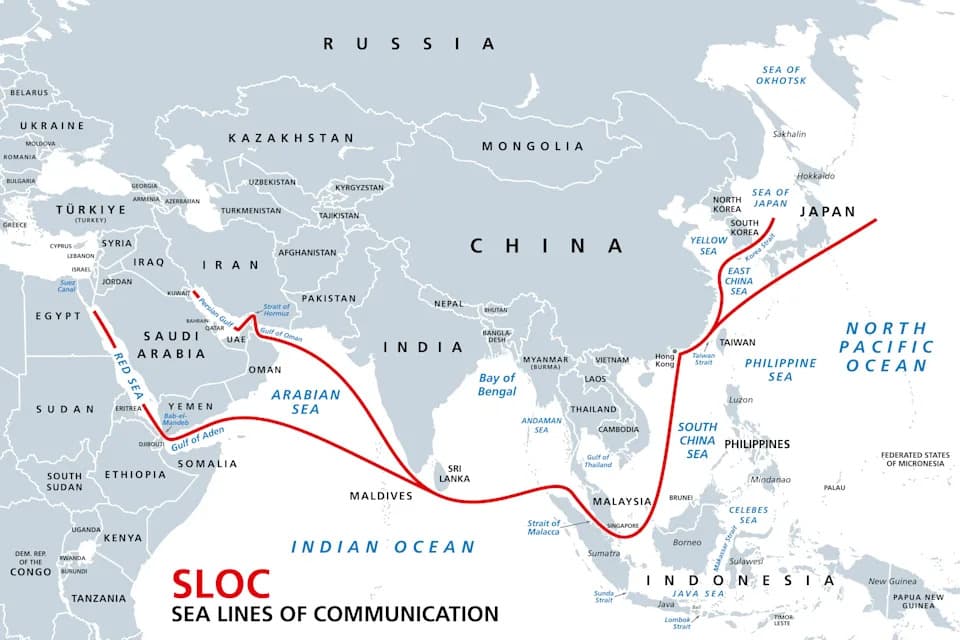
A map shows major routes for energy resources and other trade from the Middle East to Asia, including the Bab el-Mandeb strait and the Strait of Hormuz. / Credit: Getty/iStockphoto
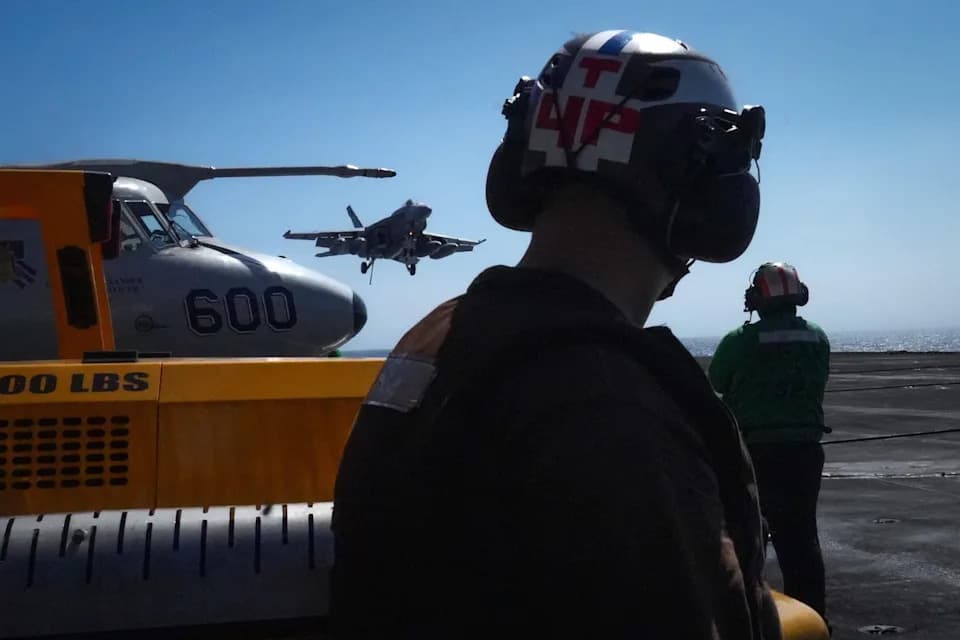
The USS Gerald R. Ford aircraft carrier and its strike group are expected to begin departing the Middle East within days, a U.S. official told CBS News. The Ford had been one of three carriers operating in the region during the Iran conflict.
Key Developments
Pentagon Cost Estimate: At a House hearing, a Pentagon official said the U.S. campaign related to the Iran conflict has cost about $25 billion so far, driven mainly by munitions, operations and equipment replacement. The administration plans a supplemental funding request to Congress after a full cost assessment.
Carrier Departure: The Gerald R. Ford strike group—deployed since last June and operating in multiple theaters—will begin heading home in the coming days, according to U.S. officials. The Washington Post first reported the carrier's scheduled return.
New Battlefield Threat: Fiber‑Optic (Tethered) Drones
Hezbollah has deployed small tethered drones controlled via fiber‑optic cables thin as dental floss—technology used in Ukraine—that are resistant to electronic jamming because the operator is linked directly to the aircraft. These drones are small, hard to detect, and can carry explosive charges; experts warn they are especially dangerous when flown low and close to targets.
"If you know what you're doing, it's absolutely deadly," said Robert Tollast, a researcher at the Royal United Services Institute.
The drones are not invulnerable: wind, obstacles or tangling with other drones can disrupt them, and defenders must either intercept them physically or sever the near‑invisible fiber tether. Israeli officials say many of the systems appear locally produced and inexpensive—built from off‑the‑shelf components with clear wire and small charges—and have become a principal threat to troops near the Lebanon border. Israel is pursuing technical countermeasures and improvised protections such as vehicle nets and cages.
Economic and Strategic Ramifications
Oil Prices: Brent crude spiked above $125 a barrel amid stalled U.S.‑Iran negotiations and renewed uncertainty about reopening the Strait of Hormuz. U.S. benchmark crude moved above $100 per barrel. Markets have lost hope of a quick resumption of normal oil flows while the strait remains effectively constricted.
Blockade Impact: U.S. Central Command says 41 tankers—carrying about 69 million barrels of oil and an estimated $6 billion in revenue—have been redirected under the U.S. blockade of Iranian ports, which has been in place since April 13. The White House calls the blockade "maximum leverage" on Tehran, while European leaders warn of escalating economic pain.
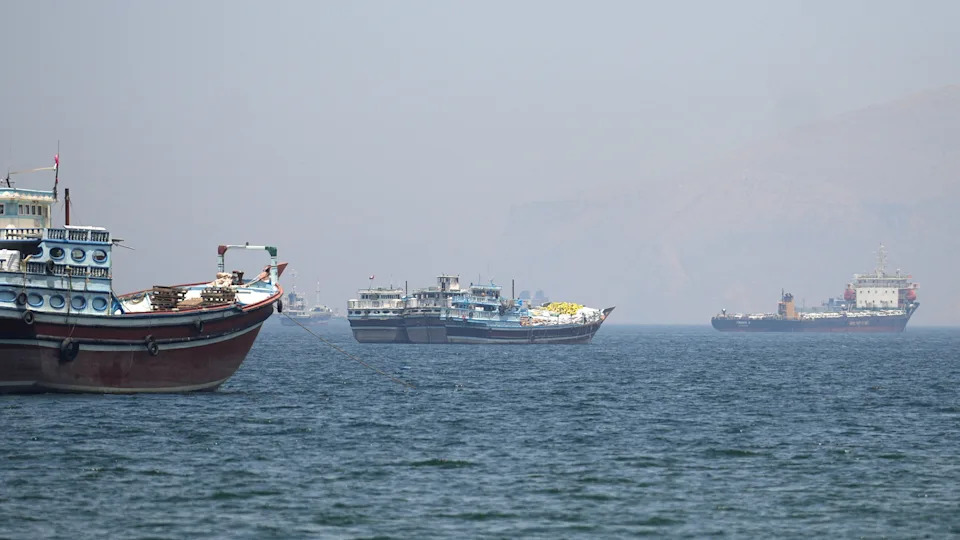
Ships and boats are seen in the Strait of Hormuz, from Musandam, Oman, April 29, 2026. / Credit: Stringer/REUTERS
EU Costs and Humanitarian Concerns: European Commission President Ursula von der Leyen told lawmakers the conflict is costing the EU roughly €500 million ($600 million) a day in higher energy bills and economic disruption. A U.N.‑backed analysis warns more than 1.24 million people in Lebanon may face crisis‑level food insecurity between April and August 2026 as conflict, displacement and economic pressure deepen the humanitarian emergency.
Diplomacy, Nuclear Questions and Domestic Politics
President Trump said he discussed the Iran war with Russian President Vladimir Putin, who reportedly offered to help remove Iran's enriched uranium. Trump said he would prefer Putin instead focus on ending the war in Ukraine. The IAEA director‑general, Rafael Grossi, meanwhile said most of Iran's highly enriched uranium is likely still at the heavily damaged Isfahan complex and that inspectors have not been able to verify its status.
Defense Secretary Pete Hegseth faced intense questioning in his first congressional appearance since the campaign began. Lawmakers pressed him on strategy, timelines and civilian costs; Hegseth declined to provide timelines and reiterated that operational details would not be publicly disclosed. An investigation remains open into a strike on an Iranian elementary school that reportedly killed more than 165 people; a preliminary U.S. assessment suggested the strike was "likely" caused by U.S. action but not intentionally targeted.
Other notable developments: President Trump said he is considering reducing U.S. troop levels in Germany amid tensions with Berlin; Vice President J.D. Vance denied a report that he questioned Pentagon missile stockpile disclosures; and Pakistan said its mediation efforts between Washington and Tehran are ongoing.
Security Alerts and Regional Threats
Iran warned that a prolonged U.S. blockade could trigger "practical and unprecedented" military responses, and senior Iranian officials reiterated threats to key shipping chokepoints including the Bab el‑Mandeb strait. Tehran has also been implicated in seizures of two commercial ships and has limited transits through Hormuz to select vessels under coordination.
Human rights groups and the U.N. reported that Iran has executed at least 21 people and detained more than 4,000 since the conflict intensified, drawing international criticism for harsh domestic measures.
The situation remains fluid politically, economically and militarily. Strategic decisions in the coming days—about carrier deployments, the blockade, negotiations and counter‑drone measures—will shape both near‑term risks and the outlook for energy markets and regional stability.
Help us improve.