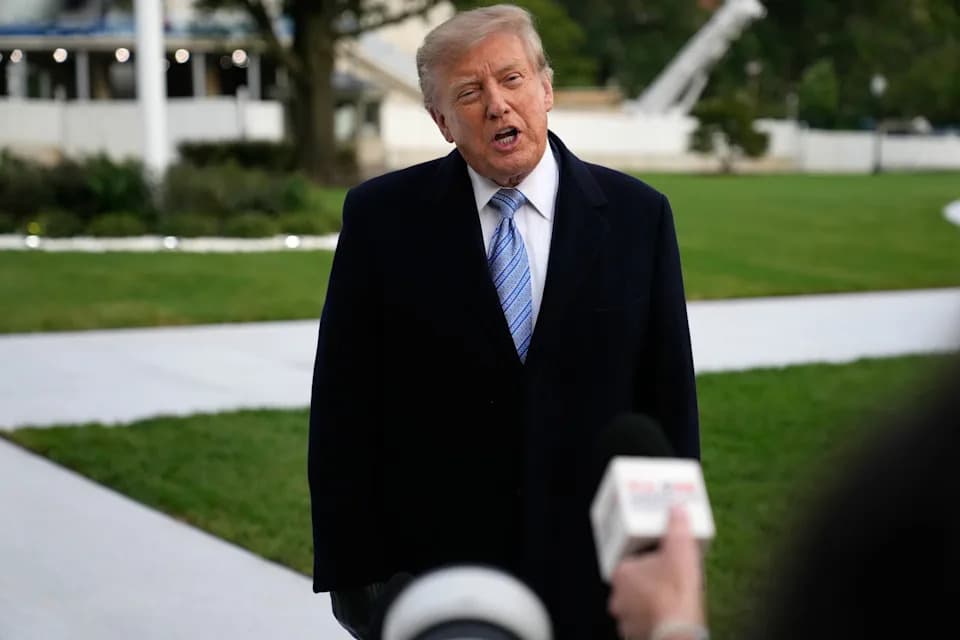
Key developments: Defense Secretary Pete Hegseth said the U.S. naval blockade of Iran will continue "as long as it takes," calling the operation a "gift to the world" and signaling an opening for negotiations. President Trump authorized lethal action against vessels laying mines in the Strait of Hormuz but said he would not use nuclear weapons. Iran's foreign minister is traveling to Pakistan, Oman and Russia as Pakistan seeks to restart U.S.-Iran ceasefire talks; meanwhile, three U.S. aircraft carriers and roughly 15,000 personnel are deployed to the region.
Hegseth Calls U.S. Blockade of Iran a 'Gift to the World' as Military Pressure Rises
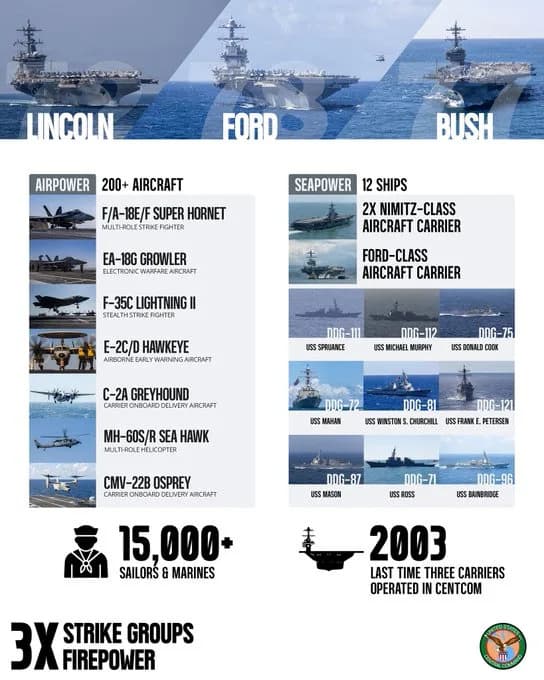
(U.S. Central Command)
Defense Secretary Pete Hegseth said Friday that the United States will maintain its naval blockade of Iranian shipping "as long as it takes," describing the operation as a "bold and dangerous" effort aimed at preventing Tehran from acquiring a nuclear weapon. He characterized the campaign as having produced decisive results and called it "a gift to the world," while saying the mission is entering a new phase that could open the door to negotiations.
U.S. Military Posture and Rules of Engagement
Hegseth described the U.S. maritime effort in the Strait of Hormuz as "ironclad" and said it is expanding as additional forces arrive. He said commanders have clear rules of engagement and warned that American forces will act to destroy threats to U.S. commerce and personnel.
"If Iran is putting mines in the water, or otherwise threatening American commercial shipping or American forces, we will shoot to destroy. No hesitation," Hegseth said.
President Donald Trump separately said he will not use nuclear weapons against Iran, but he has authorized the Navy to use lethal force against vessels laying mines in the strait. Trump framed the policy as economic and maritime pressure while keeping diplomatic options open.
Carrier Presence and Regional Capacity
U.S. Central Command reported that three aircraft carriers — the USS Abraham Lincoln, USS Gerald R. Ford and USS George H.W. Bush — are now operating concurrently in the wider Middle East, bringing more than 200 aircraft and roughly 15,000 Sailors and Marines to the region. Officials said the carriers are positioned across the Red Sea, Arabian Sea and Indian Ocean to reinforce deterrence amid heightened tensions.
Diplomacy: Iran, Pakistan, Oman and Russia
Iran's Foreign Minister Abbas Araghchi was reported to be traveling to Pakistan, Oman and Russia for consultations as Islamabad presses to host renewed ceasefire talks between U.S. and Iranian officials. Pakistani officials confirmed Araghchi's planned visit and said discussions will focus on regional developments and ceasefire efforts.
A statement from Iran's foreign ministry said Araghchi spoke with Pakistani Foreign Minister Ishaq Dar and Army Chief Field Marshal Asim Munir about the ceasefire and ongoing diplomatic initiatives. Pakistan has been actively trying to facilitate a second round of negotiations between Washington and Tehran.
Economic Measures and Maritime Commerce
The White House extended a Jones Act waiver for 90 days to ease the movement of oil and natural gas to U.S. ports amid disruptions tied to the conflict. Officials said an earlier 60-day waiver had helped more supply reach U.S. ports faster and that the extension aims to stabilize energy markets while maritime chokepoints remain tense.
Ceasefire Developments and Regional Security
A fragile three-week extension of the ceasefire between Israel and Lebanon took effect after talks in Washington, D.C. The White House called the agreement a diplomatic step, albeit one backed by an evident U.S. naval presence.
Other Notable Updates
Israeli Prime Minister Benjamin Netanyahu announced he received targeted treatment for a very small, early-stage malignant prostate tumor found during a routine follow-up after prior prostate surgery. Netanyahu said the treatment removed the problem and that there was no evidence of metastasis; his overall health assessment was reported as good.
U.S. officials continue to emphasize readiness to act militarily if Iranian forces threaten American vessels or commerce, even as diplomats pursue avenues for negotiations. The situation remains fluid, with military posture and urgent diplomacy unfolding in parallel.
Copyright 2026 Nexstar Media, Inc. All rights reserved.
Help us improve.