The Indigenous American Genomic Diversity Project sequenced 128 new genomes and combined them with 71 previously published genomes from 45 populations across eight countries. Researchers found evidence for at least three separate migrations into South America, including a previously unrecognized dispersal around 1,300 years ago, and detected a faint ancient Asian 'ghost' lineage named Ypykuéra. The study also identifies genetic adaptations affecting immunity, metabolism and fertility and highlights the severe population losses after European colonization.
Ancient Genomes Reveal Three Waves Into South America — Plus an Unknown Asian 'Ghost' Lineage
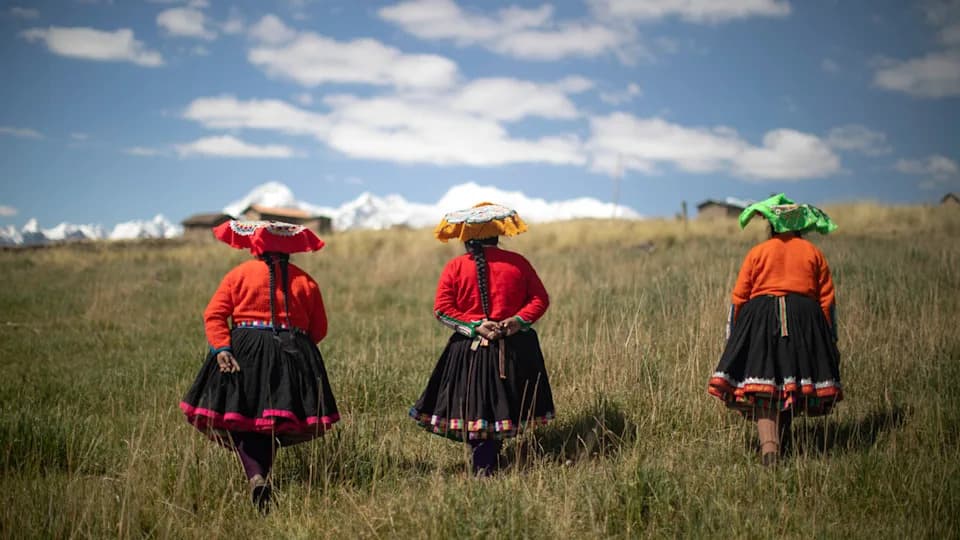
Researchers sequenced DNA from modern Indigenous groups in the Americas, including the Quechua, who live in the Andes. | Credit: Dan Kitwood/Getty Images
A large international study has reshaped our understanding of how people populated South America. The Indigenous American Genomic Diversity Project sequenced 128 new Indigenous genomes and combined them with 71 previously published genomes, spanning 45 populations and 28 language families across Argentina, Bolivia, Brazil, Colombia, Ecuador, Mexico, Paraguay and Peru. The analysis reveals at least three distinct migrations into South America, evidence of natural selection on genes tied to survival, and a faint but persistent signal of an ancient Asian 'ghost' lineage now called Ypykuéra.
Major Findings
Three Distinct Dispersals — Genetic evidence supports at least three separate waves into South America. The earliest movement reached the continent more than 9,000 years ago. A second, genetically distinct lineage, now found in groups such as the Quechua, expanded through Central America around 9,000 years ago. The study also identifies a previously unrecognized third dispersal, likely linked to Mesoamerican-related groups, that occurred at least 1,300 years ago and reflects growing connectivity across Mesoamerica, the Caribbean and South America over time.
A New Ancient Signal: Ypykuéra — The team detected a low-level genetic contribution from an ancient Asian lineage they name Ypykuéra, which also contributed to early Australasian populations. This signal has persisted at low but consistent levels in Indigenous American genomes for over 10,000 years. To date, there is no direct archaeological or fossil evidence for a distinct Ypykuéra population.
Adaptation and Natural Selection — The study identifies alleles shaped by natural selection that relate to immunity, energy metabolism, fertility, fetal growth and protection against malaria. Some of these adaptive variants are shared with modern Australasian populations, suggesting that genes introduced by Ypykuéra or related ancestries may have offered survival advantages as humans adapted to diverse environments such as the Amazon and the high Andes.
Context and Collaboration
The Indigenous American Genomic Diversity Project almost tripled the number of Indigenous genomes available for study. The researchers emphasize that the project was developed in collaboration with Indigenous communities, integrating genetic results with Indigenous histories and perspectives. Study authors also stress ethical engagement and the need for continued Indigenous-led participation in genomic research.
Study co-author Tábita Hünemeier noted that the findings underscore a more dynamic and complex peopling of the Americas than previously appreciated, including contributions from ancestral populations not yet visible in the archaeological record.
Losses From Colonization — European colonization reduced Indigenous populations by roughly 90 percent in many regions, producing severe population bottlenecks caused by epidemics, enslavement, warfare and fragmentation. Despite these losses, the data show genetic continuity spanning more than 9,000 years in some regions.
What This Means
These results refine timelines and migration models for the settlement of South America, highlight the complexity of human population history, and identify genetic adaptations that helped early inhabitants survive in new and varied environments. The study also points to ancestral lineages not yet represented in the fossil or archaeological record, motivating targeted archaeological searches and further genomic sampling done in partnership with Indigenous communities.
Help us improve.