The Wang Fuk Court fire in Hong Kong last November killed 168 people after flames swept through seven of eight apartment blocks. Authorities are now permitting roughly 6,000 residents three-hour visits to retrieve belongings from heavily damaged flats, where soot, melted fittings and charred possessions remain. Investigators heard that fire alarms in seven of the eight blocks had been switched off the day of the blaze, and officials have offered buybacks while saying on-site rebuilding is not feasible. Survivors described deep emotional trauma and salvaged small, meaningful mementos such as photos and pet urns.
Photos, Clothes, Ashes: Hongkongers Reclaim Belongings After Deadly Wang Fuk Court Blaze
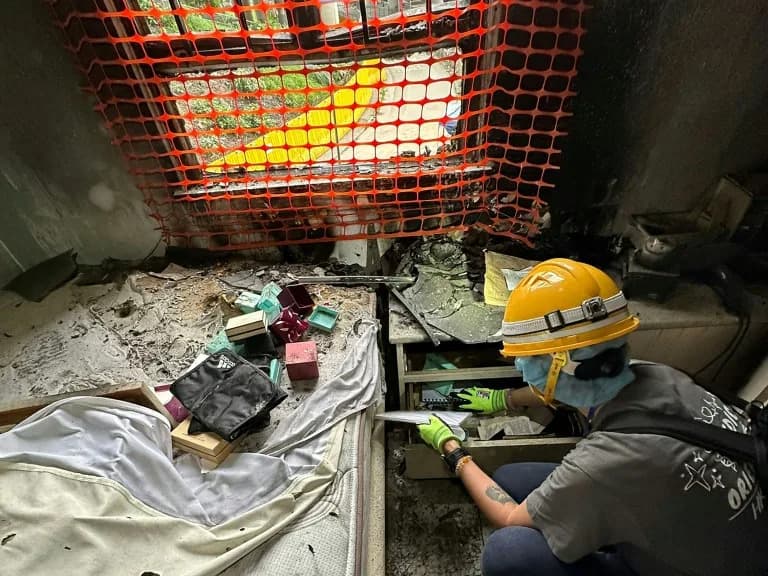
Residents wore hard hats, masks and gloves as they returned to their homes for the first time since a deadly fire in November (Bowie Chan)(Bowie Chan/Courtesy of Bowie Chan/AFP)
When 41-year-old Annie Tse returned to her third-floor flat this week for the first time since last November's catastrophic fire at Wang Fuk Court, a soot-blackened staircase jolted her memory of narrowly escaping the inferno.
The blaze ripped through seven of the estate's eight blocks and became the deadliest residential building fire worldwide since 1980, killing 168 people. Authorities are now allowing roughly 6,000 residents three-hour windows to re-enter their units and collect belongings for the first time since the disaster.
Scenes Of Damage And Small Salvaged Treasures
Escorted by social workers and wearing hard hats, masks and gloves, residents moved through scorched corridors and badly damaged apartments. Videos and photos shared with reporters showed charred appliances, walls and ceilings smeared with thick black soot, and piles of clothes blackened in wardrobes. A plastic shower door had melted into hanging ribbons, and a fan's blades had curled from intense heat.
Amid the destruction, small items survived: a framed wedding photo remained intact on a living-room wall, and two urns containing the ashes of family pets were recovered. For many, these personal mementos carried outsized emotional meaning.
Trauma, Investigation And Displaced Residents
Tse described the visit as overwhelming. "The places where I had walked that day are all black now," she told reporters, breaking into tears as she recalled wanting to warn neighbours but finding the flames already too large. Her husband, Bowie Chan, said Tse has since been diagnosed with depression and continues to struggle with guilt.
"There were no fire alarms, a lot of people didn't know," Tse said. An independent committee investigating the disaster heard testimony that fire alarms in seven of the estate's eight blocks had been switched off on the day of the blaze.
The Hong Kong Fire Services Department reported more than 920 homes were damaged or destroyed. Officials have offered to buy back apartments at approximately their pre-fire market values but said rebuilding on the same site is "not feasible." Some residents criticized the brief three-hour access slots as insufficient to salvage belongings; others said they simply could not bear to leave.
Personal Losses
Interior design owner Jason Kong, 65, said his family retrieved certificates, photographs and birth records but were unable to save their dog, Bear Bear, who was rescued by firefighters and later died of smoke inhalation. "I have a connection to the whole flat," Kong said. "I don't want to say goodbye. It would be best if they could fix it for me."
For many survivors, the return visits are a fraught mix of closure and renewed grief: practical efforts to recover documents and keepsakes are intertwined with the emotional work of mourning and rebuilding lives after a devastating loss.
Help us improve.