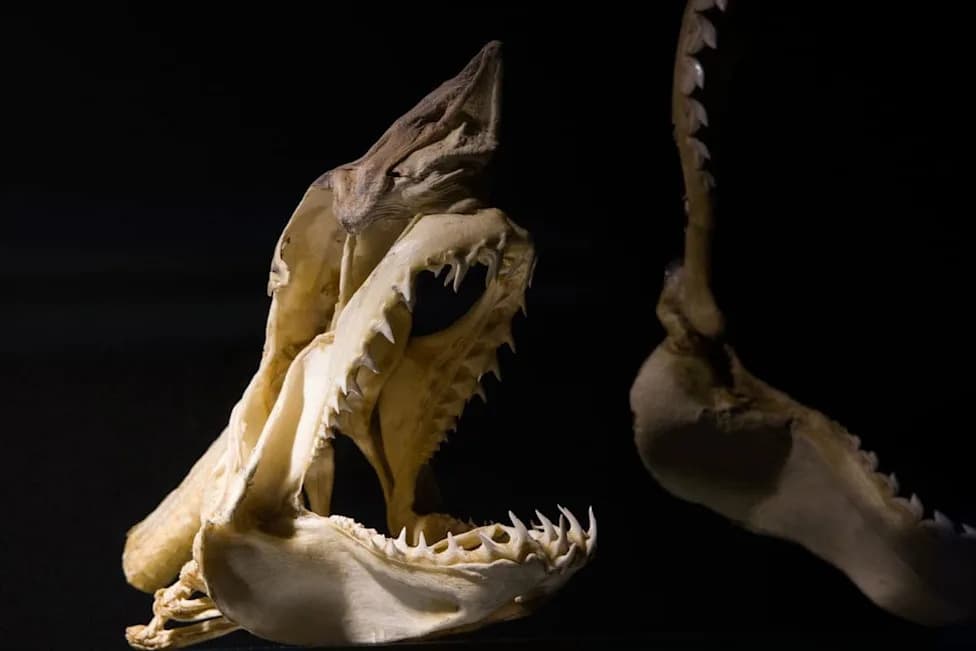
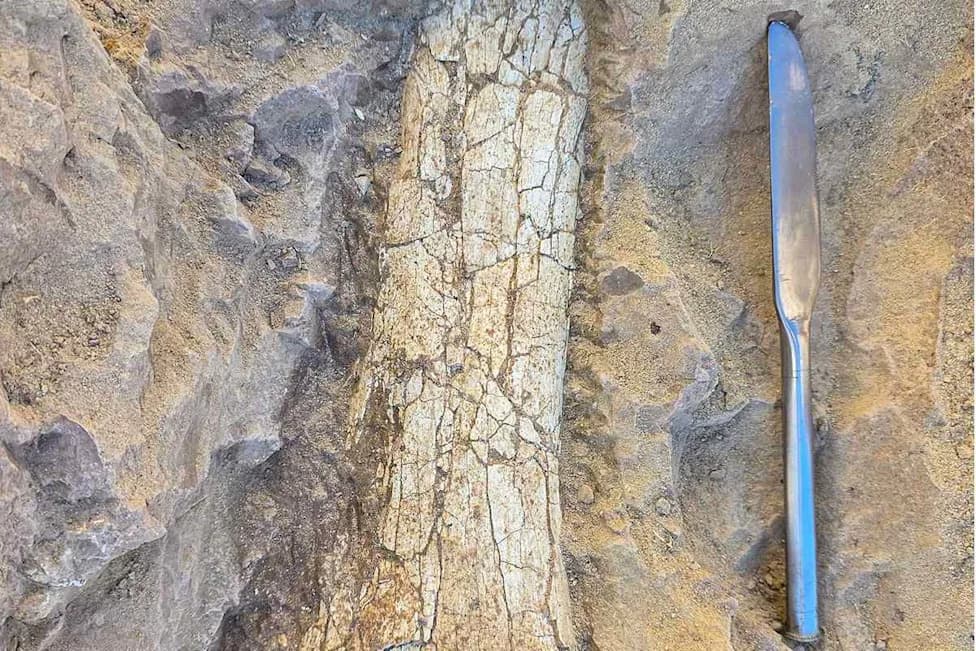
Researchers report that beak fossils as large as those belonging to animals estimated at 23–62 ft (7–19 m) point to giant finned octopuses, named Nanaimoteuthis, in Cretaceous seas. Using grinding tomography and AI, scientists extracted 3D models of jaws with heavy wear consistent with crushing shells, bones and large fish. The evidence suggests these cephalopods may have occupied apex-predator roles, though some experts urge caution about claims they routinely hunted the largest marine reptiles.
Giant 60-Foot Octopuses May Have Been Cretaceous Apex Predators, New Fossils Suggest
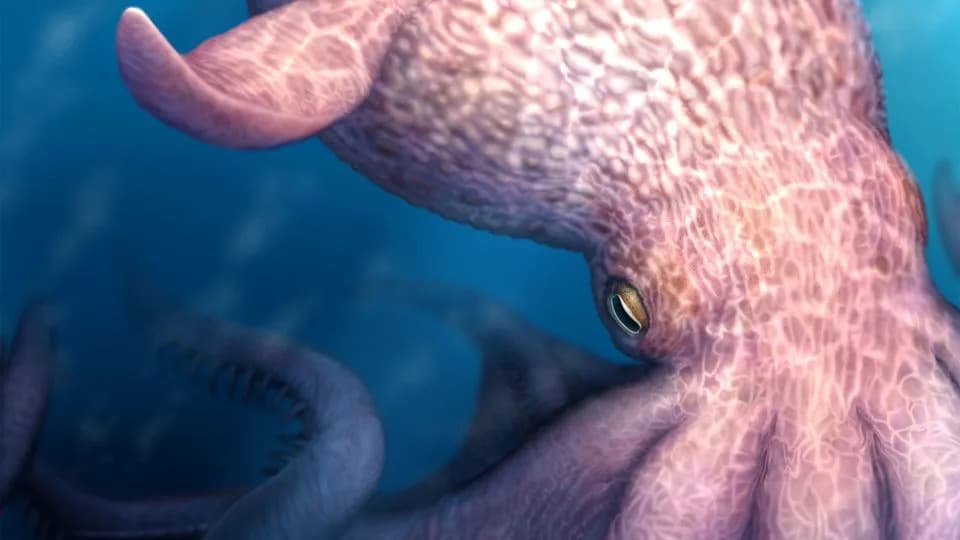
An artist's impression depicts the giant finned octopus called Nanaimoteuthis. - Yohei Utsuki/Hokkaido University
New research suggests enormous finned octopuses — estimated up to 62 ft (19 m) long — may have been apex predators in Cretaceous seas about 100 million years ago. Scientists identified exceptionally well-preserved beak fossils embedded in rock and used advanced imaging and machine-learning tools to reveal details previously hidden in the matrix.
The study, published in Science, reports that the recovered beaks show heavy wear consistent with crushing hard-bodied prey such as shells, bones and large fish. The extinct animals have been named Nanaimoteuthis, and researchers extrapolated overall body size from the dimensions of these large jaws.
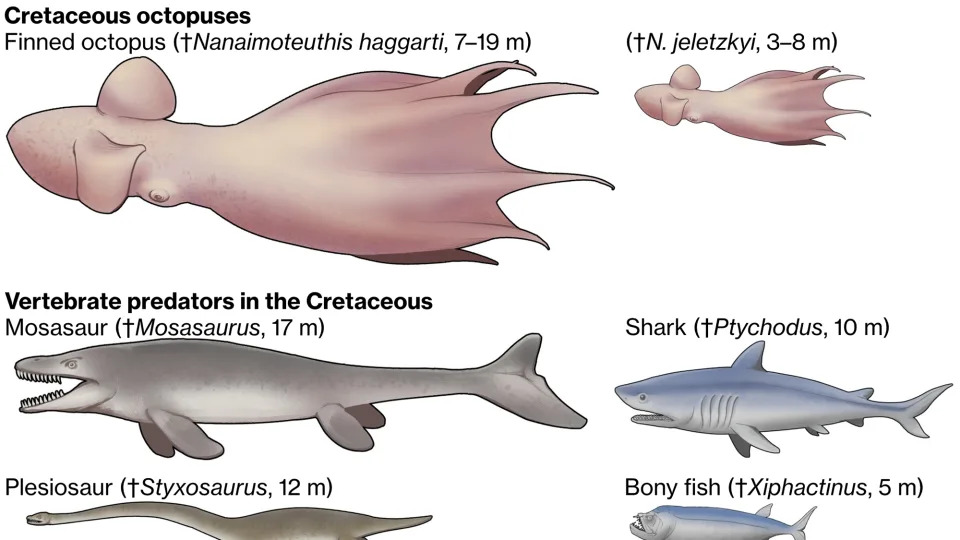
A diagram shows how the colossal size of Nanaimoteuthis compares with that of other animals. - Hokkaido University
How the Fossils Were Found
Octopus bodies are mostly soft tissue and rarely fossilize, so preserved hard parts such as beaks are uncommon. The team reanalyzed 15 large beak fossils previously reported from Japan and Vancouver Island and then expanded the search. Using a method called grinding tomography they produced high-resolution 3D datasets of rock-encased material and applied an AI model to detect additional specimens.
That digital workflow — described by coauthor Yasuhiro Iba of Hokkaido University as "digital fossil mining" — revealed 12 more jaw fossils preserved in Cretaceous sedimentary rock dating from roughly 100 to 72 million years ago. The technique allowed the researchers to build detailed 3D models and examine wear patterns that are otherwise impossible to study in intact rock.
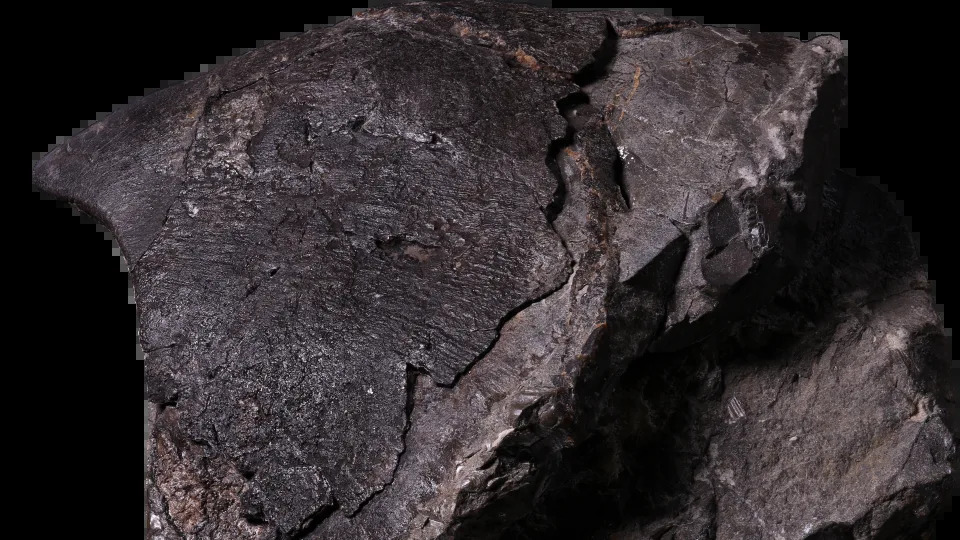
The fossilized lower jaw is seen with the hard, beaklike structure known as the rostrum (top left). - Hokkaido University
Ecological Implications
Beak wear suggests these giant octopuses routinely processed hard, tough prey. "This suggests that these giant octopuses may have functioned as apex predators in the Cretaceous sea," Iba told CNN. If so, Cretaceous marine ecosystems were more complex than previously understood and included a wider range of top predators alongside marine reptiles, sharks and large fishes.
"These animals would have been feeding on other animals, and they could have crunched through bones of large fish and possibly marine reptiles," said Tim Coulson, professor of zoology at the University of Oxford, who was not involved in the study. "Their size suggests they were an apex predator, sat at the top of the food chain."
Not all experts are ready to accept that Nanaimoteuthis routinely hunted the largest marine reptiles. Jakob Vinther of the University of Bristol cautioned that while the find is remarkable, the fossils do not definitively prove regular predation on the very largest prey; large octopuses might also meet energy needs by feeding on many smaller animals.
Next Steps
Iba plans to scale up the digital fossil-mining approach to locate other hidden fossils and build a fuller picture of past ecosystems. The study highlights how modern imaging and machine-learning tools can change our view of ancient food webs by revealing previously undetectable evidence preserved in rock.
Help us improve.