Carcinonepa libererrantes is a newly described insect species preserved in amber from Kachin, Myanmar, notable for true forceps-like claws on its front legs. CT scans and comparisons with more than 2,000 grasping structures show these chelae are unique and represent a rare example of convergent evolution in insects. The genus name references crab-like features; the species name honors the K-pop group Stray Kids because the fossil's claw pose resembles the band's trademark stance. Researchers suggest the claws were adapted for seizing small prey near the coast and that the insect had a toad-bug–like predatory lifestyle.
Prehistoric Clawed Insect Trapped in Myanmar Amber Named After K-pop Group Stray Kids
Strange prehistoric bug with claws found trapped in amber in Myanmar named after K-pop group
Researchers have described a previously unknown prehistoric insect preserved intact in amber from Kachin, Myanmar, revealing an extraordinary set of forceps-like front legs that shed light on a roughly 100-million-year-old coastal-forest ecosystem.
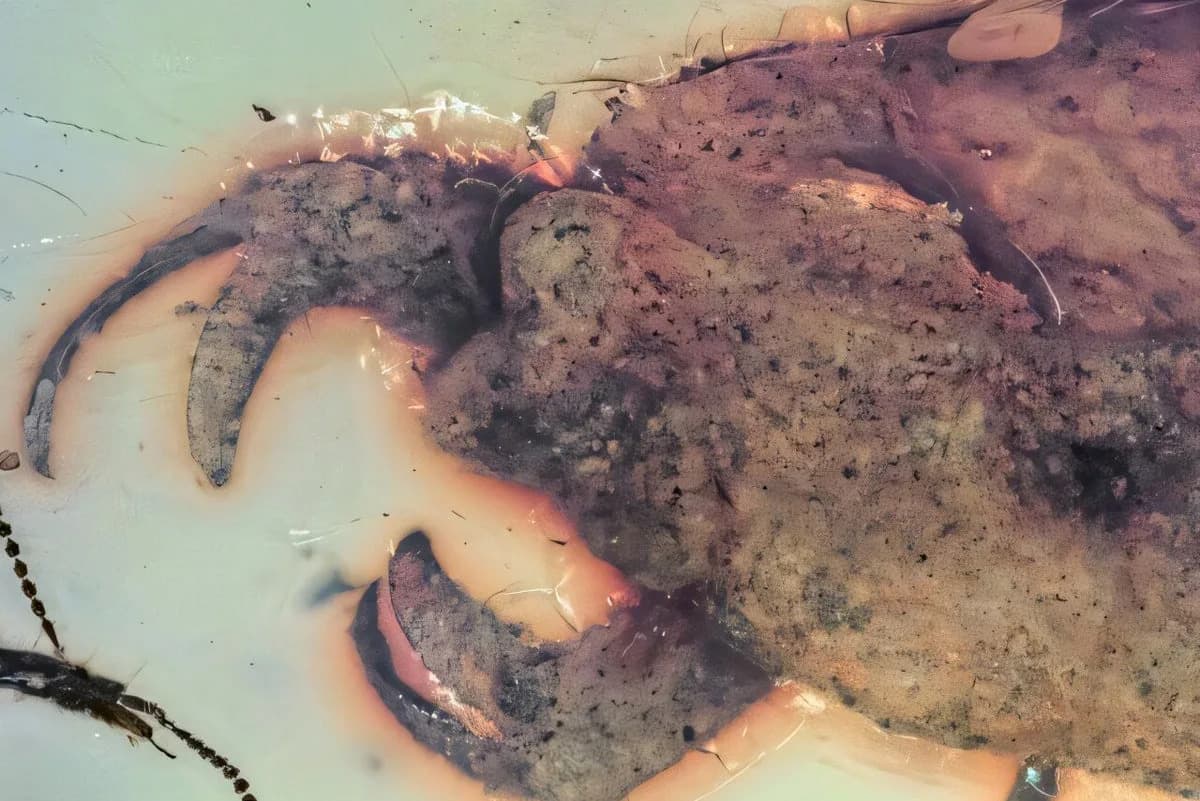
The specimen, recovered from amber deposits in Myanmar’s northernmost state of Kachin, represents the first fossil record of a true forceps-like leg in a bug. Its most striking feature is a pair of large claws, or chelae, on the front legs that closely resemble the grasping appendages of crabs — a morphology that is exceedingly rare among insects.
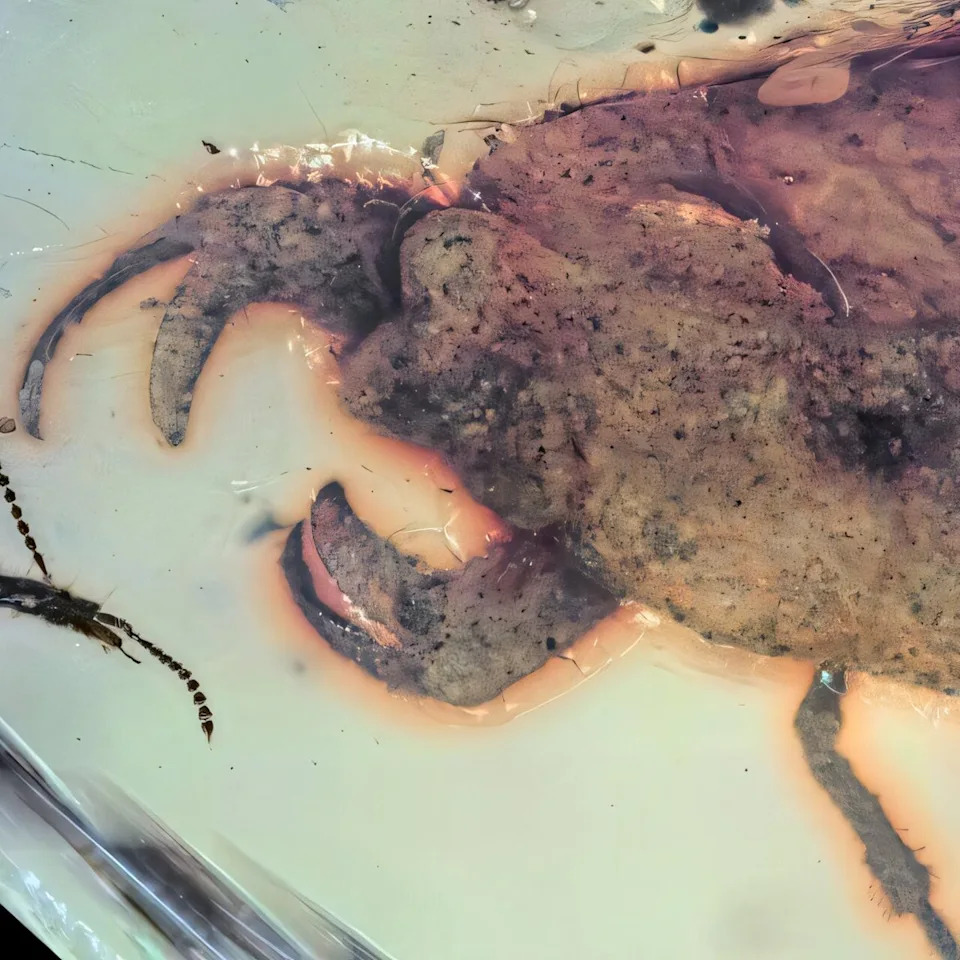
Preserved in amber: the newly discovered bug species Carcinonepa libererrantes (Insects (2026))
Unique Anatomy and Evolutionary Significance
“Previously, such chelae were known from only three insect groups. This fossil, therefore, represents the fourth known case of these structures evolving independently in insects,” said zoologist Carolin Haug, a co-author of the paper published in the journal Insects.
Because of its distinctive anatomy, the team assigned the specimen to a new genus and species: Carcinonepa libererrantes. The genus name combines a Latinized Greek root for "crab" (carcino-) with nepa, a nod to the true water-bug group Nepomorpha. The species name, libererrantes, is a Latinisation inspired by the K-pop group Stray Kids; researchers say the fossil's claw posture evocatively resembles the band's trademark pose.
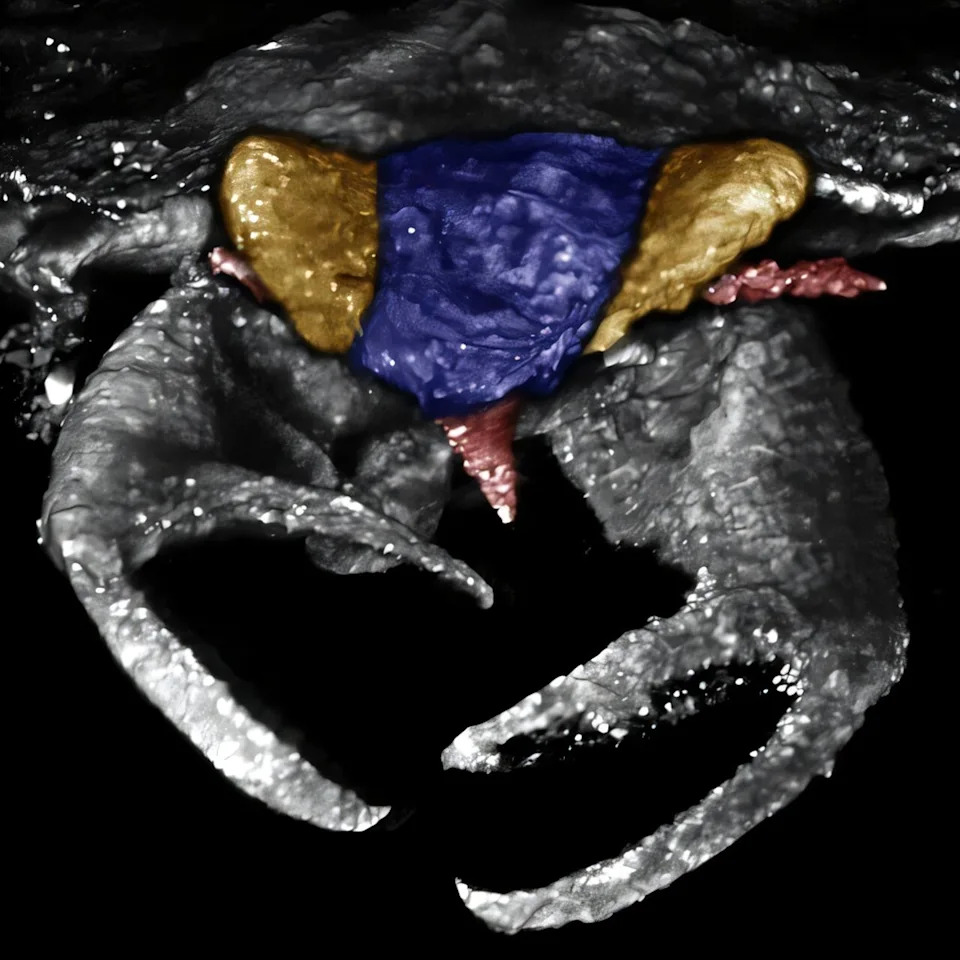
CT scan of the newly discovered insect species with its distinctive claws (Insects (2026))
Imaging and Comparative Analysis
Scientists used high-resolution CT X-ray scanning to visualize the insect’s internal and external anatomy in detail. By comparing the scans with those of other insects and arthropods, the team found the fossil’s chelae differ markedly from analogous structures in known species.
“We compared the shapes of over 2,000 grasping structures. The part closer to the body in this fossil has a shape unknown from any other fossil or modern representative,” the authors wrote.
The forceps-like legs show a resemblance to the grasping limbs of more distantly related arthropods such as crabs, lobsters and shrimps, suggesting a remarkable instance of convergent evolution in limb function and form.
Ecology and Behavior
Researchers propose the chelae were likely used to seize small insects close to the coast, and the insect’s overall body form resembles living members of Gelastocoridae (toad bugs), which are terrestrial predators. This morphology suggests C. libererrantes probably led a similar predatory lifestyle in coastal or near-shore forest habitats during the Cretaceous.
The discovery not only documents a rare anatomical innovation in insects but also provides a new window into the diversity and ecological interactions of ancient forest ecosystems preserved in Burmese amber.
Help us improve.