China has become a consequential but unofficial diplomatic actor in the Iran war, using economic ties and intensive outreach to push for de-escalation. Beijing’s influence—rooted in its position as Iran’s largest oil customer and its capacity to offer reconstruction incentives—helped nudge Tehran back to talks hosted in Pakistan. Analysts describe China’s approach as cautious, opportunistic and consistent with its broader pattern of mediation.
China’s Quiet Diplomacy: How Beijing Became an Unofficial Mediator in the Iran War
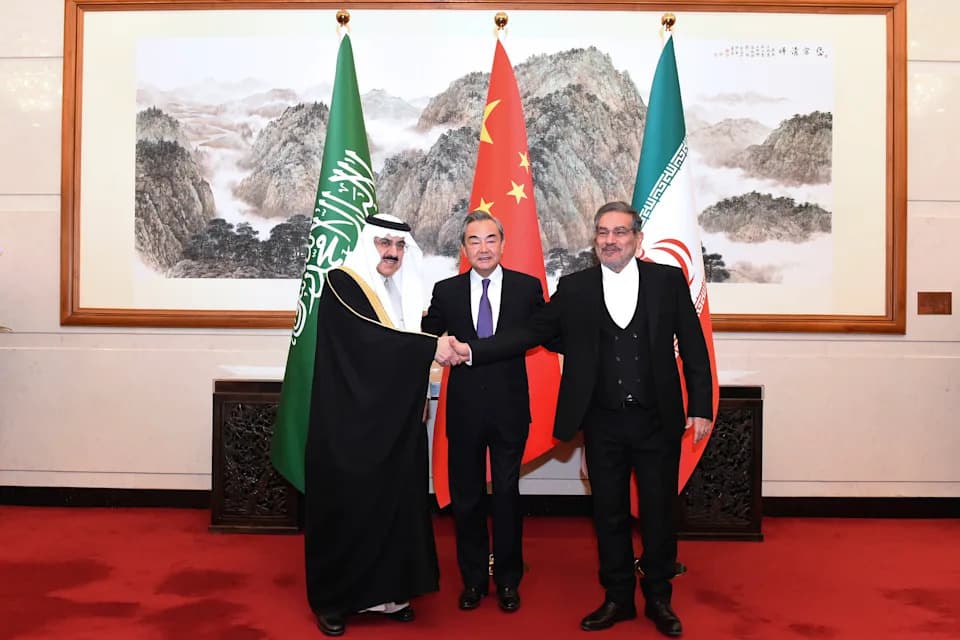
FILE - In this photo released by Xinhua News Agency, Ali Shamkhani, then secretary of Iran's Supreme National Security Council, right, shakes hands with Saudi national security adviser Musaad bin Mohammed al-Aiban, left, as Wang Yi, China's most senior diplomat, looks on for a photo during a closed meeting held in Beijing, on March 11, 2023. (Luo Xiaoguang/Xinhua via AP, File)(ASSOCIATED PRESS)
China has quietly stepped into an influential—but unofficial—diplomatic role in the recent Iran war, positioning itself as a responsible global actor at a moment of heightened tensions between the United States and traditional partners.
Growing Diplomatic Footprint
Once reluctant to intervening in conflicts far from its borders, Beijing’s diplomatic profile has expanded in recent years. Chinese envoys have increasingly engaged in conflict mediation from Southeast Asia to Europe, applying a consistent playbook of appeals to sovereignty, the U.N. charter and international law.
Behind-the-Scenes Influence in the Iran War
Although China has not formally declared itself a mediator in the Iran war, diplomats and officials from Washington, Tehran and regional capitals say Beijing has played an important role in calming tensions. Experts note that Beijing’s leverage comes largely from its deep economic ties to Iran—especially as the world’s largest buyer of sanctioned Iranian oil—and from its ability to offer post-conflict economic incentives.
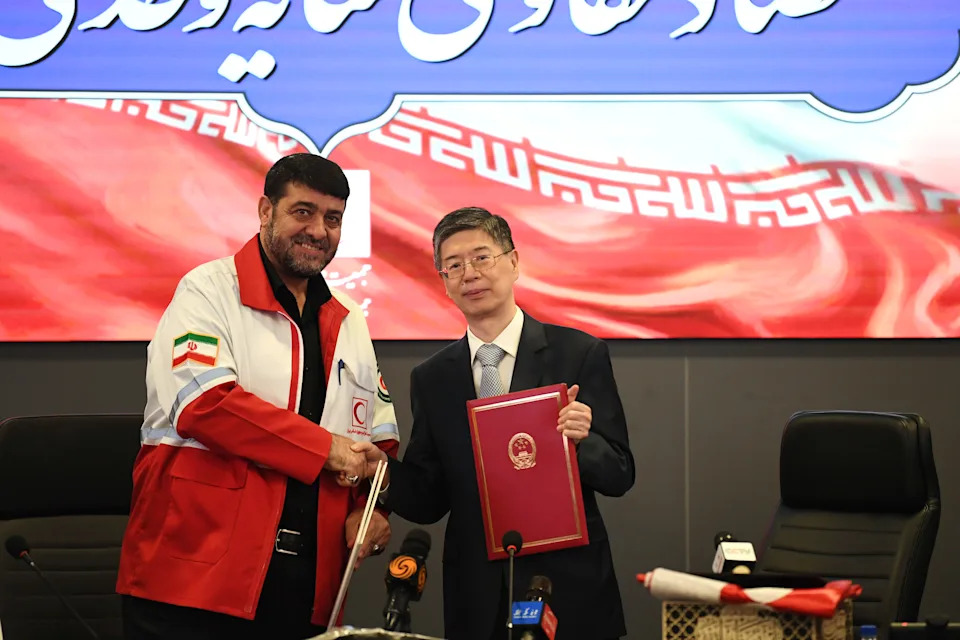
In this photo released by Xinhua News Agency, Chinese Ambassador to Iran Cong Peiwu, right and Iranian Red Crescent Society (IRCS) President Pirhossein Kolivand attend a signing ceremony for the handover certificates of China's emergency humanitarian assistance to Iran in Tehran, Iran, April 15, 2026. (Shadati/Xinhua via AP)(ASSOCIATED PRESS)
Diplomats told The Associated Press that China used its economic clout to encourage Tehran to return to face-to-face talks held in Pakistan. China has not publicly confirmed that role, a cautionary stance that observers attribute to Beijing’s desire to avoid being perceived as aligned with any U.S.-led security framework.
High-Level Outreach
After initial U.S.-Israeli strikes on Feb. 28 escalated the conflict, Chinese Foreign Minister Wang Yi increased contacts with regional counterparts, including officials in Israel, Saudi Arabia, Bahrain and the United Arab Emirates. By mid-April, China’s Foreign Ministry had counted roughly 30 phone calls by Wang with parties involved in the crisis.
Wang also met Pakistan’s foreign minister—Islamabad has emerged as a principal mediator—and unveiled a five-point proposal calling for an end to hostilities and the reopening of the Strait of Hormuz. Chinese President Xi Jinping publicly urged against a return to the “law of the jungle” and called for the free flow of shipping through the Strait.
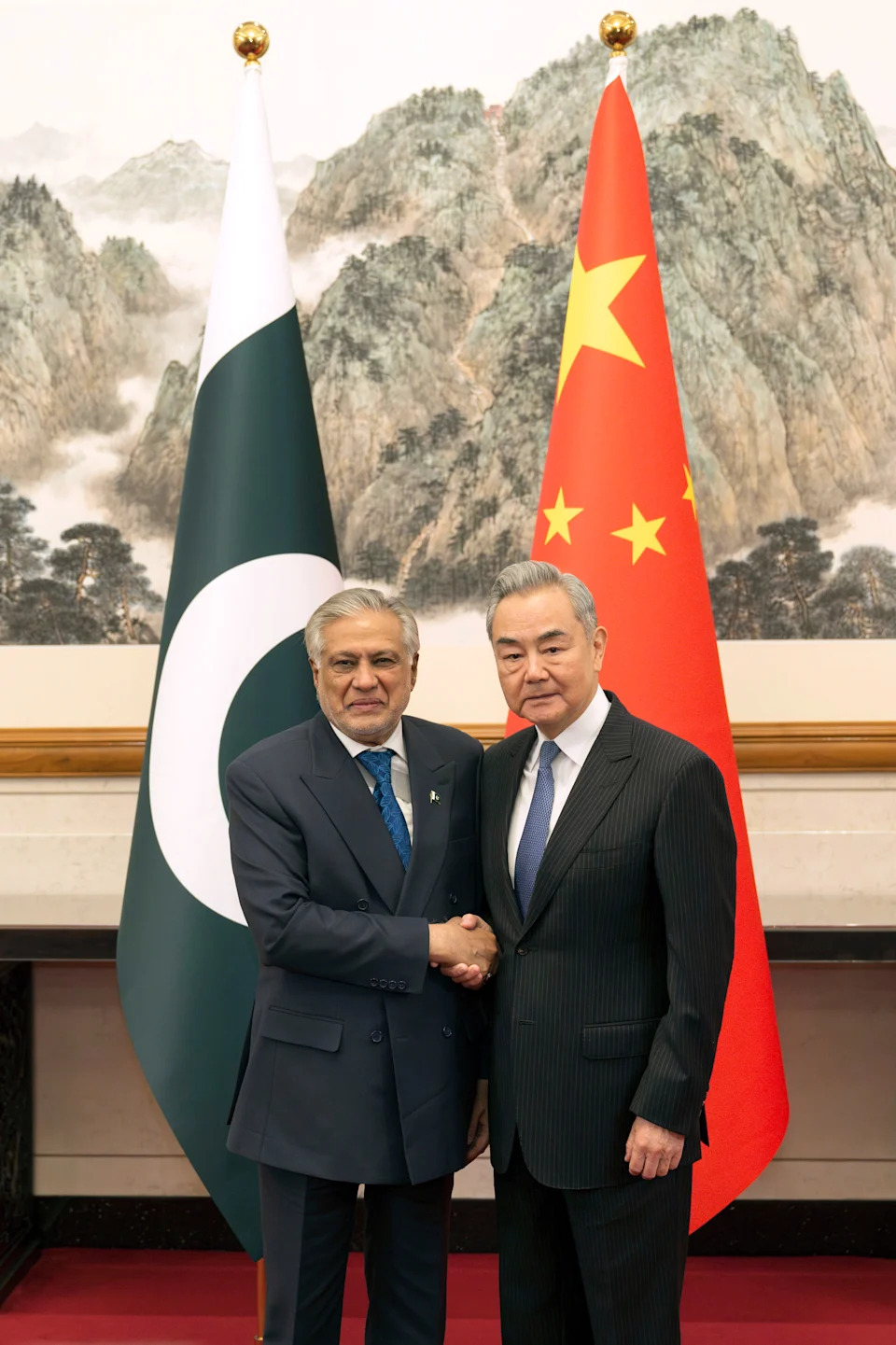
In this photo released by Xinhua News Agency, Chinese Foreign Minister Wang Yi, right, shakes hands with Pakistani Deputy Prime Minister and Foreign Minister Mohammad Ishaq Dar in Beijing on March 31, 2026. (Cai Yang/Xinhua via AP)(ASSOCIATED PRESS)
Why Beijing’s Role Matters
Analysts say China occupies a unique position. As Iran’s top oil customer, Beijing can exert economic pressure and offer reconstruction investment and commercial relief—powerful incentives for Tehran to accept and adhere to post-conflict constraints. At the same time, U.S. officials point to longstanding concerns about China’s transfer of dual-use components and earlier technology links to Iran’s missile program.
“China can give Tehran both political cover and material incentives to accept constraints and stick to them,” said Tuvia Gering of the Atlantic Council’s Global China Hub.
A Pattern of Opportunistic, Low-Risk Mediation
China’s recent diplomacy—such as brokering the 2023 resumption of Saudi-Iran talks and mediating tensions between Thailand and Cambodia—reveals a pattern: Beijing tends to intervene when diplomatic conditions are already favorable and risks are manageable. Observers describe this approach as opportunistic and cautious, but potentially effective when combined with strong economic leverage.
Limits and Mixed Results
Experts caution that China’s strategy has delivered mixed results. While Beijing can convene talks and offer incentives, it lacks the direct security influence of states such as Pakistan or key Gulf countries. Moreover, China’s desire to avoid public association with U.S. security frameworks constrains how overtly it will act.
What Comes Next
Beijing’s involvement in the Iran war underscores its growing diplomatic ambitions and the limits of traditional security alliances. Whether China’s behind-the-scenes efforts translate into a lasting de-escalation will depend on Tehran’s calculations, regional dynamics and how other powers—especially the United States—respond.
Reporting note: Contributions to this piece include reporting from The Associated Press and commentary from regional diplomacy experts.
Help us improve.