Stanford researchers discovered a polymerase that can synthesize DNA using its own protein structure as a template. Experiments on a cloned DRT3 system from Escherichia coli showed that Drt3b directs sequence‑specific DNA synthesis without an external DNA template. The finding expands known polymerase functions, suggests a role in bacterial anti‑phage defense, and could inspire future biotechnological applications—though reprogramming the enzyme appears challenging.
Scientists Discover Polymerase That Builds DNA From Its Own Shape — A New Protein‑Templated Mechanism
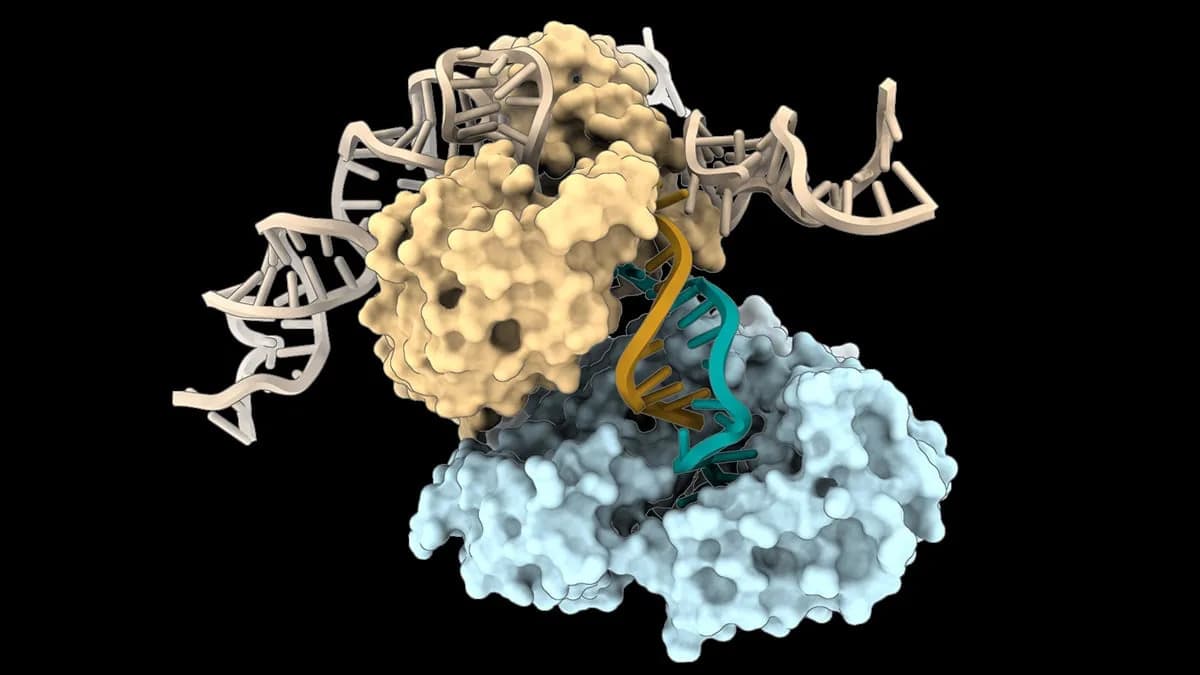
A diagram of the DRT3 system, showing Drt3a in yellow and Drt3b in blue. (Hyunbin Lee)
Researchers at Stanford University have identified a previously unknown way that DNA can be synthesized: a polymerase enzyme that uses its own structure as a mold to direct sequence-specific DNA synthesis, without relying on an external DNA template.
What the Study Found
The team cloned a defense-associated reverse transcriptase system (DRT3) from Escherichia coli and tested its activity both in vitro and in living cells. They found a three-part apparatus consisting of two enzymes, Drt3a and Drt3b, plus a segment of non-coding RNA. Unexpectedly, Drt3b synthesizes DNA without referencing any external template: the protein’s architecture itself prescribes the DNA sequence it produces.
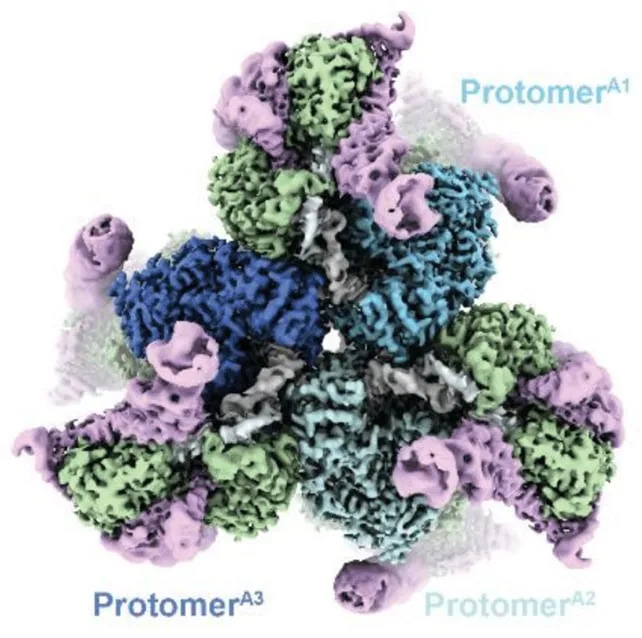
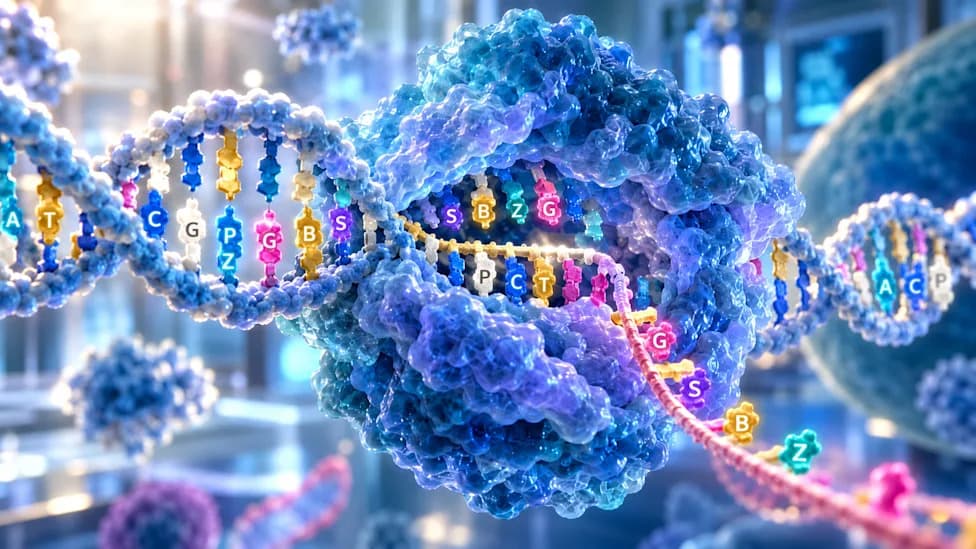
How the DNA-building factor looked under cryo-electron microscopy, showing multiple enzymes at work. (Deng et al.,Science, 2026)
How It Differs From Conventional Biology
Under standard models, genetic information flows from a DNA template to proteins that copy or read that template. In the DRT3 system, however, the protein acts as the blueprint. As Stanford biochemist Alex Gao told Science, “The protein itself serves as the blueprint for the DNA sequence. That was quite a surprise. This is a fundamentally new way that life produces DNA.”
“These findings expand the functional landscape of nucleic acid polymerases, revealing a protein‑templated mechanism for sequence‑specific DNA synthesis,” the researchers write in their paper.
Biological and Biotechnology Implications
The discovery does not overturn core molecular biology, but it adds a novel mechanism to how genetic information can be generated. The DRT3 system may play a role in bacterial anti‑phage defense, and the researchers predict similar systems could be widespread across bacterial lineages. Understanding how DRT3 functions in natural settings will require additional study.

Subscribe to ScienceAlert's free fact-checked newsletter
There are also potential long‑term applications: natural bacterial defense systems such as CRISPR were adapted into powerful biotechnologies. In principle, a protein‑templated polymerase like Drt3b could inspire new synthetic biology tools, though the studied enzyme appears to be a very specific, fixed mold and would likely be difficult to reprogram for arbitrary sequences.
Next Steps
Follow‑up experiments will be needed to map exactly how DRT3 counters phage infection, how bacteria regulate the system, how widespread the mechanism is, and whether protein‑templated polymerases can be engineered for practical use. The study has been published in Science.
Note: Experiments reported include both in vitro biochemical assays and tests in living cells, but the full biological role of DRT3 in bacterial immunity remains to be clarified.
Help us improve.