This week saw coordinated settler attacks near Ramallah, renewed Israeli strikes in Gaza that killed civilians including children, and accelerating demolitions and evictions in East Jerusalem. Humanitarian access to Gaza has worsened, with UN agencies reporting a 37% drop in aid inflows and bakeries cutting production. OCHA reports more than 2,500 Palestinians displaced in 2026—75% attributed to settler attacks—while US-Hamas talks in Cairo made limited progress but produced no agreement.
Palestine Weekly: Coordinated Settler Raids, Renewed Gaza Strikes and Rising Evictions
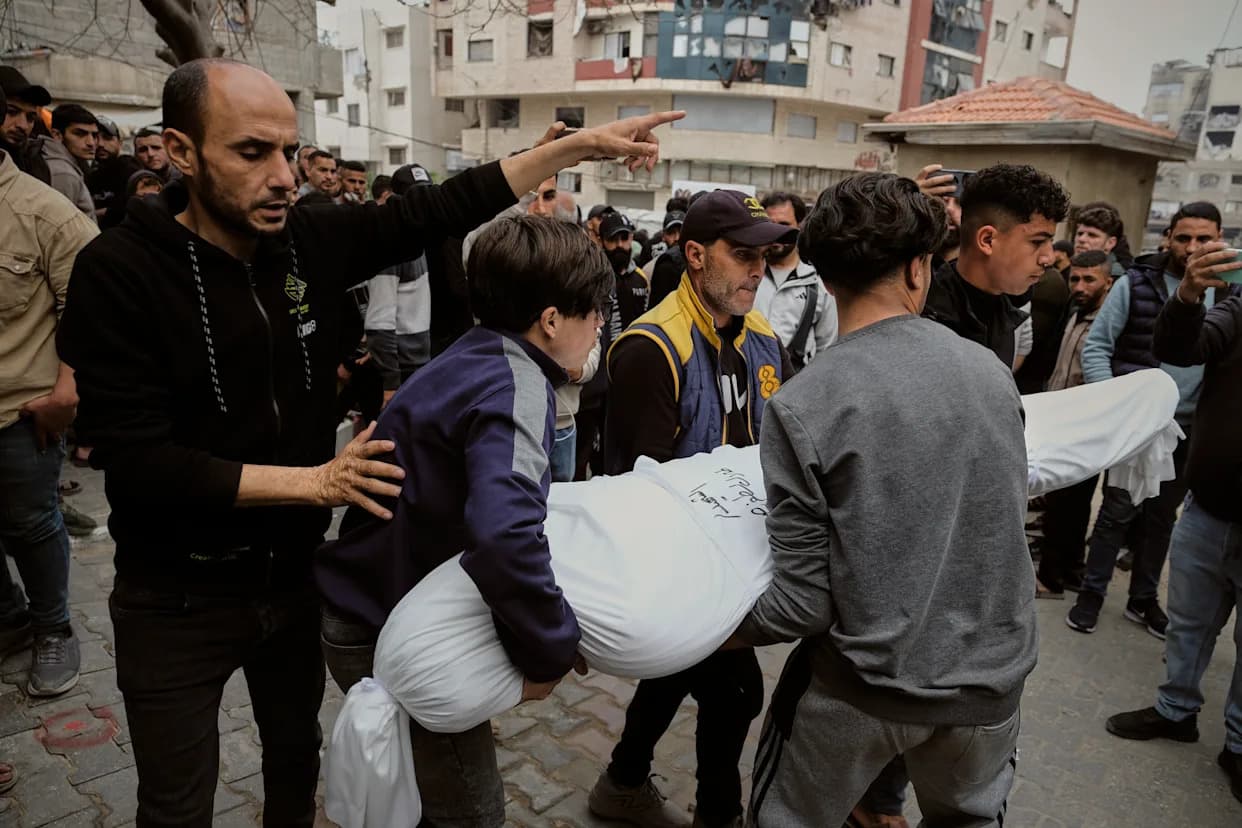
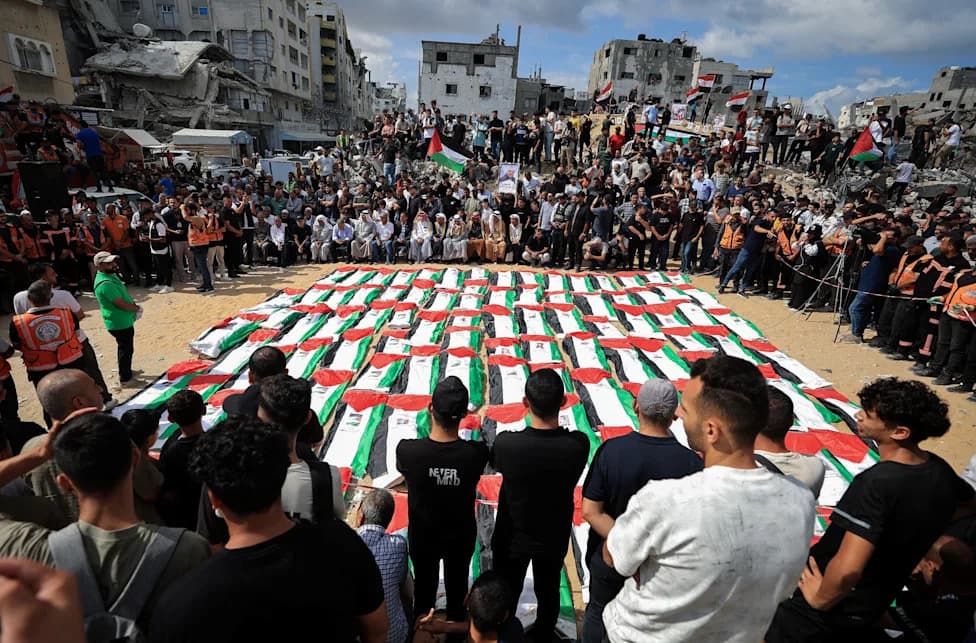
Mourners carry the bodies of Palestinians killed in an Israeli air strike during their funeral in Gaza City on Wednesday, April 15, 2026 [Jehad Alshrafi/AP Photo]
This week saw intensifying violence and dispossession across Gaza, the West Bank and East Jerusalem, marked by coordinated settler attacks near Ramallah, continued Israeli strikes in Gaza, mounting demolitions and evictions in East Jerusalem, and limited diplomatic movement in Cairo. United Nations experts warned that daily attacks and widespread destruction are contributing to a campaign that they described as effectively 'ethnically cleansing' parts of the West Bank.
Gaza: Continued Strikes and Deepening Humanitarian Crisis
Israeli air strikes, drone attacks and gunfire persisted across the Gaza Strip throughout the week as humanitarian conditions worsened. On April 14, a strike on a police vehicle on al-Nafaq Street in Gaza City killed four people, including three-year-old Yahya al-Malahi; his family said they had been leaving a relative's wedding. A later strike that day hit the Shati refugee camp, killing at least five more.
On April 16, brothers Abdelmalek and Abdel Sattar al-Attar were killed in Beit Lahiya in an area witnesses said lay outside the zone demarcated by the Israeli military as the 'yellow line'. On April 17, brothers Mahmoud and Eid Abu Warda were reportedly shot by a drone while trying to fetch water in Shujayea; a separate drone strike struck a desalination facility in the same neighborhood, killing an additional person. The following day two civilian contractors delivering water on behalf of UNICEF were shot dead by Israeli troops in northern Gaza.
Official tallies show that, since the October ceasefire, 777 Palestinians in Gaza have been killed and at least 2,193 injured as of April 20. The cumulative death toll since October 7, 2023 now stands at 72,553, after the Gaza Ministry of Health certified an additional 196 deaths this week.
Humanitarian access remains severely constrained. The UN Office for the Coordination of Humanitarian Affairs (OCHA) reports a 37% decline in UN and partner aid inflows between the first and second three-month periods after the ceasefire. Bakeries have scaled back production because of shortages of flour and fuel, producing long queues for bread. UN envoy Nickolay Mladenov said Israeli restrictions at border crossings remain 'the primary obstacle' to sufficient aid deliveries.
West Bank: Coordinated Settler Attacks Near Ramallah
The most sustained violence in the West Bank this week occurred across a cluster of villages northeast of Ramallah—Khirbet Abu Falah, al-Mughayyir and Turmus Aya—where three illegal outposts were established in the past two months on privately owned Palestinian land in Area B. One outpost sits on land recently taken from the Abu Najjeh community, which was forcibly displaced from Ein Samiya in summer 2023.
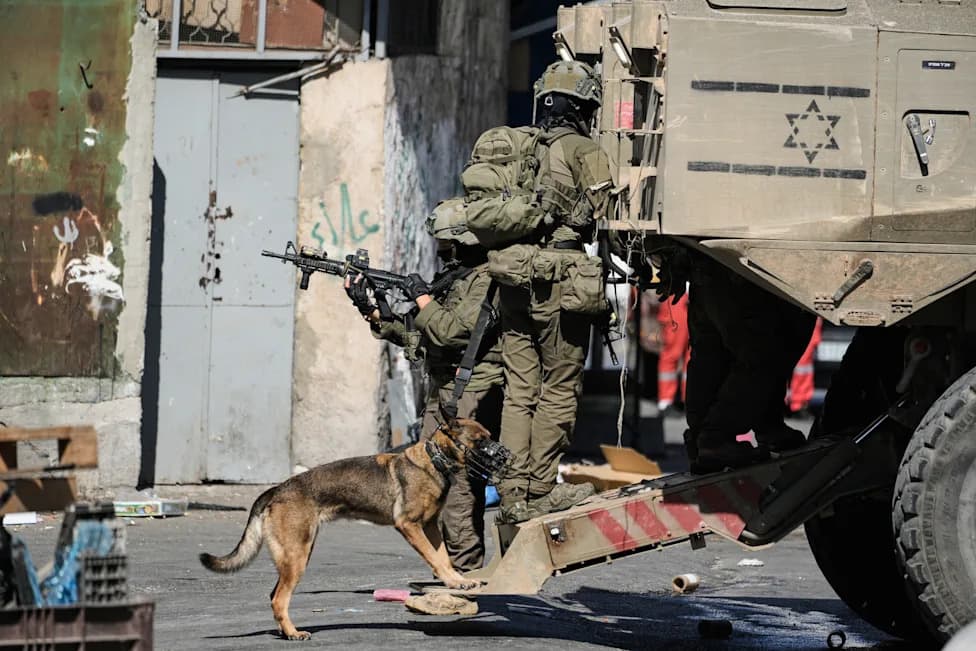
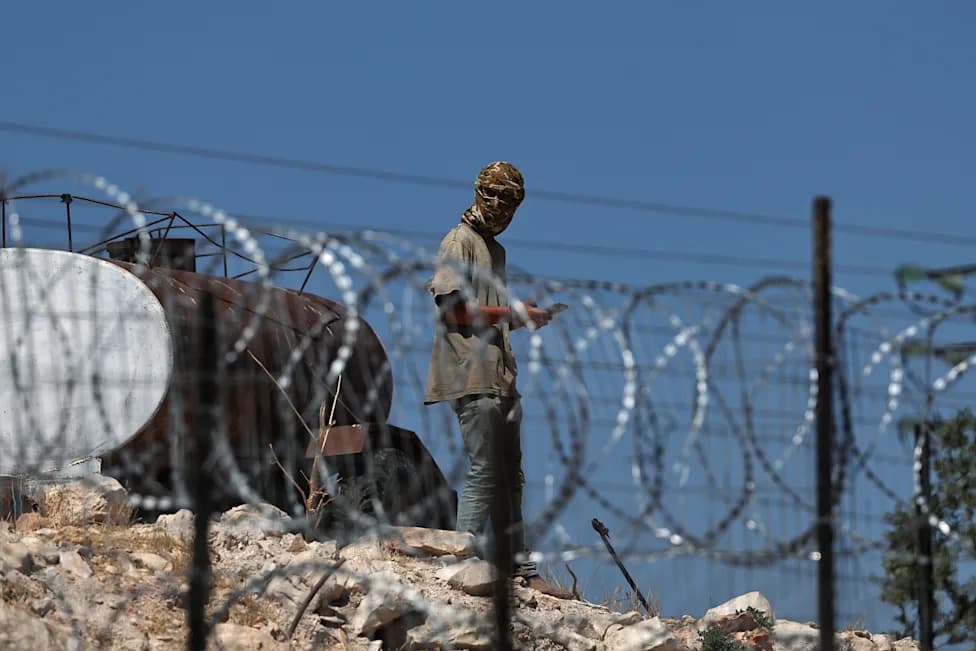
On April 18, settlers launched simultaneous attacks on all three villages, according to local activists. In Turmus Aya, settlers in more than a dozen vehicles burned a home and a car while an army force near the outpost reportedly did not intervene. In Khirbet Abu Falah, dozens of settlers gathered at a new outpost before moving against Palestinian homes; soldiers later raided that village. In al-Mughayyir, soldiers reportedly pushed two small children to the ground, and settlers on a government-supplied quad bike attacked a Palestinian driver on a nearby road.
The next morning settlers raided a sheep pen in al-Mughayyir and stole about 70 sheep; when residents pursued them, settlers reportedly fired live ammunition. Activists say Israeli military and police escorted Or Nachman outpost founder Amishav Malt into the village, where he led what he described as a recovery operation to retrieve stolen animals—a tactic activists say is sometimes used to justify further seizures. Reports also allege police beat a Palestinian unconscious and that soldiers enabled another outpost founder, Neria Ben Pazi, to take sheep from a restrained resident. At least 20 military vehicles later laid siege to the village entrance.
Settler attacks were documented across other communities as well, including the cutting down of olive trees in Yatma near Nablus, the theft of livestock and crops in Jifna and several Masafer Yatta villages, and the erection of barbed wire that blocked children from Umm al-Khair reaching their school safely.
On April 16 Israeli forces raided Beit Duqqu (northwest of Jerusalem) and shot dead 17-year-old Mohammed Rayan; soldiers reportedly prevented ambulances from treating him and removed his body, denying the family timely burial rites. Four others were shot during the raid. On April 18 forces killed 25-year-old Mohammed Suwaiti in Khirbet Salama, southwest of Hebron, alleging he had approached the Negohot settlement.
East Jerusalem: Demolitions and Evictions Accelerate
Demolitions and evictions in occupied East Jerusalem continued at an elevated pace. Israeli authorities demolished the home of 80-year-old cancer patient Abu Kamel Dweik in Silwan’s al-Bustan neighbourhood—at least the eighth demolition in that area this month. OCHA reports that since January 2026 at least 86 Palestinian-owned structures have been demolished in East Jerusalem, displacing more than 250 people; about half of those demolitions were carried out by owners themselves to avoid fines.
The extended Basha family—six households totaling 12 people, most over 60 who have lived in the Old City's Muslim Quarter for nearly a century—face a court-ordered eviction by April 26.
Diplomacy and Political Developments
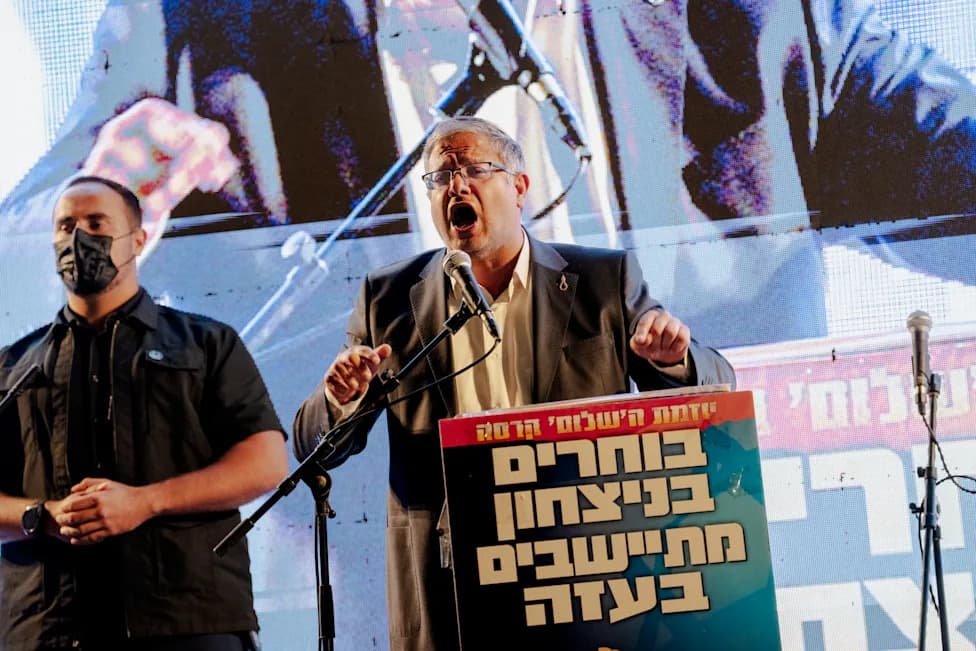
Direct US-Hamas talks in Cairo focused on implementing phase-one commitments as a precursor to any discussion of disarmament; no formal agreement was reached this week. Meanwhile, Israeli Finance Minister Bezalel Smotrich urged Prime Minister Benjamin Netanyahu to direct the military to 'immediately prepare for the full occupation of the Gaza Strip' and to establish Israeli settlements there if Hamas refuses to disarm fully. Smotrich made the remarks at a ceremony marking the re-establishment of the Sa-Nur settlement, dismantled by Israel in 2005.
Israeli media reported the Netanyahu government would allocate roughly 1.2 million shekels (about $400,000) to expand ultra-nationalist Jerusalem Day marches into mixed Jewish-Arab cities including Lydd (Lod). Critics say subsidising such events reflects the growing influence of National Security Minister Itamar Ben-Gvir, whose oversight of police operations is already the subject of legal challenge. Israel's High Court ordered Ben-Gvir to reach an agreement with the attorney general to curb political interference in police affairs after alleged repeated violations of an earlier agreement.
Humanitarian Impact and Data
OCHA's latest humanitarian situation report notes that in 2026 more than 2,500 Palestinians have been displaced by demolitions, settler attacks and evictions—including over 1,100 children. Settler attacks now account for roughly 75% of all recorded displacement this year, and March recorded the highest monthly settler injury toll since documentation began in 2006.
Response: Al Jazeera has reached out to the Israeli military for comment on the incidents described but had not received a reply at the time of reporting.
Note: This article compiles reported incidents, official tallies and local activist accounts. Figures are cited from the Gaza Ministry of Health, the UN Office for the Coordination of Humanitarian Affairs (OCHA), UNICEF and local reporting as of April 20–18, 2026.
Help us improve.