China’s state media are using AI and social platforms to craft vivid, shareable narratives that often mock the U.S. Recent AI-generated animations and videos — including a martial-arts-style allegory about Iran — have gone viral domestically and reached international audiences. Experts say the content is designed to appeal to younger viewers and forms part of a broader information struggle flagged by U.S. officials as a security concern.
China’s State Media Turns to AI and Social Platforms to Shape Global Narratives — Often Mocking the U.S.
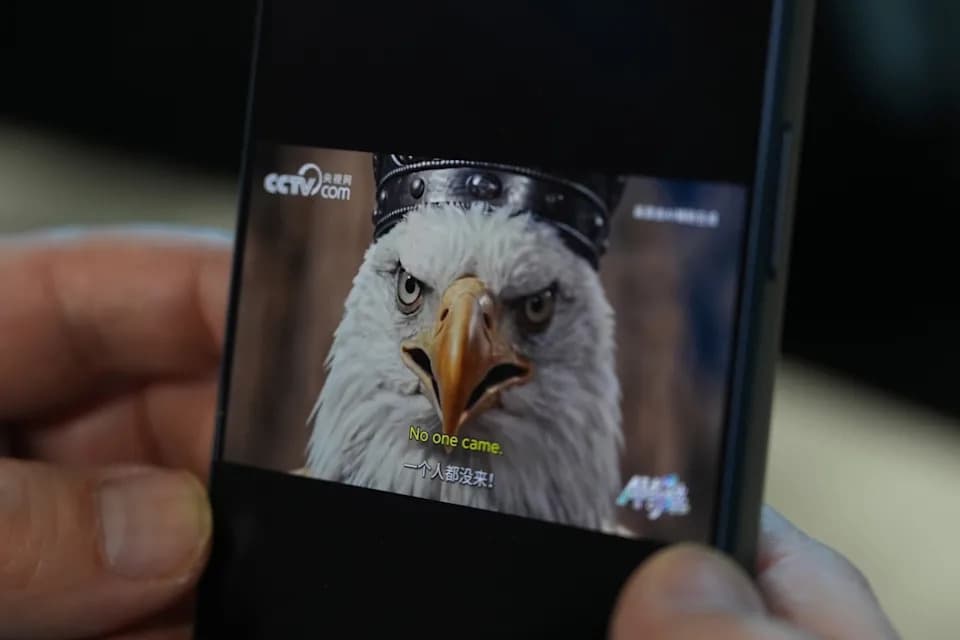
An AI-made viral animation released by Chinese state media mocking the United States as a white eagle is seen on a mobile phone in Beijing, China, Monday, April 6, 2026. (AP Photo/Ng Han Guan)(ASSOCIATED PRESS)
China’s official media have moved from slogan-heavy, top-down messaging to slick, digitally native content that uses social media and artificial intelligence to tell stories — and frequently to lampoon the United States and its leaders.
AI-Driven Storytelling and Political Allegory
One recent example is a five-minute, AI-generated animation styled like a classic martial-arts film that frames the conflict in Iran as an allegory. In the clip, a regal white eagle representing the U.S. laughs before its forces attack a group of Persian cats in black cloaks representing Iranians; the cats vow to resist after losing their leader and a critical trade route is closed. Released by China Central Television on social platforms and later subtitled on X (formerly Twitter), the short went viral in China and was viewed more than one million times after being shared in English.
Part Of A Broader Strategic Push
The use of AI animation and other creative formats follows repeated directives from President Xi Jinping urging China’s media and diplomats to strengthen the country’s global communications, broaden its influence in international affairs, and counter what Beijing describes as biased Western narratives. State outlets such as Xinhua have also produced AI-generated music videos and short films that mock U.S. policies and episodes tied to former President Donald Trump, including reported comments about Greenland and hemispheric security initiatives.
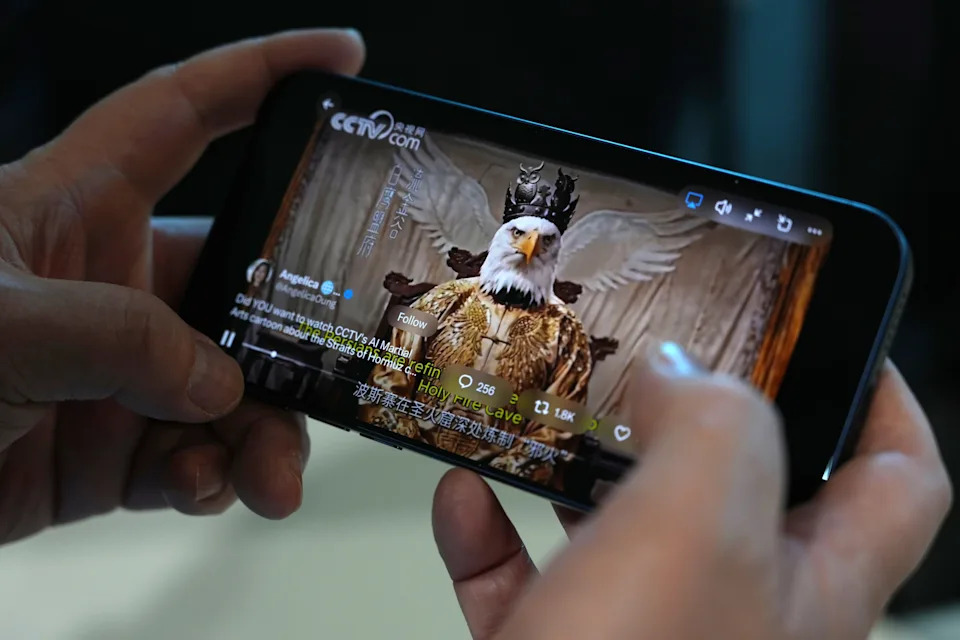
An AI-made viral animation released by Chinese state media mocking the United States as a white eagle is seen on a mobile phone in Beijing, China, Monday, April 6, 2026. (AP Photo/Ng Han Guan)(ASSOCIATED PRESS)
U.S. officials have warned that foreign state-run messaging campaigns on digital platforms "pose a direct threat to U.S. national security and fuel hostility toward American interests."
Targeting Younger Audiences
Scholars and media experts say these AI-driven "infotainment" pieces are designed to appeal especially to younger, social-media-savvy audiences. Shi Anbin of Tsinghua University’s Israel Epstein Center describes the approach as a new way for mainstream Chinese media to reach Gen Z and global social-media users with Chinese perspectives on international affairs. Andrew Chubb, a researcher of political propaganda, noted that such content can feel like historical dramatization rather than traditional propaganda, helping it spread widely.
New Formats, Familiar Goals
Beijing’s media strategy now mixes playful web language, pop culture, and high production values. Party-backed outlets recruit pop stars, produce rap tracks and TV dramas, and experiment with AI-created short-form videos to make state narratives more engaging. Analysts say this creativity is paired with a deliberate distribution mechanism: a sprawling "matrix" of social accounts run by diplomats, state media, influencers and automated accounts across platforms such as X and Facebook.
Whether presented as allegory, music video, or short animation, these pieces aim to simplify complex geopolitics and frame China’s worldview while undermining U.S. actions and messaging. As Washington pledges to bolster its countermeasures, the contest over hearts, minds and online attention is intensifying.
Reporting notes: The original animation was released by China Central Television; Xinhua produced other AI clips. The article draws on expert commentary and State Department warnings about foreign-state messaging campaigns.
Help us improve.