New FOIA-released records show the Trump-era EPA replaced a 2024 Biden finding — that any inhaled formaldehyde increases cancer risk — with a 0.3 ppm threshold largely aligned with industry-funded studies by Rory Conolly. The documents reveal industry-EPA meetings, cited studies previously judged unreliable by EPA scientists, and former industry officials who assumed EPA chemical-policy roles. Critics warn the decision relied on disputed science and could set a precedent for weakening protections for other carcinogens.
Documents Reveal Trump-Era EPA Relied On Industry Science To Weaken Formaldehyde Cancer Protections
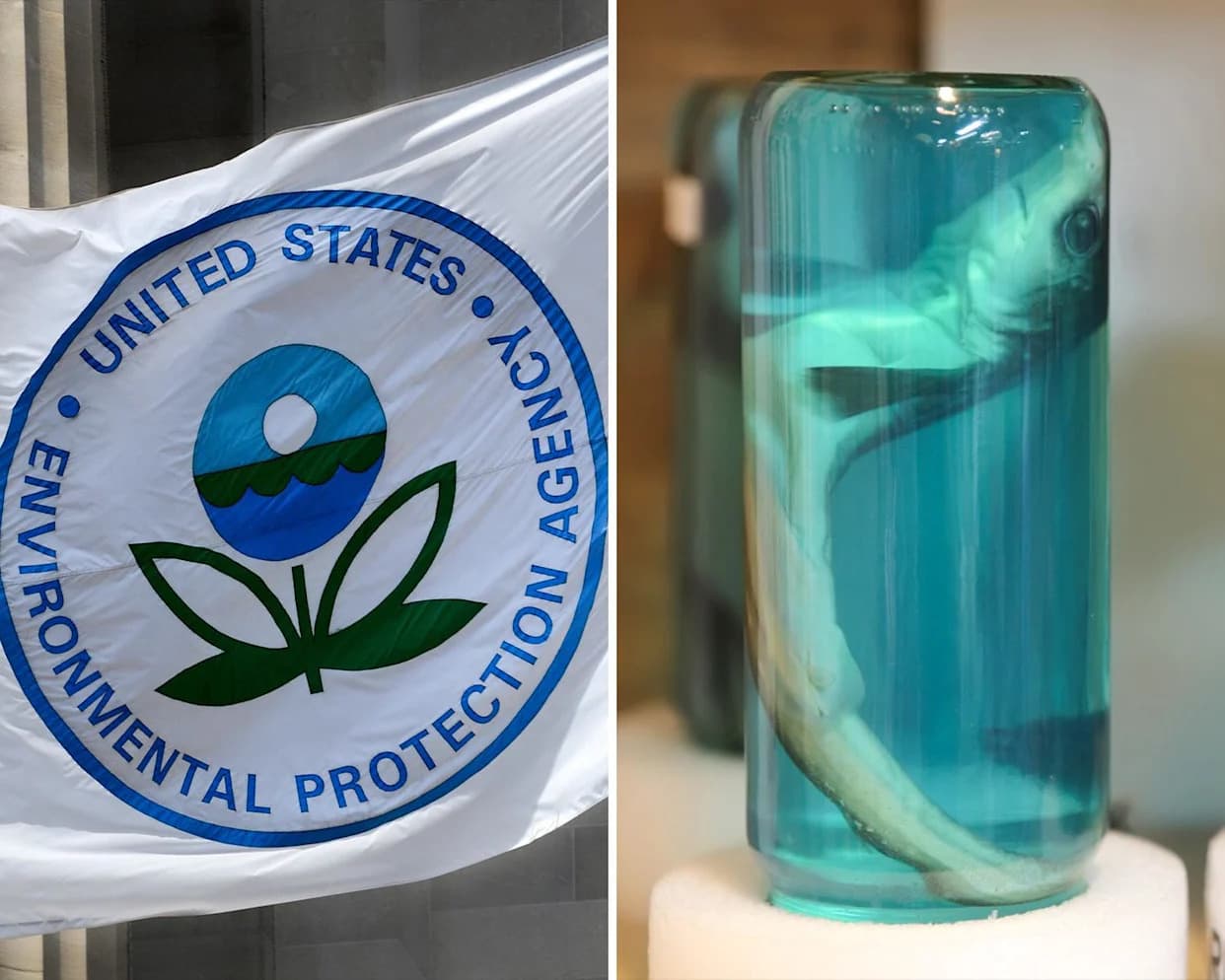
The EPA under the Trump administration has weakened regulations around formaldehyde.Composite: Getty Images, NurPhoto(Composite: Getty Images, NurPhoto)
Newly released records from chemical manufacturers and the U.S. Environmental Protection Agency show a coordinated industry effort that influenced the agency to roll back federal protections for formaldehyde, a carcinogen used in products from cosmetics and furniture to glues and craft supplies.
What the Documents Show
The files, obtained via a Freedom of Information Act request by the Environmental Defense Fund (EDF), indicate the Trump-era EPA (late 2025) replaced a Biden-era (late 2024) conclusion — that any inhaled formaldehyde increases cancer risk — with a 0.3 parts per million (ppm) "threshold" level. That threshold corresponds to concentrations that cause sensory irritation, and the agency argued limiting irritation would also prevent cancer.
Central to the rollback were a small number of studies led by scientist Rory Conolly, funded by industry trade groups, which concluded a safe exposure threshold exists. EPA records show that between 2008 and 2024 agency scientists had judged much of that work to be outdated or too uncertain for risk assessment. After the 2025 leadership change at EPA, the agency adjusted its risk levels to align with Conolly’s findings or with studies the agency had previously flagged as unreliable.
Industry Meetings and Influence
The FOIA files include materials from a three-day February 2023 meeting that brought EPA officials together with major formaldehyde producers, downstream users and trade associations; Conolly was among the presenters. Internal communications and presentations in the records repeatedly cite Conolly’s analyses and other industry-aligned science.
“Much of industry and the Trump EPA claims and justification are based on what Conolly did,” said Maria Doa, a former EPA scientist now with EDF.
The documents also show that several former trade group officials who opposed stricter formaldehyde rules later assumed leadership roles in EPA chemical policy in 2025. Among them are Nancy Beck and Lynn Dekleva, formerly of the American Chemistry Council and DuPont respectively. Advocates and former agency staff say that rapid personnel shift helped accelerate the policy changes.
Scientific Reviews And Disputes
The EPA’s Integrated Risk Information System (IRIS) produced an assessment concluding no inhalation level of formaldehyde is safe. That IRIS conclusion was reviewed in 2024 by the National Academies of Sciences, Engineering, and Medicine (NASEM), which concurred that IRIS’s methods and its no-safe-level conclusion were appropriate. Industry presentations and some agency documents later challenged those findings, arguing for the 0.3 ppm threshold instead.
Critics say the Trump EPA selectively emphasized dissenting studies and older human data, and "cherry-picked" favorable analyses while sidelining broader scientific consensus. FOIA materials also highlight potential conflicts of interest among many scientists industry cited in its presentations, raising concerns about the independence of the evidence used to justify the policy shift.
Why This Matters
Chemical manufacturers produce up to 5 billion pounds of formaldehyde annually. Formaldehyde is widely used as a preservative, binder and antifungal agent across consumer and industrial products. Experts warn that the precedent established by rescinding a no-safe-level finding could be used to revisit and weaken protections for other carcinogens, potentially increasing public exposure to hazardous chemicals.
“The bottom line is money — and that they want limited regulations on the chemicals they are making,” said Maria Doa.
The EPA defended the 2025 changes in a statement saying the Biden analysis relied on flawed approaches and that the new assessment “takes into account a wider range of views and strengthens protections by relying on gold-standard science.” Industry representatives and Conolly have said their work supports the threshold approach; Conolly also noted he has served in military and academic roles and defended the quality of his research.
Advocates and some former EPA staff are urging congressional oversight of the process and of the revolving-door movement between industry and agency roles, arguing the changes have material public-health and economic consequences.
Help us improve.