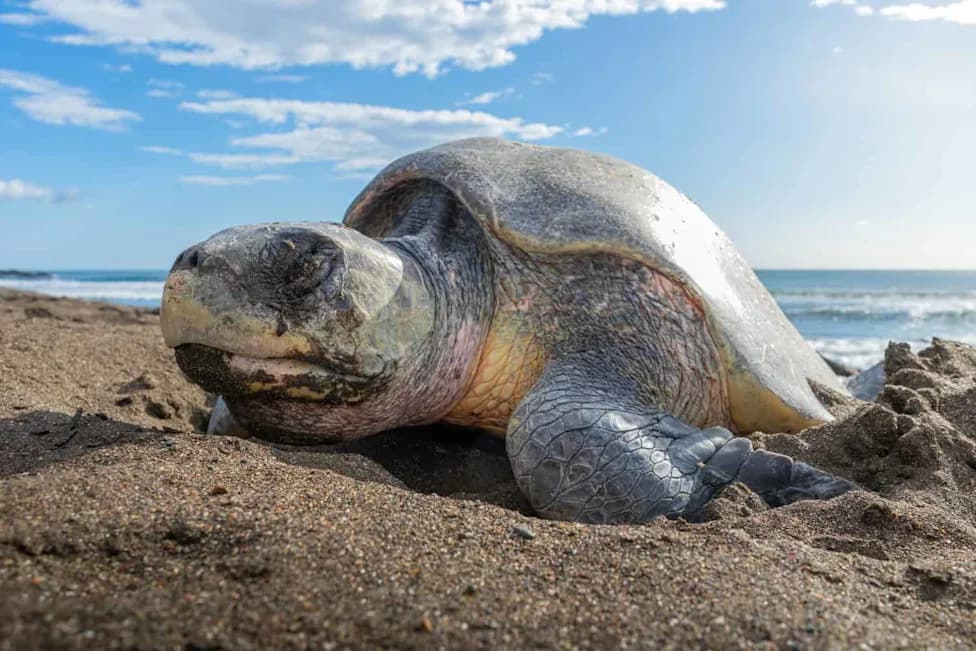
The Loggerhead Marinelife Center and the Smithsonian Conservation Biology Institute are using satellite tags to track rehabilitated amputee sea turtles. Amelie, a Kemp's ridley that lost a forelimb—likely to a shark—was rescued seven weeks earlier, treated for pneumonia and surgically repaired, then released with a tracker glued to her shell. An ultrasound shows she is developing eggs, and researchers hope tracking will reveal dive behavior, migration routes and survival. Another tagged three-limbed turtle, Pyari, has already traveled nearly 700 miles since January.
Three-Limbed Kemp's Ridley 'Amelie' Released and Tracked by Satellite After Amputation
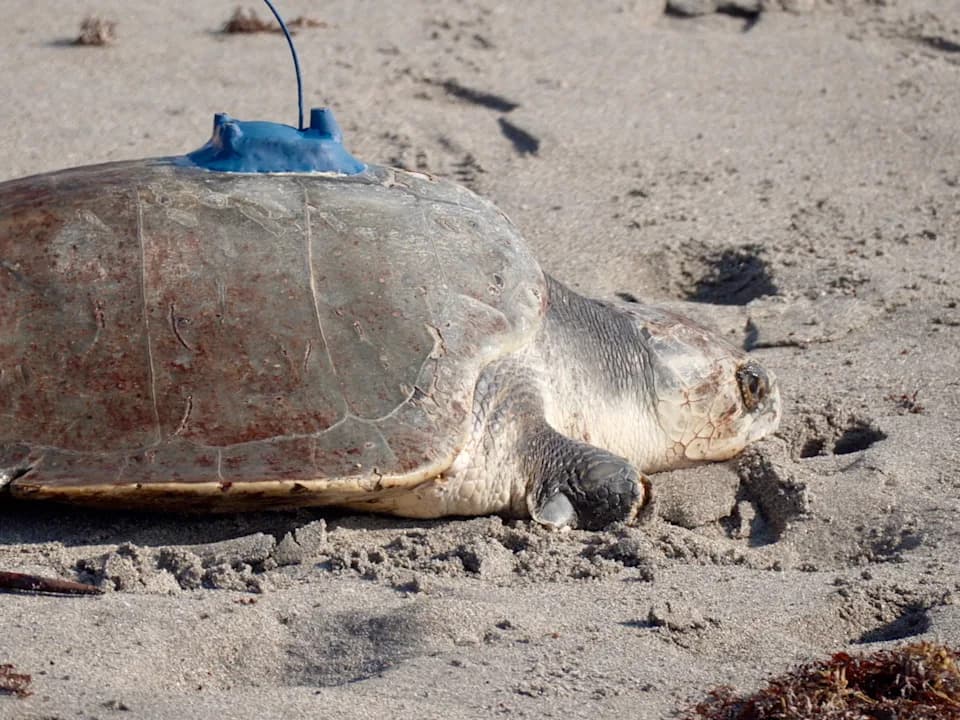
A rehabilitated adult female Kemp's ridley sea turtle crawls toward the ocean during a release in Juno Beach, Fla. on Wednesday, March 25, 2026. (AP Photo/Cody Jackson)(ASSOCIATED PRESS)
JUNO BEACH, Fla. — Veterinarians at the Loggerhead Marinelife Center are turning to satellite technology to monitor rehabilitated sea turtles, with a special focus on animals that have lost limbs.
In a partnership with the Smithsonian Conservation Biology Institute, researchers are attaching satellite tags to amputee turtles to study how well they adapt, migrate and dive after returning to the wild.
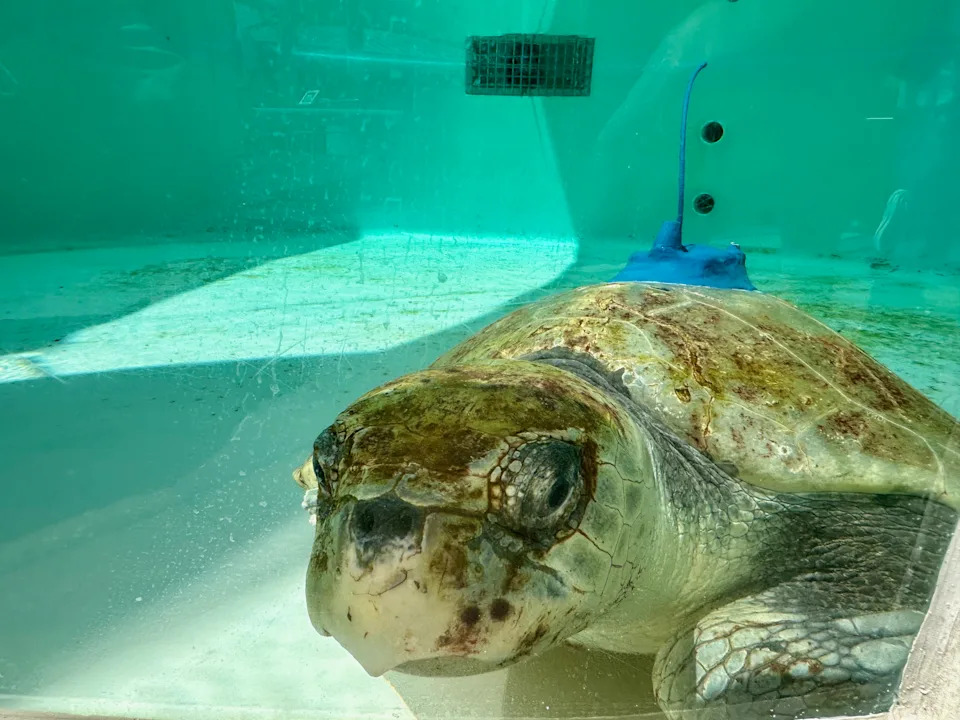
An adult female Kemp's ridley sea turtle is seen swimming in a tank at Loggerhead Marinelife Center after a satellite tracking device was attached to its shell in Juno Beach, Fla. on Tuesday, March 24, 2026. (AP Photo/Cody Jackson)(ASSOCIATED PRESS)
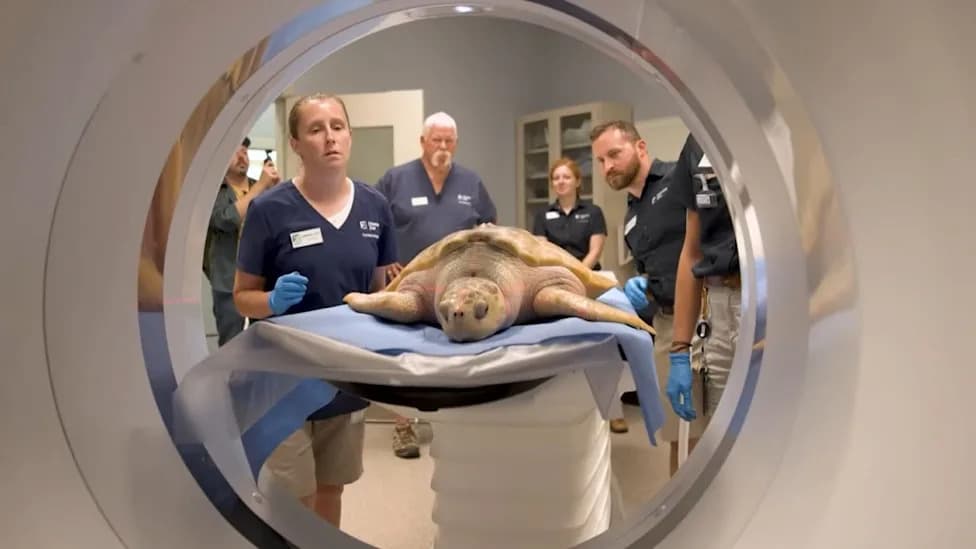
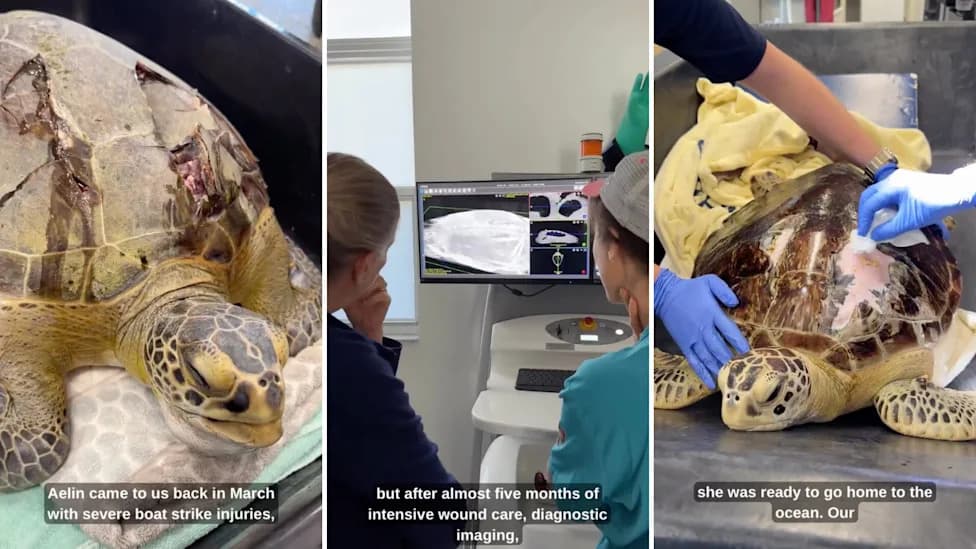
Amelie, a Kemp's ridley sea turtle that lost her right forelimb—most likely to a shark—was rescued by the Inwater Research Group in Port St. Lucie and brought to Loggerhead seven weeks before her release. At the hospital she underwent surgery to clean and close the wound and received treatment for pneumonia while recovering in a rehabilitation tank.
When veterinarians cleared Amelie for release, staff affixed a satellite tag to her carapace. An ultrasound also showed she is developing eggs, providing researchers with an additional motivation to follow her movements and behavior at sea.
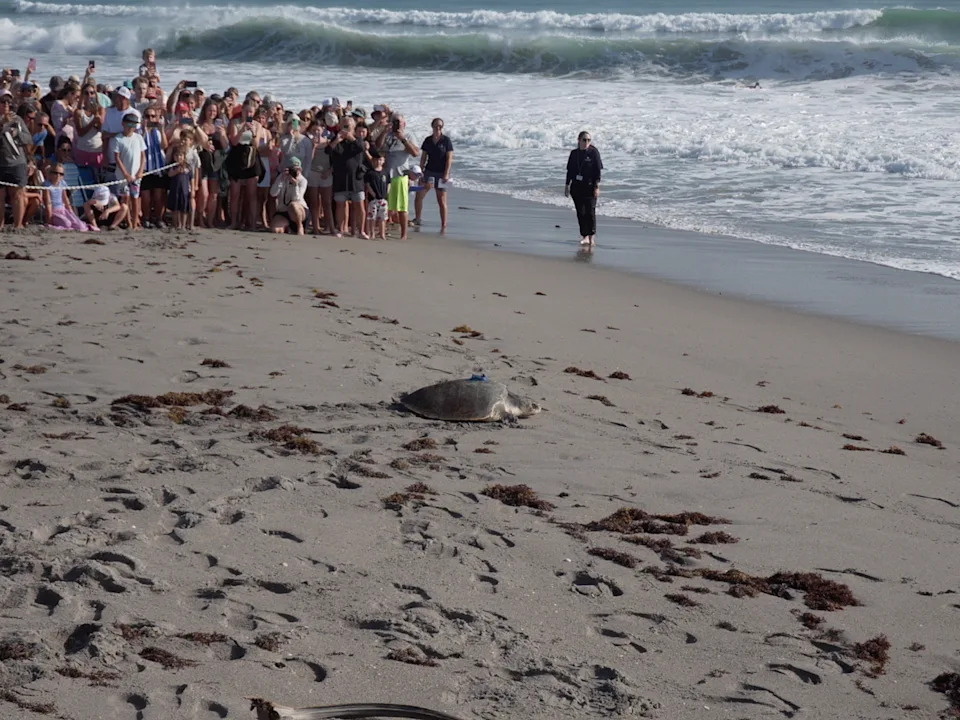
Spectators watch as an adult female Kemp's ridley sea turtle is released into the Atlantic Ocean after rehabilitation in Juno Beach, Fla. on Wednesday, March 25, 2026. (AP Photo/Cody Jackson)(ASSOCIATED PRESS)
"We do know they can be successful in the wild because we have seen amputee turtles on our nesting beaches," said Sarah Hirsch, Loggerhead's research director. "But we want to better understand their dive behaviors, migration routes and survival after rehabilitation."
Amelie is the fourth amputee the center has tagged for satellite tracking. Another three-limbed turtle, Pyari, has traveled nearly 700 miles since her release in January, according to her tracker.
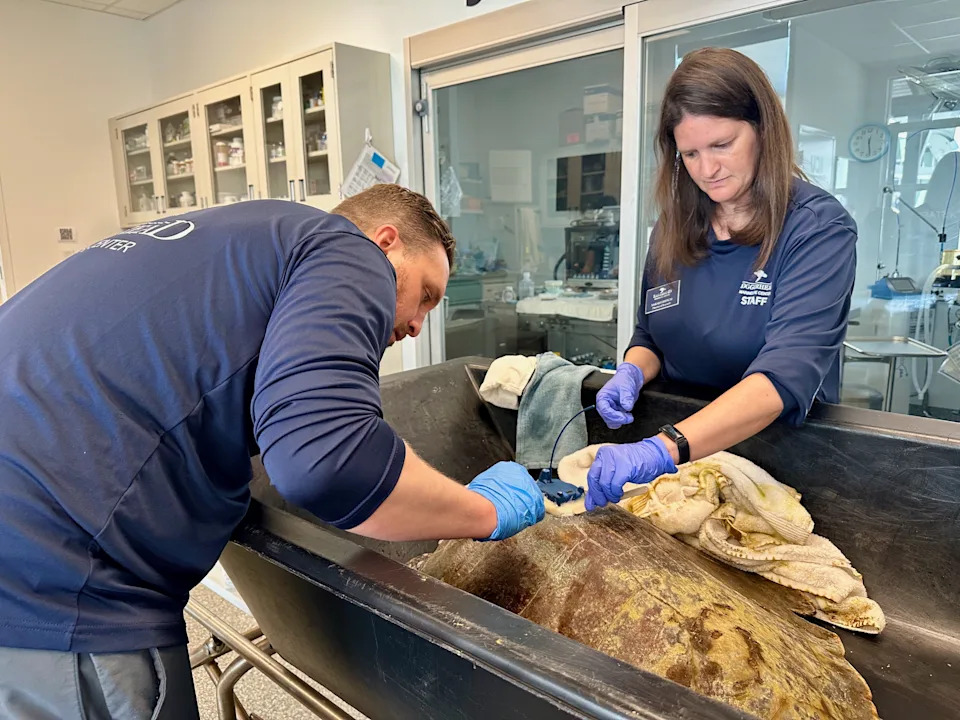
Justin Perrault, left, and Sarah Hirsch attach a satellite tracking device to an adult female Kemp's ridley sea turtle at Loggerhead Marinelife Center in Juno Beach, Fla. on Tuesday, March 24, 2026. (AP Photo/Cody Jackson)(ASSOCIATED PRESS)
The satellite tags include a saltwater switch that senses when a turtle surfaces to breathe; that triggers transmission of location and behavior data to orbiting satellites. Location points typically appear online after about a 24-hour delay. The center posts tracking maps for Amelie, Pyari and other research subjects on the Loggerhead website.
"They've been through a lot," Hirsch said. "They've received extensive medical care here, and seeing them return to the ocean and potentially contribute to the population is very rewarding."
This project aims to provide conservationists with data that can improve release practices and better assess the long-term prospects for amputee sea turtles in the wild.
Help us improve.